

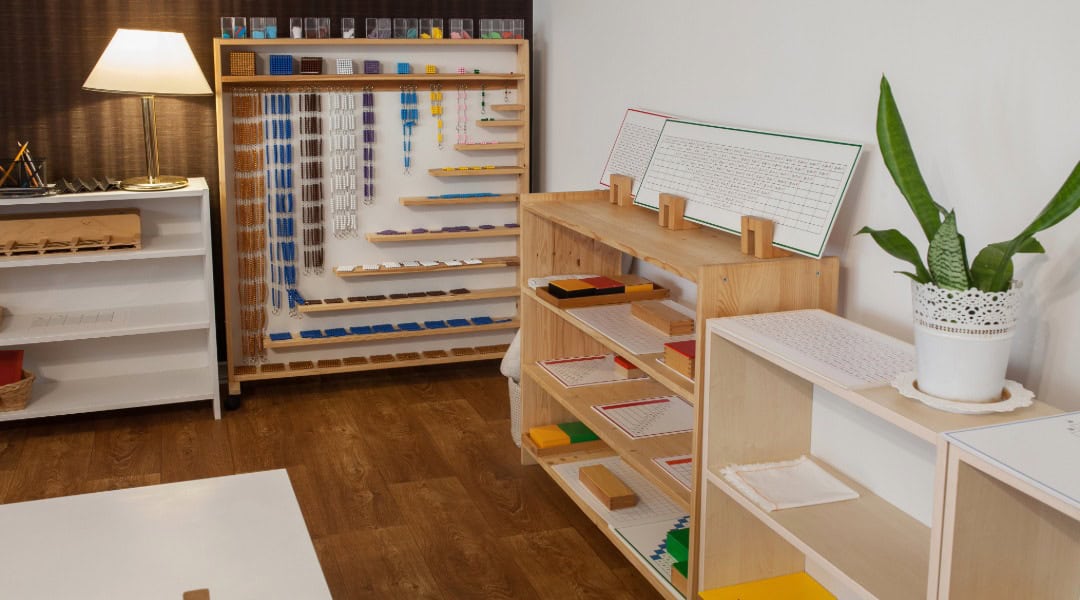
Montessori Prepared Environment: The Most Powerful Teacher in the Room
The Montessori prepared environment is one of the most powerful teaching tools in an elementary classroom—yet it isn’t found on a shelf, a lesson plan, or a curriculum guide. It is the classroom itself.
What Maria Montessori called the Montessori prepared environment is a carefully designed learning space that supports independence, curiosity, and purposeful work. At the elementary level, this environment becomes more complex and dynamic, growing alongside children in the second plane of development.
As a Montessori elementary teacher, I’ve watched the Montessori prepared environment do quiet, powerful work—guiding children toward confidence, responsibility, and deep focus without constant adult intervention.
“The first aim of the prepared environment is, as far as it is possible, to render the growing child independent of the adult.”
— Dr. Maria Montessori
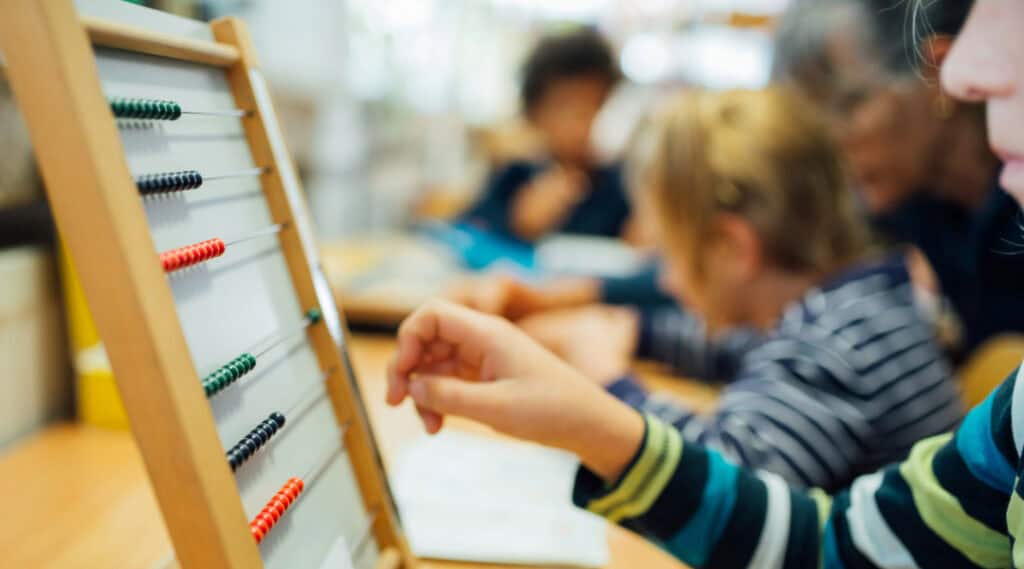
What Is the Montessori Prepared Environment?
💡 TL;DR – The Montessori Prepared Environment
A Montessori prepared environment is a thoughtfully designed learning space that:
✅ supports independence
✅ encourages movement and choice
✅ uses hands-on, self-correcting materials
✅ allows children to learn at their own pace
In Montessori classrooms, the environment itself acts as a teacher.
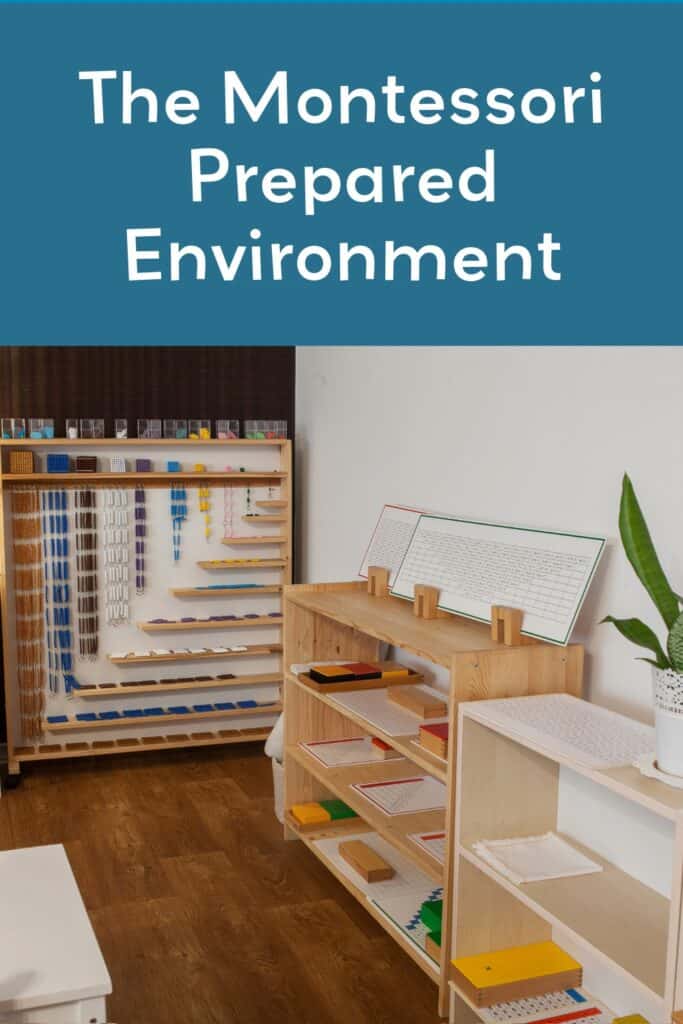
The Montessori prepared environment is a learning space intentionally designed to meet the developmental needs of the child. Everything—from the furniture and materials to the layout and routines—exists to support independence, movement, choice, and meaningful work.
At the elementary level, the classroom is calm, orderly, and rich with opportunities for exploration. Materials are accessible, inviting, and purposeful. Students are trusted to choose their work, manage their time, and collaborate with others—all within a structure that supports responsibility and respect.
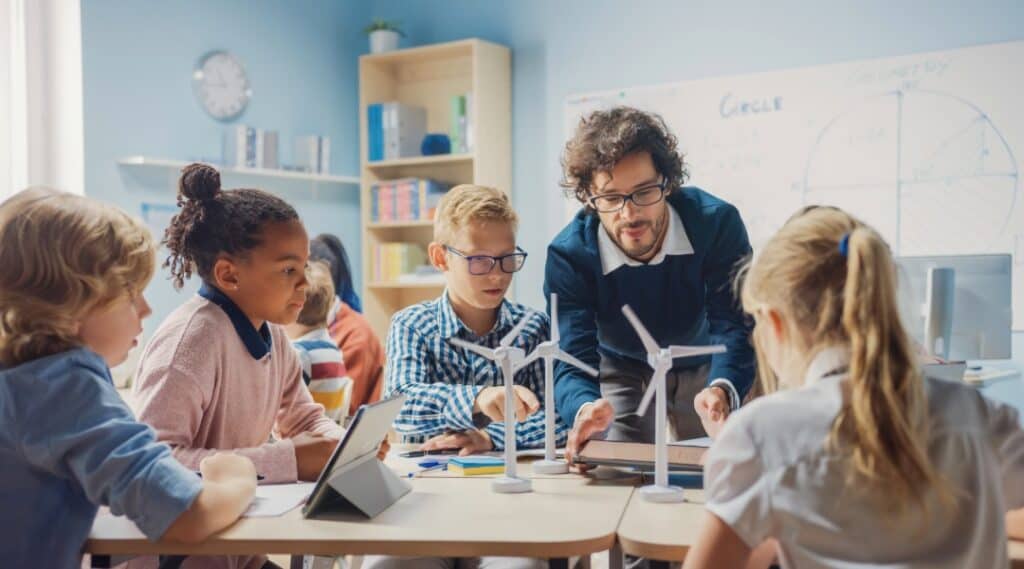
How the Montessori Prepared Environment Differs from Traditional Classrooms
This approach to classroom design is one of the key differences between Montessori and traditional schooling.
Rather than organizing the day around teacher-led instruction, the Montessori classroom invites children to actively engage in learning at their own pace. The environment itself becomes a guide, nudging children toward independence and intrinsic motivation instead of external rewards.
The 6 Principles of the Montessori Prepared Environment
The Montessori prepared environment is guided by six core principles. Together, they create a learning space that supports academic growth, social development, and independence.
1. Freedom Within Limits
Freedom within limits is a cornerstone of the Montessori prepared environment. Elementary students are free to choose their work, move about the classroom, and follow their interests—but always within clearly defined boundaries that protect the learning community.
In my upper elementary classroom, students worked with a weekly plan that included required lessons and follow-up tasks. One example was journal writing, which needed to be completed by Friday. Students were free to decide when and how they completed the work, but they were responsible for following through.
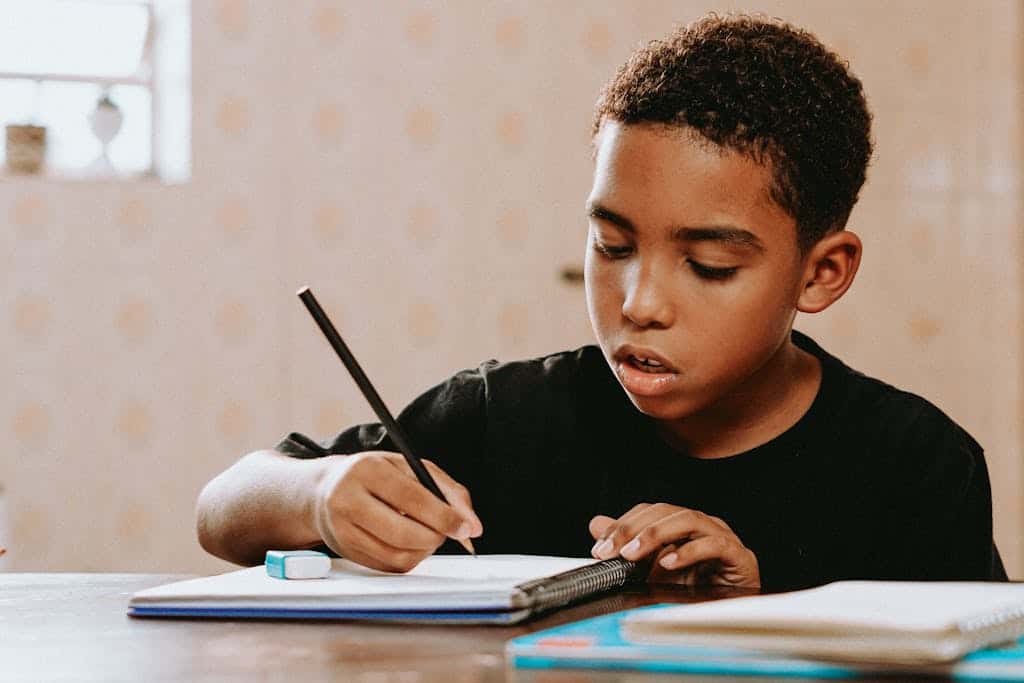
This balance allows students to develop independence, time-management skills, and intrinsic motivation. Work isn’t completed for stickers or rewards, it’s done because the child chose it and found meaning in it.
2. Structure and Order
Order is essential in the Montessori elementary prepared environment. Every material has a place, and students learn that returning work properly is part of the learning process.
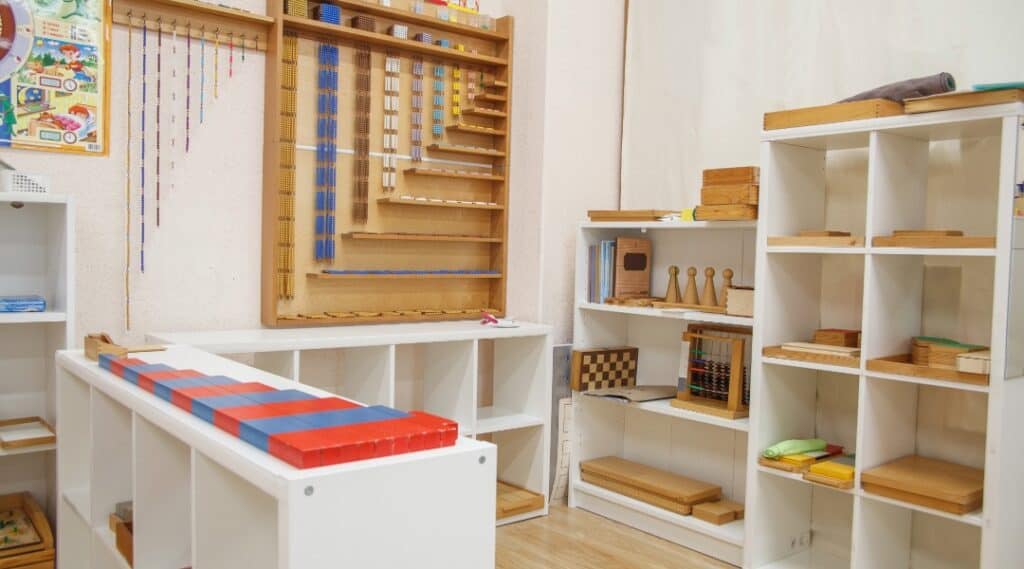
In my classroom, maintaining order didn’t happen overnight. Through modeling, gentle reminders, and observing older peers, students gradually developed pride in caring for their shared space. Over time, the classroom became calmer, more intentional, and more peaceful.
Maria Montessori believed that order in the environment supports order in the mind. A well-organized space allows children to focus deeply and move with purpose.
Stay connected with Montessori elementary
Sign up for thoughtful resources and free printables.
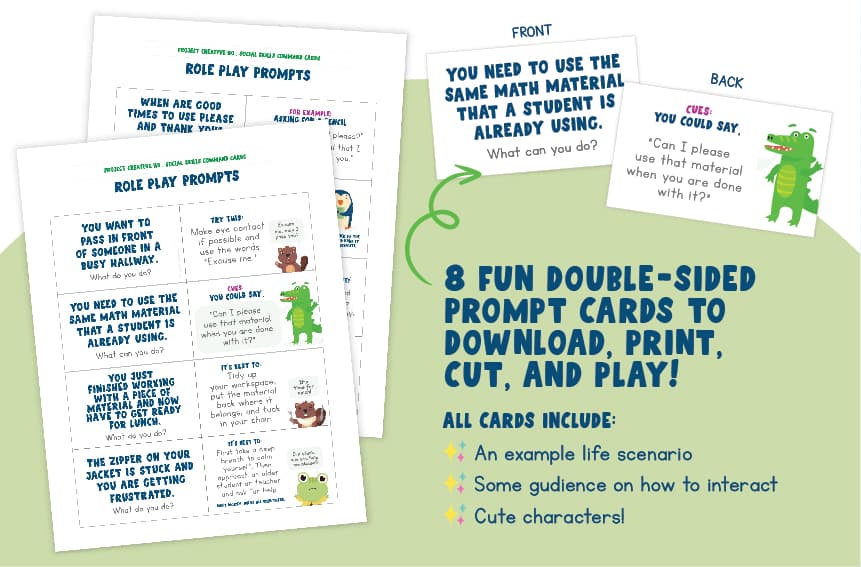
📥 Get Grace & Courtesy Command Cards — FREE
3. Repetition
Repetition plays a vital role in the Montessori prepared environment. Elementary students encounter materials and concepts repeatedly over several years, strengthening understanding with each experience.
Montessori grammar materials are a great example. Parts of speech posters and symbols remain consistent from year to year, allowing children to revisit concepts with increasing depth.
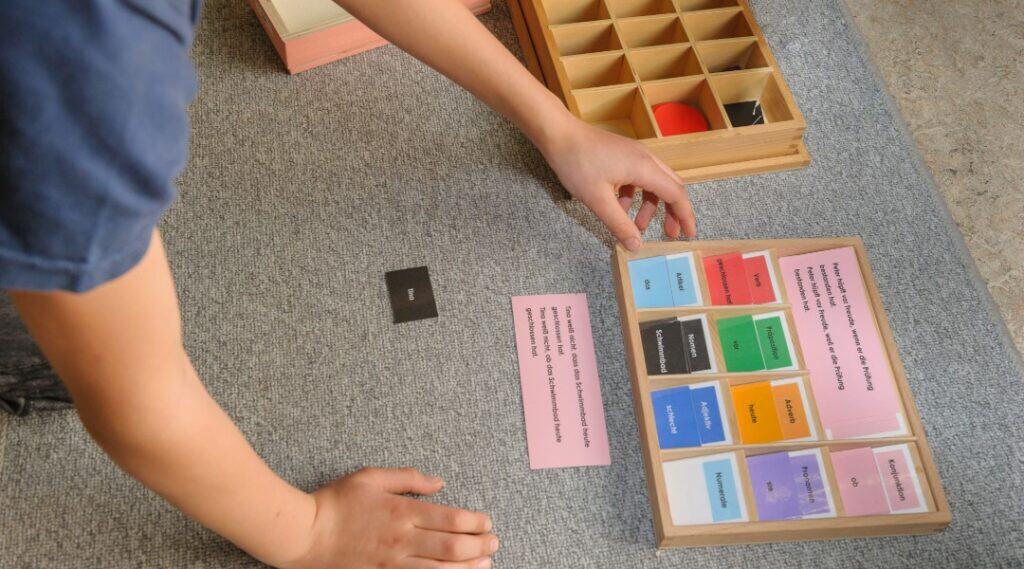
This purposeful repetition helps children master skills naturally, without pressure, while laying strong foundations for future learning.
4. Specialization
Every element of the Montessori elementary prepared environment is designed specifically for the developmental needs of elementary-aged children. From child-sized furniture to hands-on academic materials, nothing is accidental.
One powerful example is the Montessori racks and tubes material for long division. With its many small pieces and concrete structure, it allows children to see division in action, bridging the gap between concrete understanding and abstract thinking.
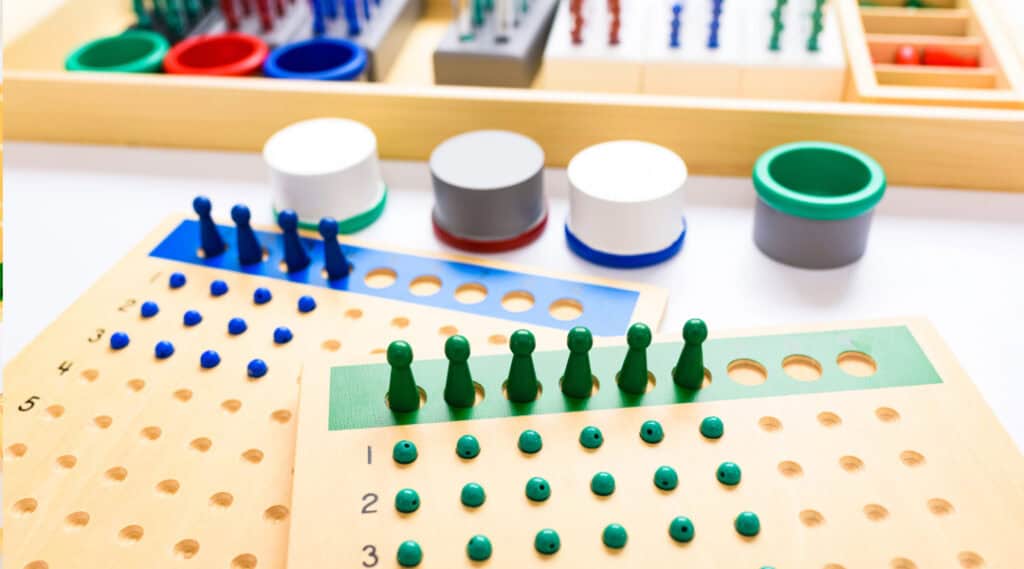
This specialized environment supports the growing elementary mind through meaningful, hands-on experiences. The mind and body work together, and that’s truly so Montessori.
5. Independence
Independence is both a goal and a natural outcome of the Montessori prepared environment. Elementary students are expected to plan their work, manage their time, and take responsibility for their learning.
I often encouraged students to use planners that showed the week at a glance. Whether in lower or upper elementary, these tools helped children visualize their responsibilities and make thoughtful choices about how to structure their day.

This independence builds self-reliance, accountability, and confidence—skills that extend far beyond the classroom.
6. Social Interaction
Social development is deeply embedded in the Montessori elementary prepared environment. Children work collaboratively, form mixed-age communities, and learn how to function as part of a group.
In my classroom, students regularly worked in different groupings and collaborated with peers outside their usual social circles. Older elementary students also interacted with younger children—reading to primary students, helping toddlers transition outdoors, or offering short lessons.
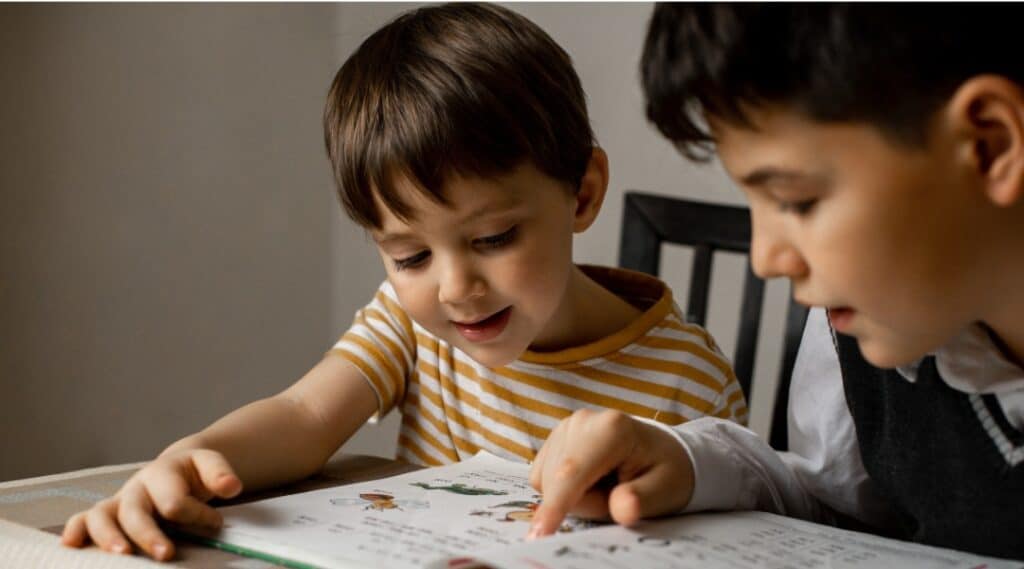
These experiences foster communication, empathy, leadership, and conflict-resolution skills—essential tools for life beyond school.
The Prepared Environment as a Teacher
The Montessori prepared environment is often described as the third teacher. When thoughtfully designed, it allows children to work independently and confidently, guided by the materials themselves.
Most Montessori materials are autodidactic, meaning they contain a built-in control of error. Children can recognize mistakes and make adjustments without adult correction, strengthening problem-solving skills and resilience.
As teachers, we observe closely. When a child struggles, we ask not, “What should I say?” but rather, “What needs to change in the environment?” Often, a small adjustment is all that’s needed.
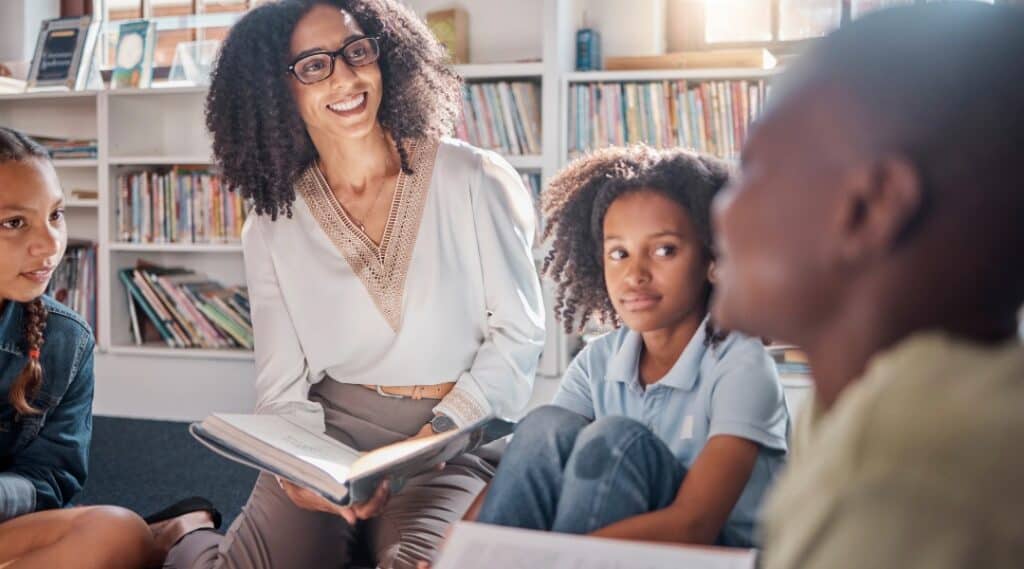
The Teacher’s Role in the Montessori Prepared Environment
The teacher plays a vital role in creating and maintaining the Montessori prepared environment, acting as a guide rather than a director.
Rather than dictating learning, the Montessori teacher trusts that the environment and materials will spark curiosity, invite exploration, and support growth.
“The principal agent is the object itself and not the instruction given by the teacher…it is the child who is active, and not the teacher.”
— Dr. Maria Montessori
Through careful preparation and observation, the teacher creates a space where children can thrive.
Creating a Prepared Environment at Home
You don’t need a classroom to apply the principles of the Montessori prepared environment.
At home, you can:
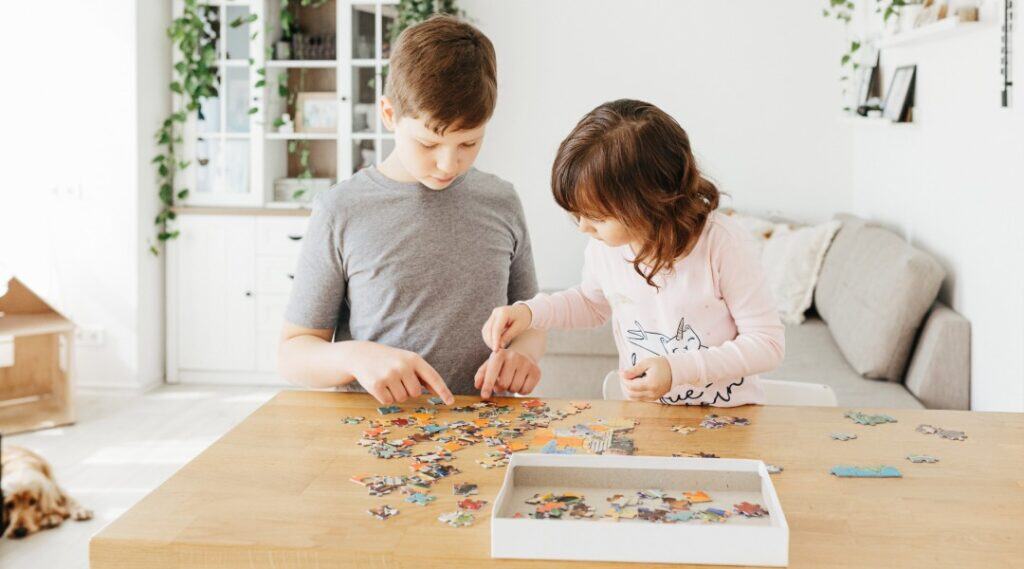
✅ create a calm, organized space with minimal clutter
✅ offer accessible, purposeful materials at child height
✅ encourage choice and independence within clear expectations
✅ allow time for repetition and deep engagement
✅ trust the process and follow the child
Even small changes can make a meaningful difference.
Wrap-Up: The Montessori Prepared Environment
The Montessori prepared environment is a thoughtfully designed space that supports independence, responsibility, and a lifelong love of learning.
Guided by six principles—freedom within limits, order, repetition, specialization, independence, and social interaction—the elementary prepared environment meets children exactly where they are developmentally.
When the environment is prepared with intention, children become confident problem-solvers, collaborators, and joyful learners—ready to engage with the world around them.
If you’re exploring Montessori at the elementary level—whether as a teacher, parent, or lifelong learner—the prepared environment is one of the most powerful places to begin.
📌 Save this for your Montessori journey!
💡 More Montessori Elementary Reads:
What Are the Montessori Great Lessons?
This is How to Add Value to Your Classroom Meetings
These Montessori Books Will Change How You See Learning
15 Remarkable Benefits of Montessori Education Revealed by a Teacher
