
Montessori Planes of Development (With a Spotlight on the Elementary Years)
After 15+ years in a Montessori elementary classroom, and watching my stepdaughter grow from preschooler to university grad, I’ve seen firsthand how clearly the Montessori planes of development map onto real life.
If you’ve spent any time in Montessori spaces, you’ve likely heard about the “four planes.” But what do they actually mean? And why do they matter?
Let’s break them down—and then take a closer look at the second plane, where elementary children (ages 6–12) experience one of the most fascinating stages of growth.
The Montessori Planes of Development
Maria Montessori observed that children develop in distinct stages from birth to age 24. She grouped these into four “planes,” each lasting roughly six years.
Each plane represents a complete transformation—physically, emotionally, socially, and intellectually.
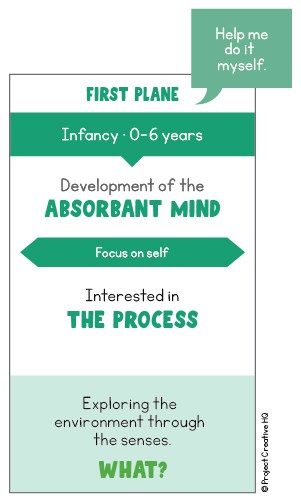
First Plane (0–6): The Absorbent Mind
- Learns through senses and movement
- Absorbs environment effortlessly
- Focused on independence: “Help me do it myself.”
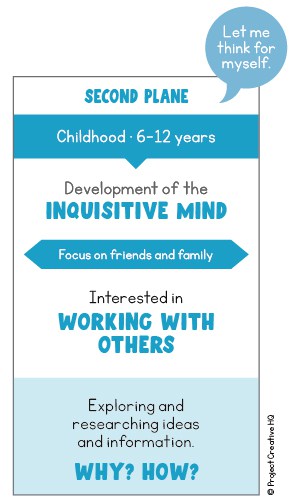
Second Plane (6–12): The Reasoning Mind
- Driven by curiosity: How? Why?
- Strong sense of justice and fairness
- Deep need for peer collaboration
- Transition from concrete to abstract thinking
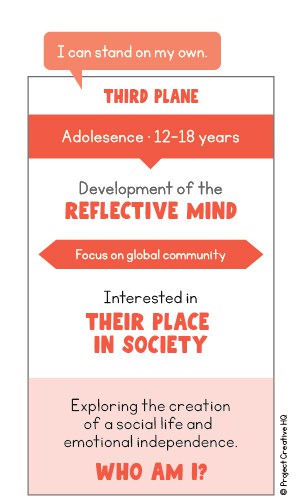
Third Plane (12–18): Adolescence
- Identity formation
- Emotional intensity
- Desire for community contribution
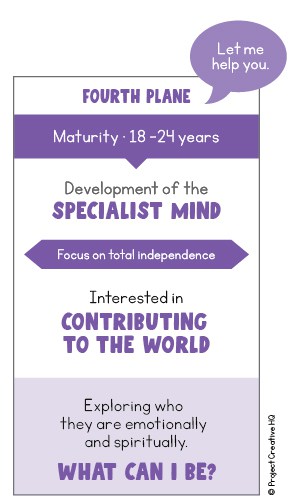
Fourth Plane (18–24): Maturity
- Economic independence
- Purpose and contribution
- Confident adulthood emerging
Spotlight: The Second Plane of Development (Ages 6–12)
This is where I’ve spent most of my career — and it’s magic.
The second plane child shifts from absorbing the world to questioning it.
They don’t just want facts.
They want reasons.

They begin asking:
- Why is the sky blue?
- Is that fair?
- What happens if…?
Montessori described three major areas of development during this stage:
🧐 Intellectual Growth
Elementary children move into abstract thinking. They:
- Connect ideas across subjects
- Recall information months later
- Apply knowledge in new situations
They still need hands-on materials—but now those materials support reasoning, not just sensory exploration.
This is why Montessori elementary environments emphasize:
- Big-picture lessons (like the Great Lessons)
- Research and project work
- Independent problem solving
The goal isn’t memorization.
It’s intellectual independence.
😉 Moral Development
If you’ve ever worked with a 9-year-old, you know this word:
“It’s not fair.”
Second plane children develop a powerful sense of justice. They are:
- Deeply concerned with rules
- Hyper-aware of fairness
- Beginning to understand consequences
This is the age where discussions matter more than directives.
They don’t just want to follow rules, they want to understand them.
😎 Social Development in the Second Plane
The second plane child turns toward peers.
You’ll see:
- Group projects
- Secret clubs
- Playground “micro-societies”
- Loyalty to friends

Montessori classrooms support this with:
- Multi-age groupings
- Collaborative work
- Peer mentorship
This social shift isn’t a distraction from learning.
It is learning.
Want a Ready-to-Use Social Skills Activity?
Our Grace and Courtesy Command Cards give you instant role-play prompts you can use during:
✅ morning meetings
✅ peace circles
✅ SEL blocks
✅ small group support
They’re simple, printable, and grounded in real classroom experience.
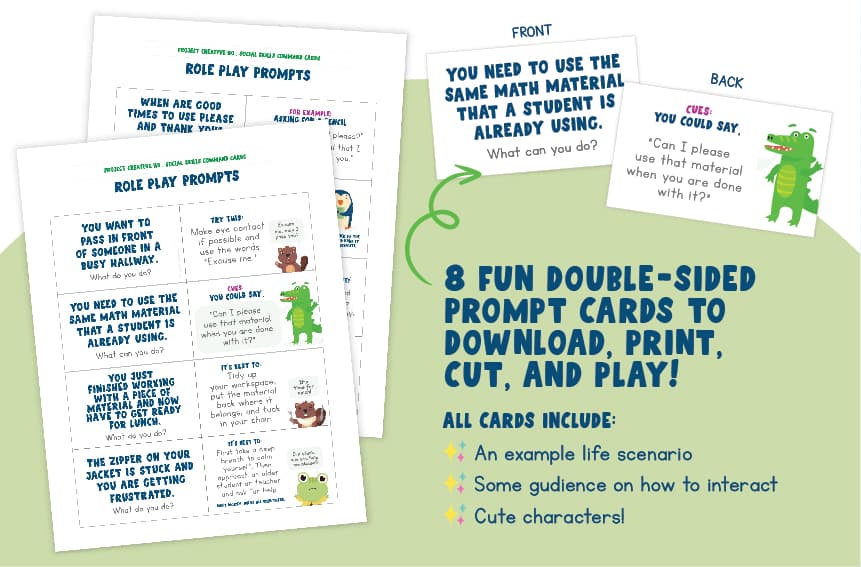
📥 Get the Grace and Courtesy Command Cards
(free with newsletter sign-up)
Why Understanding the Planes Matters
When we understand the Montessori planes of development, we stop expecting a 7-year-old to behave like a 4-year-old, or a 14-year-old to behave like an adult.
Each stage has its own needs.
The second plane child doesn’t need more control.
They need:
- Respect
- Big ideas
- Meaningful responsibility
- Social belonging
And when we meet them there, they rise.
The Wrap-Up: The Montessori Planes of Development
The Montessori planes of development remind us that growth happens in phases — each one complete, powerful, and necessary.
And if you’re walking alongside a child in the second plane?
You’re witnessing one of the most expansive periods of intellectual, moral, and social transformation in the human journey.
It’s a privilege.
Want to learn more about Montessori? Read these articles!