


What Is Montessori Education? Your Complete Guide
Montessori education is known for hands-on learning, independence, and a deep respect for how children grow and learn. But what is Montessori, really—and how does it actually work in classrooms?
In this guide, I’ll break down what Montessori education is, how it differs from traditional schooling, and why it continues to resonate with families and educators around the world. Drawing from my experience as a Montessori elementary teacher, I’ll keep things practical, clear, and grounded in real classrooms.
If you’ve ever wondered what is Montessori, this is a great place to start.

TL;DR — What Is Montessori?
- Montessori is a child-centered approach to education.
- Students learn through hands-on materials, choice, and meaningful work.
- Children progress at their own pace, within clear structure and expectations.
- Montessori supports the whole child—academic, social, emotional, and practical.
- It works best when adults trust children’s ability to learn and grow independently.
What is Montessori?
Montessori is an educational approach designed to help children reach their full potential at their own pace. Rather than relying on memorization or constant teacher-led instruction, Montessori focuses on hands-on learning, independence, and a genuine love of discovery.
Students are encouraged to explore concepts deeply, follow their curiosity, and take responsibility for their learning. The goal isn’t just academic success—it’s confidence, capability, and lifelong curiosity.
📚 The Oxford Dictionary defines Montessori as:
Montessori (noun): A system of education for young children that seeks to develop natural interests and activities rather than use formal teaching methods.
In a world where education often feels one-size-fits-all, Montessori stands out as a more personalized and respectful approach—one that honours each child’s unique development.
💡Who is Maria Montessori?
Maria Montessori was an Italian physician and educator who developed the Montessori method. Learn more about her life and philosophy here.
The Montessori Philosophy: “Follow the Child”
At the heart of Montessori education is a simple but powerful idea: follow the child.
This means recognizing that children develop at different rates and have different needs at different stages. Montessori classrooms are designed to respond to these developmental stages, offering lessons and materials when children are ready for them—not based on age alone.
Instead of pushing children through a fixed curriculum, Montessori allows learning to unfold naturally, guided by observation, curiosity, and readiness.

Montessori Theory of Child Development
Montessori education is grounded in a deep understanding of child development. Through careful observation, Maria Montessori identified what she called the Four Planes of Development—distinct stages that shape how children learn and interact with the world.
The Four Planes of Development
- Birth–6 (The Absorbent Mind): Rapid learning through sensory exploration and imitation
- Ages 6–12 (Second Plane): Growing abstract thinking, social awareness, and curiosity about the world
- Ages 12–18 (Third Plane): Identity formation, emotional growth, and a need for real-world experiences
- Ages 18–24 (Fourth Plane): Independence, purpose, and contribution to society
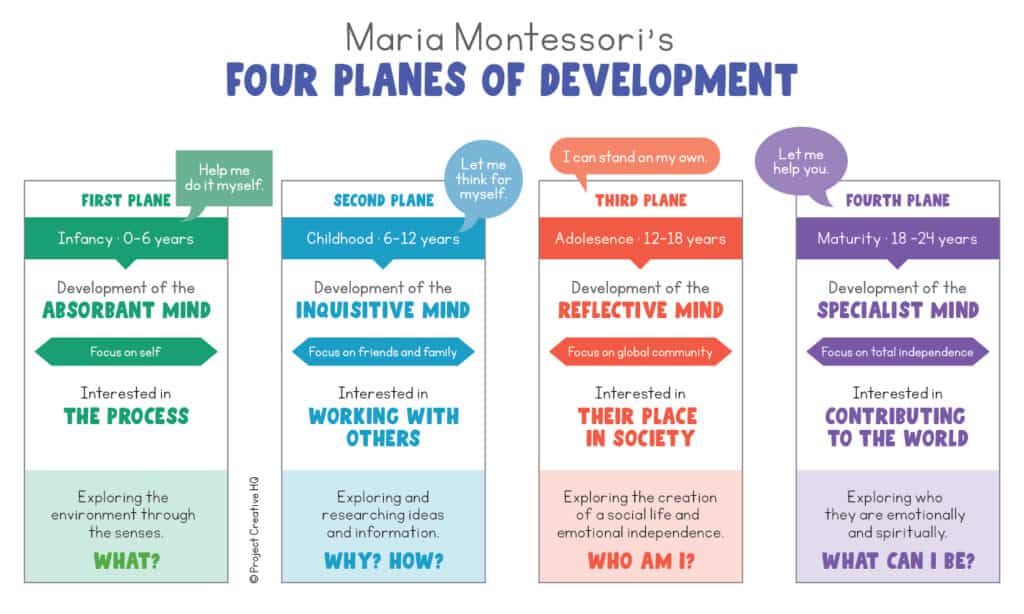
Montessori education adapts to each of these stages rather than expecting children to adapt to the system.
Montessori at Every Stage of Development
Infant & Toddler (Birth–3)
Focuses on movement, independence, and sensory exploration. Children learn through purposeful activity in a calm, supportive environment.
Primary (Ages 3–6)
Hands-on materials help children build foundational skills in language, math, and practical life. Independence and concentration are key goals.
Elementary (Ages 6–12)
This is where Montessori really shines. Students engage in research, collaboration, storytelling, and big-picture thinking. Learning becomes more abstract, social, and interconnected.
Adolescence (Ages 12–18)
Montessori adolescents learn through real-world experiences, community work, and meaningful projects that build independence and self-awareness.
Free Social Emotional Learning Activity
Sign up for our newsletter and receive Montessori-aligned resources for the elementary level, and this free printable!
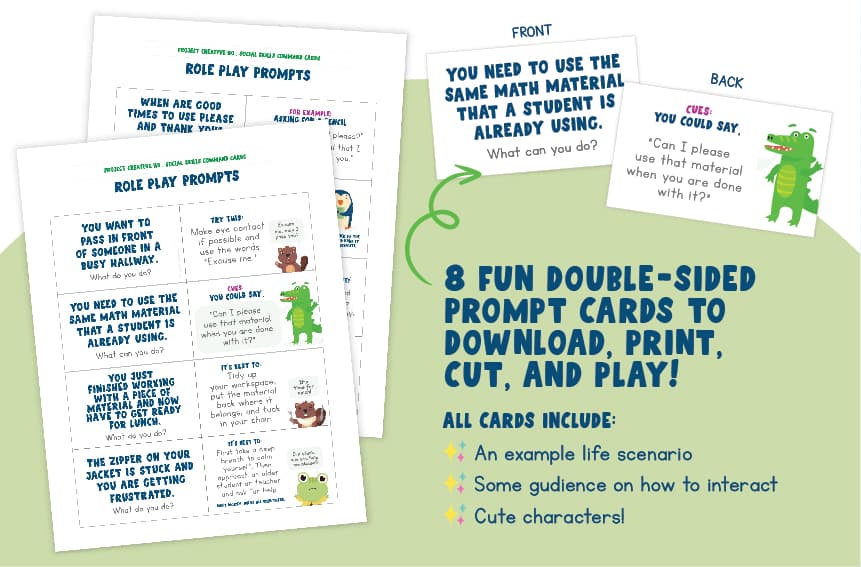
📥 Get these Grace & Courtesy Command Cards to your inbox.
How Is Montessori Teaching Different?
As a Montessori elementary teacher, this is where I see the biggest shift from traditional education.
A Whole-Child Approach
Montessori supports academic learning and social, emotional, and practical development. Children learn how to manage time, work with others, and reflect on their choices.
A Prepared Environment
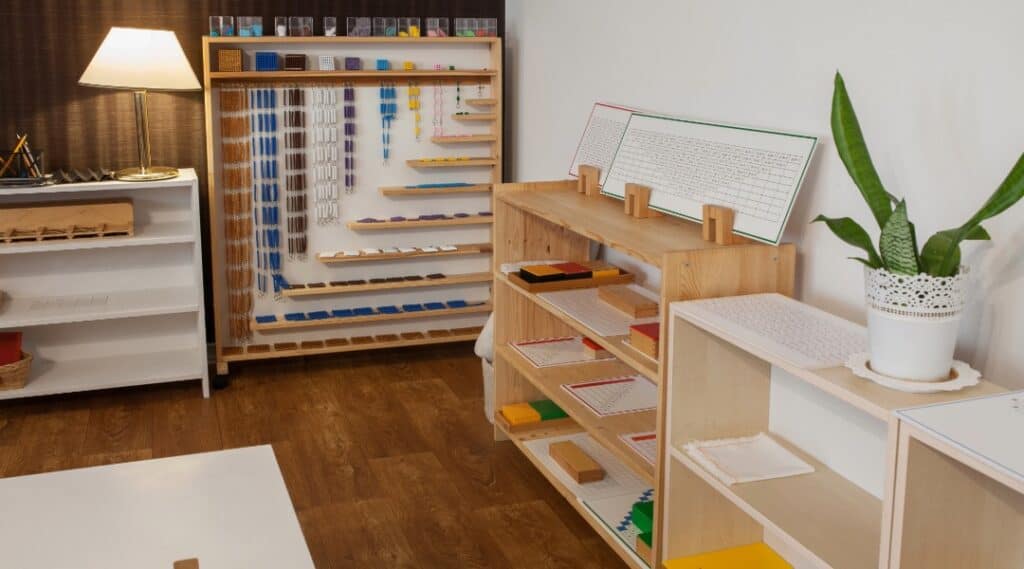
The classroom is intentionally designed to support independence. Materials are accessible, organized, and purposeful, allowing students to work without constant adult direction.
Hands-On Montessori Materials
Montessori materials make abstract ideas concrete. Students don’t just hear about concepts—they touch, build, and explore them.

The Teacher as a Guide
Montessori teachers observe, guide, and support rather than lecture. Lessons are given when children are ready, and students are trusted to practice independently.
Pros and Cons of Montessori Education
Pros:
👍Encourages independence and responsibility
👍Supports deep understanding over memorization
👍Builds confidence and intrinsic motivation
👍Respects individual learning pace
Cons:
👎Not all schools implement Montessori with fidelity
👎Can feel unfamiliar or uncomfortable to families used to traditional schooling
👎Requires patience and trust from adults
Montessori isn’t a perfect fit for everyone—but it’s a powerful option for many.
Inside a Montessori Classroom
A Montessori classroom is calm, active, and purposeful. Students move freely, choose work thoughtfully, collaborate naturally, and take responsibility for their environment.
It’s structured—but the structure lives in routines, expectations, and trust rather than constant adult control.
Montessori Accreditation: Why It Matters
Not all Montessori schools are the same.
Accreditation helps ensure that:
✅ teachers are properly trained
✅ materials and practices align with Montessori principles
✅ child development is respected
While non-accredited schools can still offer strong programs, accreditation adds a layer of accountability and clarity for families.
Resources for Parents and Educators
If you want to keep learning about what Montessori is, explore:
➡️ Montessori books and articles
➡️ School tours and classroom observations
➡️ Conversations with experienced Montessori educators
Montessori is best understood when you see it in action.
The Wrap-Up: What Is Montessori Education?
Montessori is an educational approach that trusts children, respects development, and believes learning should be meaningful, hands-on, and joyful. It’s not about rushing ahead or checking boxes—it’s about growing capable, curious humans.
Whether you’re a parent, teacher, or school leader, understanding Montessori starts with understanding children—and Montessori begins there.
📌 Save this post to explore Montessori anytime!
💡 More Montessori Elementary Reads:
What Are the Montessori Great Lessons?
The Montessori Great Lessons Resources for Every Teacher
Great Parenting Books That Align with Montessori Values
11 Myths About the Montessori Elementary Classroom
