


21 Creative Parts Of Speech Activities Your Students Will Love
After years of teaching in a Montessori elementary classroom, I’ve learned one thing for sure—parts of speech activities can be so much more than dry grammar drills. I love turning the eight parts of speech into moments of creativity and fun.
For me, the magic happens when we mix games, stories, and songs to help kids see how words work together. It keeps grammar lively, sparks curiosity, and makes the rules stick. Trust me, once you add a few games to your classroom routine, you’ll wonder how you ever taught grammar without them. routine!

What Are Parts of Speech Activities
When I talk about parts of speech activities, I’m thinking of all the interactive ways we can help students learn the different categories of words in our language. Over the years, I’ve used everything from hands-on sorting games and storytelling prompts to silly grammar songs and scavenger hunts that get students moving.
For me, these activities aren’t just about memorizing grammar rules—they’re about helping kids see how words work together to create meaning. When students can spot the role each word plays, they build a strong foundation for writing, reading, and communicating with confidence.
💡 Parts of Speech Refresher
Before we jump into the activities, here’s a quick refresher:
The 8 parts of speech are nouns, verbs, adjectives, adverbs, pronouns, prepositions, conjunctions, and interjections. I like to keep these front of mind because understanding them is the first step to building clear sentences and expressing ideas confidently—whether we’re writing or speaking.
21 Montessori-Aligned Parts of Speech Activities
I’ve found that incorporating creative, interactive activities makes learning the parts of speech so much more engaging for children in the second plane of development. Since parts of speech are a key part of the Montessori elementary curriculum, I love adding a playful element—it helps the concepts stick while keeping students excited about grammar.
Verb and Noun Charades
Materials: No materials required; optional verb and noun cards
How I run it: I have students take turns acting out different verbs and nouns while the rest of the class guesses the action, person, place, or thing. Sometimes I hand out cards with verbs and nouns for them to draw from—it adds a bit of surprise and keeps the energy high. This lively parts of speech activity is one of my favorites because it reinforces both action words and nouns while encouraging creativity and movement.

Mad Libs
Materials: Pre-written story or paragraph templates with blanks for students to fill in words for identified part of speech; pencils or pens; word bank (optional)
How I run it: I give students a story or paragraph with blanks labeled for specific parts of speech (like noun, verb, adjective, or adverb). They fill in the blanks with their own words—or choose from a word list—before reading their silly stories aloud. Without fail, this activity gets plenty of laughs while sneaking in valuable grammar practice. It’s one of those parts of speech activities that blends structure with creativity, which is why I keep coming back to it.
💡 Get ready for hours of fun with the Carl the Cantankerous Cat Digital Picture Book + Printable Activity Pack!
This bundle includes a 30+ page eBook and 16 engaging printable activities, featuring the exciting Cat Libs game—a creative twist on Mad Libs that lets kids create their own hilarious cat stories.
Adjective Detectives
Materials: Clipboards; paper and pencils; a list of objects to find
How I run it: I turn students into “adjective detectives” by sending them on a hunt around the classroom, school, or even outdoors. Armed with clipboards, pencils, and a list of nouns to find (plus magnifying glasses for extra fun), they track down each item and write an adjective to describe it. If they spot a crayon, for example, they might jot down “green” or “broken.” It’s a great way to get them moving while sharpening their descriptive skills.

Parts of Speech Roll A Story
Materials: Dice; paper and pencils
How I run it: I pick six of the eight parts of speech and assign each one a number from 1 to 6. Students roll the dice four times, and each roll determines the part of speech and the word they’ll choose. Then, they use their four chosen words to create a sentence, underlining each and labeling its part of speech.
For example, if they roll a noun (“boy”), a verb (“sprint”), an adjective (“sweaty”), and a preposition (“over”), they might write: “The sweaty boy sprinted over the hill.” It’s a simple but powerful way to show how the parts of speech work together to build meaning.
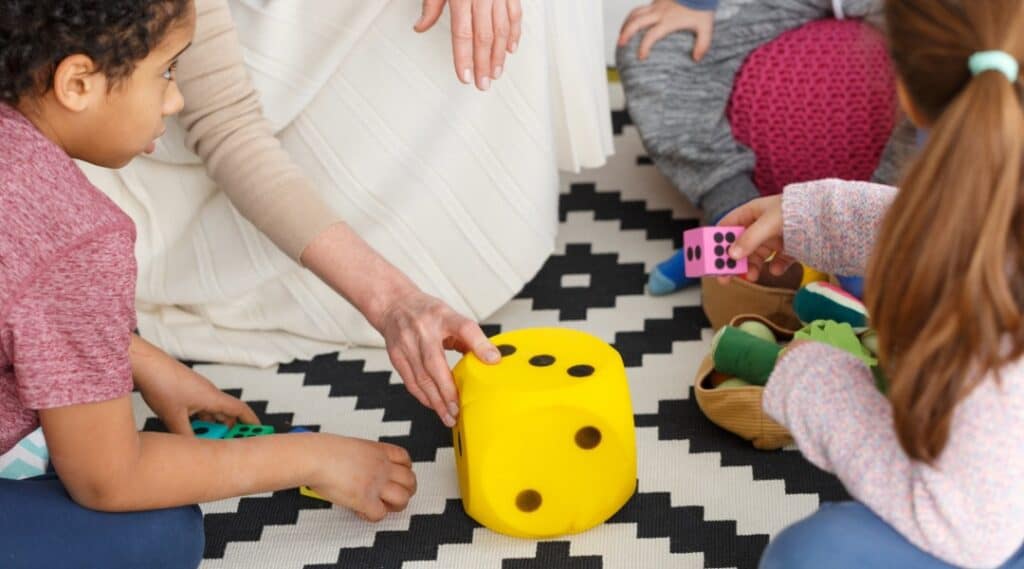
This engaging exercise helps students practice sentence building while reinforcing their understanding of how parts of speech work together.
💡 Want to keep the language fun going?
I use Story Cube Activity Dice all the time—take a look, and don’t miss our blog post The Best Story Dice and 11 Interesting Ways to Use Them for fresh ways to use them in your classroom.
Parts of Speech Sorting
Materials: Cards or slips of paper with various words from different parts of speech; sorting trays or labeled bins
How I run it: I prepare a set of word cards and set up sorting trays for each part of speech. Then I let students sort the words into the correct bins. Afterward, they team up to discuss their choices—sometimes debating tricky words that fit more than one category (like down). It’s a simple way to get them thinking deeply about word roles while collaborating.
Interjection Memory Match
Materials: Cards with different interjections and matching emotion or reaction
How I run it: I create pairs of cards—one with interjections like “Wow!” or “Ouch!” and another with matching emoji or pictures showing the feeling. It’s a fun way to connect words to emotions, and it always sparks laughter and energy in the room.
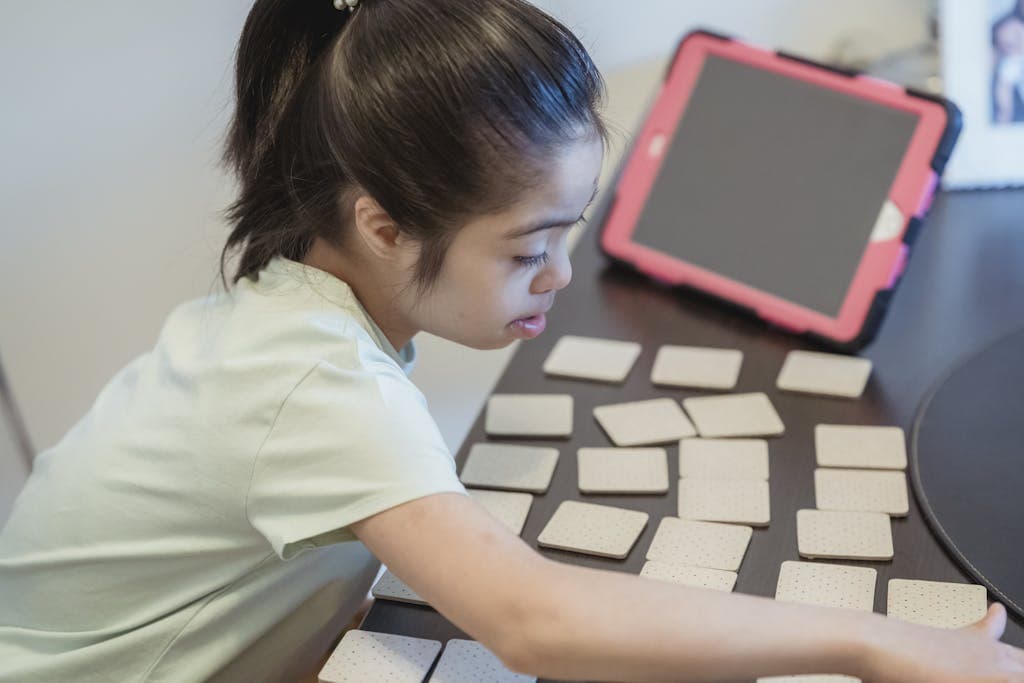
Lay all the cards face down and have students take turns flipping over two cards at a time, trying to find pairs that match the interjections with their corresponding emotions or reactions.
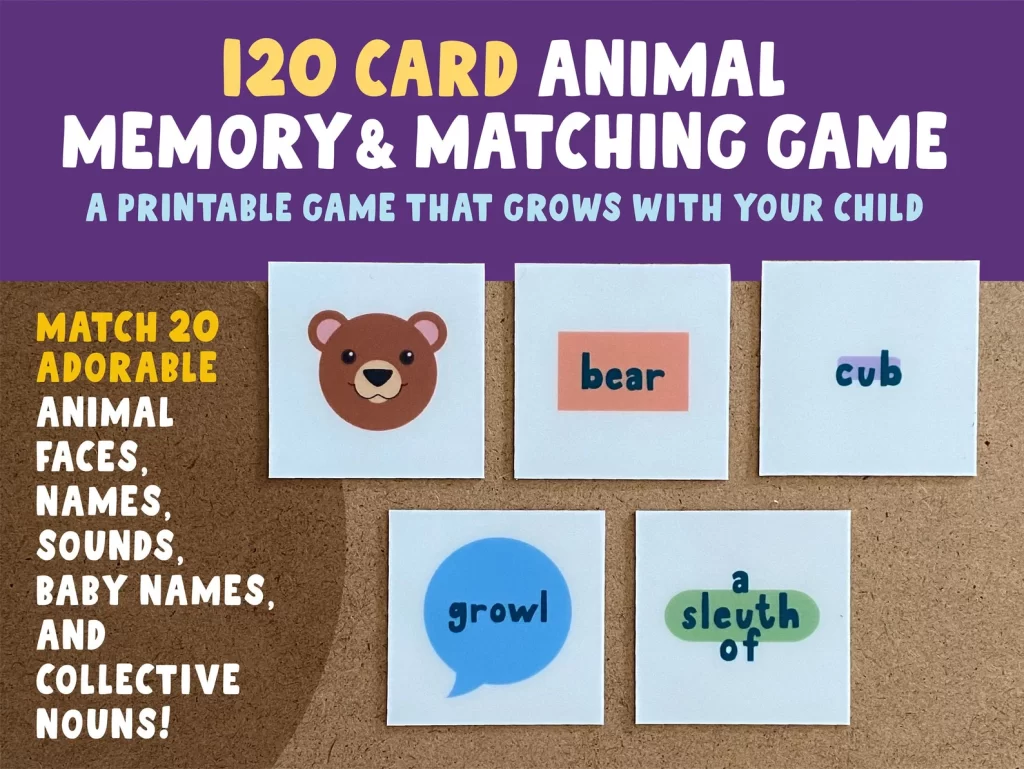
💡 Looking for more fun ways to build language skills?
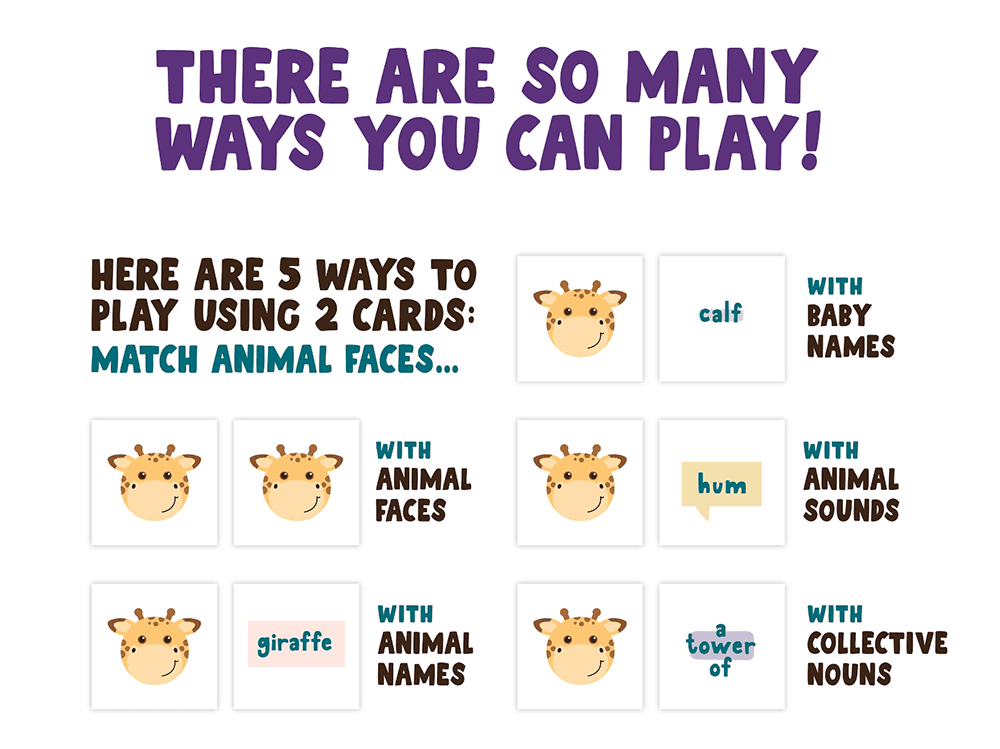
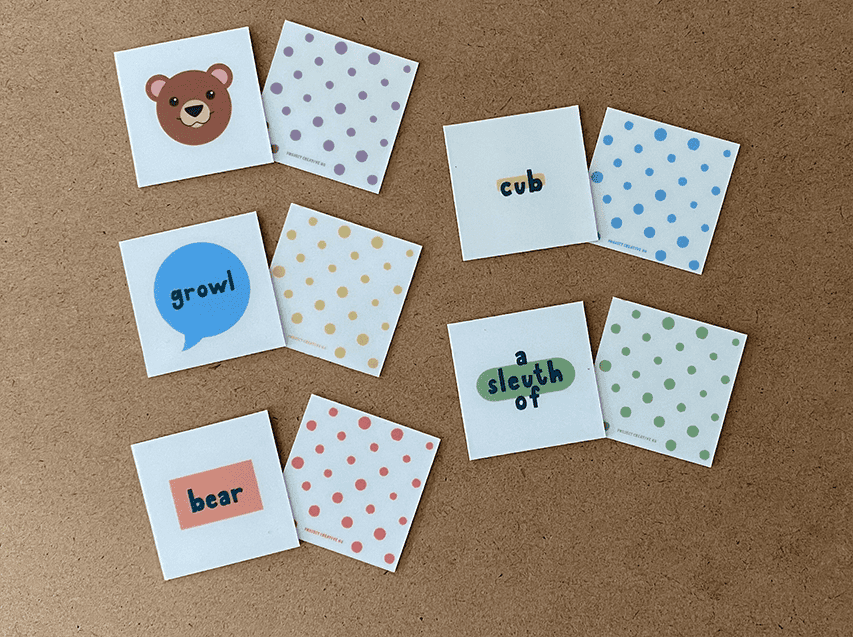
We actually created an Animal Memory Match Game that kids love! It’s a playful way to build vocabulary and make connections between animals and their traits. There are three categories to keep things fresh and exciting!
Parts of Speech Tic-Tac-Toe
Materials: Tic-tac-toe boards labeled with different parts of speech; markers or tokens.
How I run it: I give pairs or small groups boards labeled with parts of speech. To claim a square, a student must say a word that fits that part of speech. It turns grammar into a game—and the competition keeps kids motivated.

💡 Cat Emoji Tic Tac Toe
When I taught online, I used our Cat Emoji Tic Tac Toe game as a reward during lessons. Because I love cats, it was a big hit! If you have cat lovers in your life, you’ll also want to check out the Best Ever Cat Facts Coloring Book we made—it’s perfect for downtime or a fun break between rounds.
Part of Speech of the Week
Materials: Chart paper or whiteboard; markers; word cards (optional)
How I run it: Every week, I pick one part of speech to spotlight. I write it up front and have the class brainstorm as many words as possible for that category. At the end of the week, we chat about how those words make our sentences shine. It’s a low-prep way to build vocabulary and deepen understanding.
💡 Word of the Week Magic
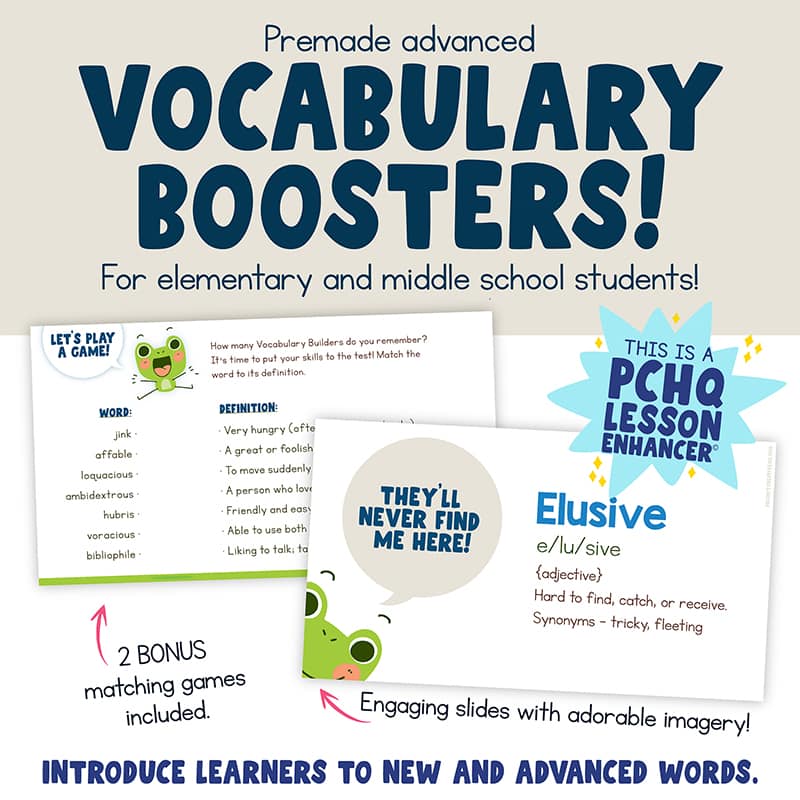
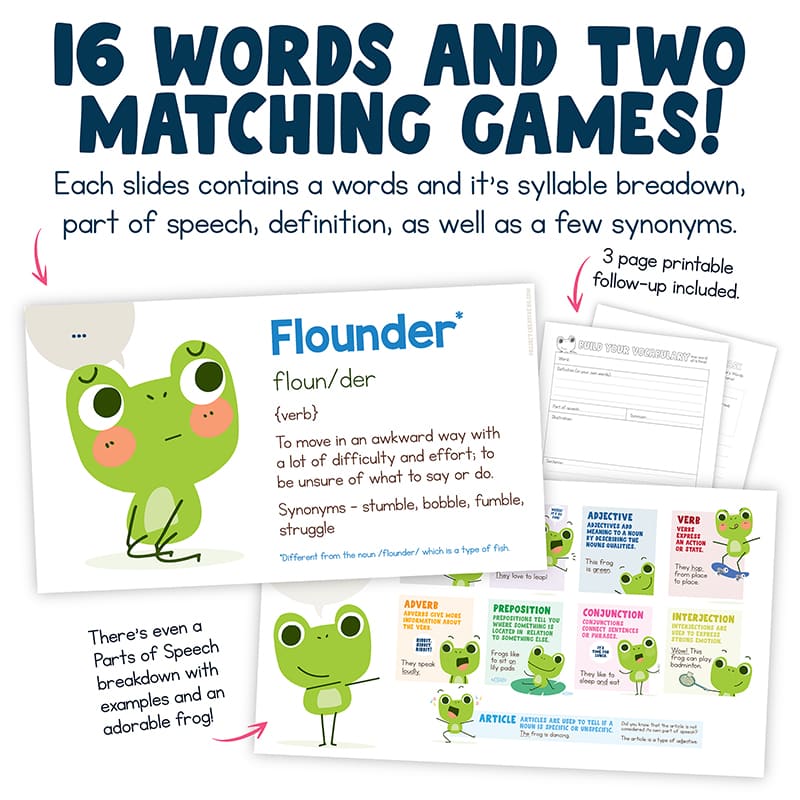
To make this easier, we created Word of the Week slides with visuals, definitions, and examples. They’re a huge help whether you’re teaching in class or at home—they keep vocabulary fresh without extra prep.
Parts of Speech Sentence Cards
Materials: Premade sentence cards with specific parts of speech in a specific order; small whiteboards for students to write their sentence or paper and pencil
How I run it: Students pick a card with a pattern like noun – adverb – verb – preposition – adjective – noun and then write a sentence following that structure. I encourage them to add articles if needed. It’s a great way to practice sentence building while reinforcing grammar in a hands-on way.

Parts of Speech Jeopardy
Materials: Jeopardy-style game board (can be created on a whiteboard or with a digital presentation); question cards for different parts of speech categories; buzzers or bells (optional)
How I run it: I set up a Jeopardy board with categories for different parts of speech and questions of varying difficulty. Students play in teams, answering questions to earn points. It’s a lively way to review and reinforce what they’ve learned, plus a great chance for some friendly competition.

For example, an easy question under “Adjectives” might ask for an adjective that describes a good friend. While a hard question under noun might ask for the collective noun of a group of cats.
Noun Hunt
Materials: Baskets or bags for collecting; labels or tags for categorizing objects
How I run it: I send students on a noun hunt around the classroom or school with baskets to collect items representing people, places, things, or animals. Then we sort and share what they found. This hands-on activity helps connect grammar concepts to the real world and sparks great conversations.
💡 Free Printable Parts of Speech Chart
Whenever we do a noun hunt, I keep this chart nearby—it helps my students check their own work and stay independent.
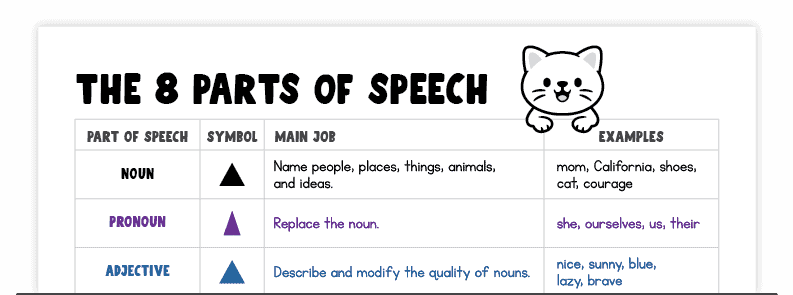
Drop your email below and we’ll send the chart to your inbox!

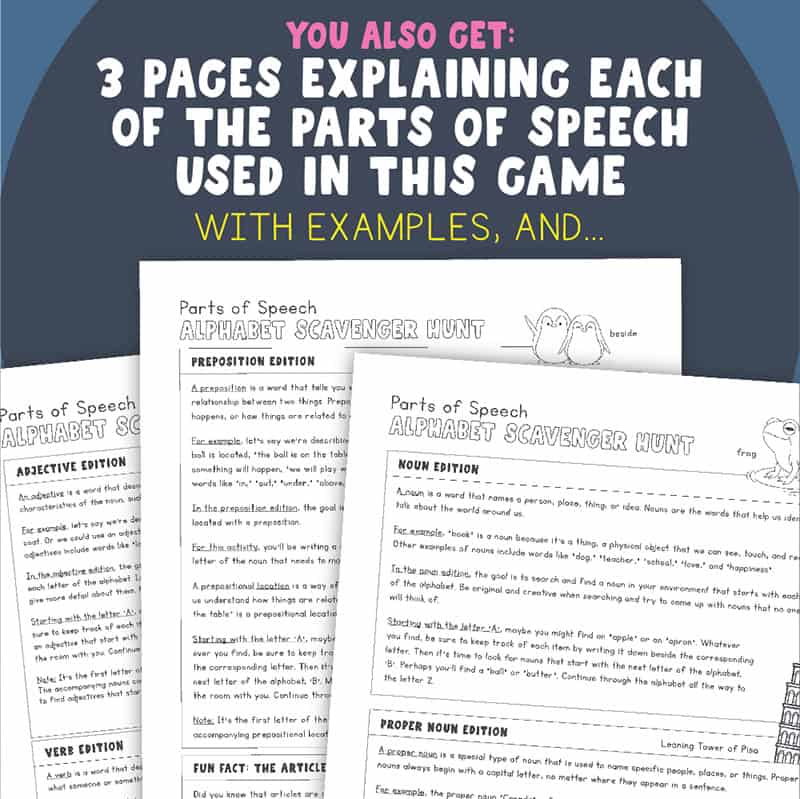
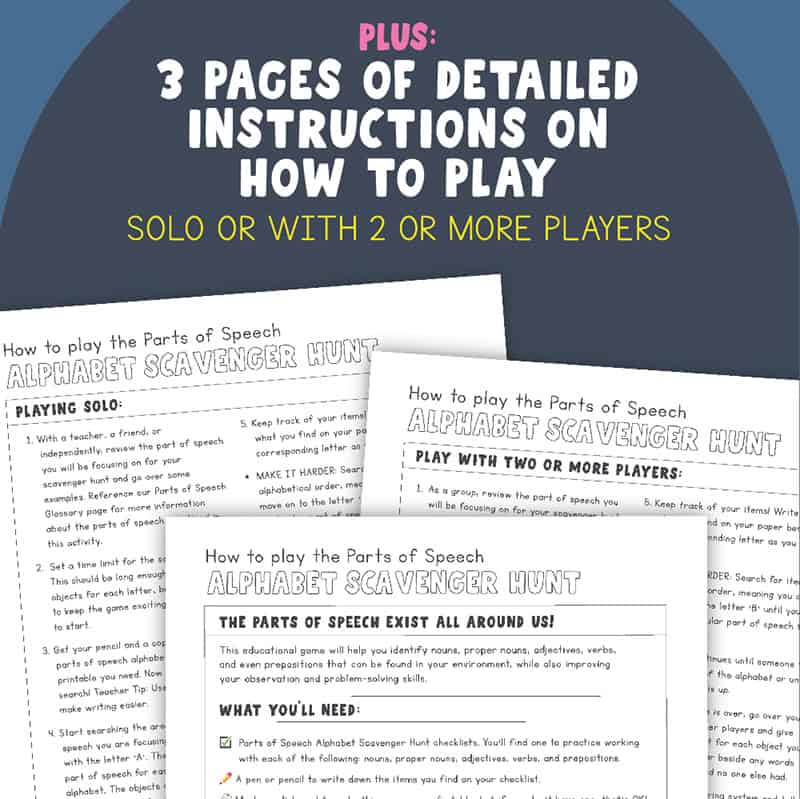
Parts of Speech Scavenger Hunt Game
Materials: Printable parts of speech scavenger hunt game; pencils; clipboards (optional)
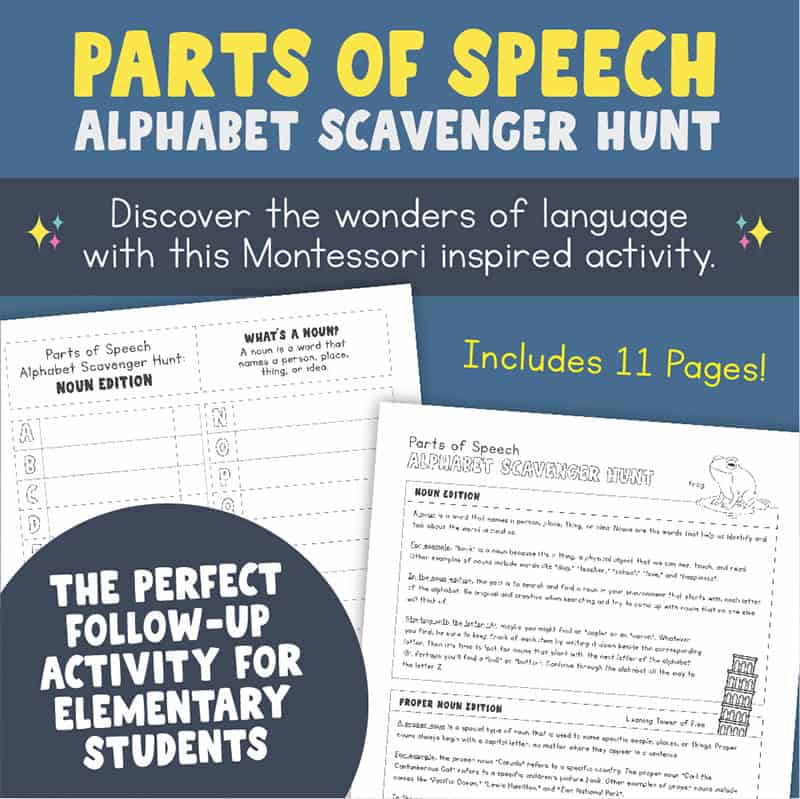
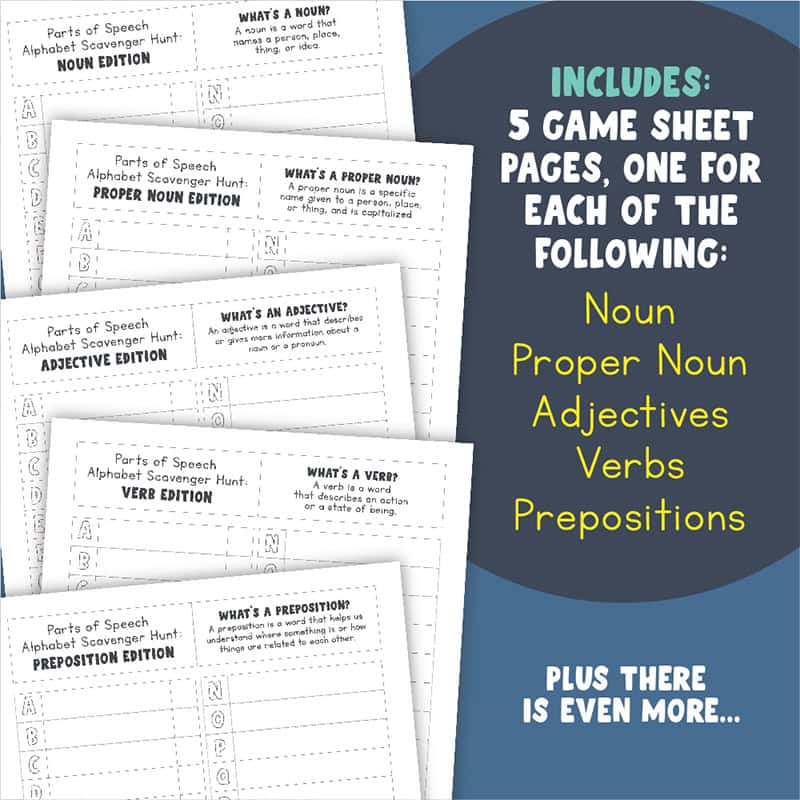
How I run it: I use a scavenger hunt printable featuring all 26 letters, encouraging kids to find nouns, verbs, adjectives, or prepositions around them. This educational scavenger hunt turns language learning into an active adventure that kids genuinely enjoy.
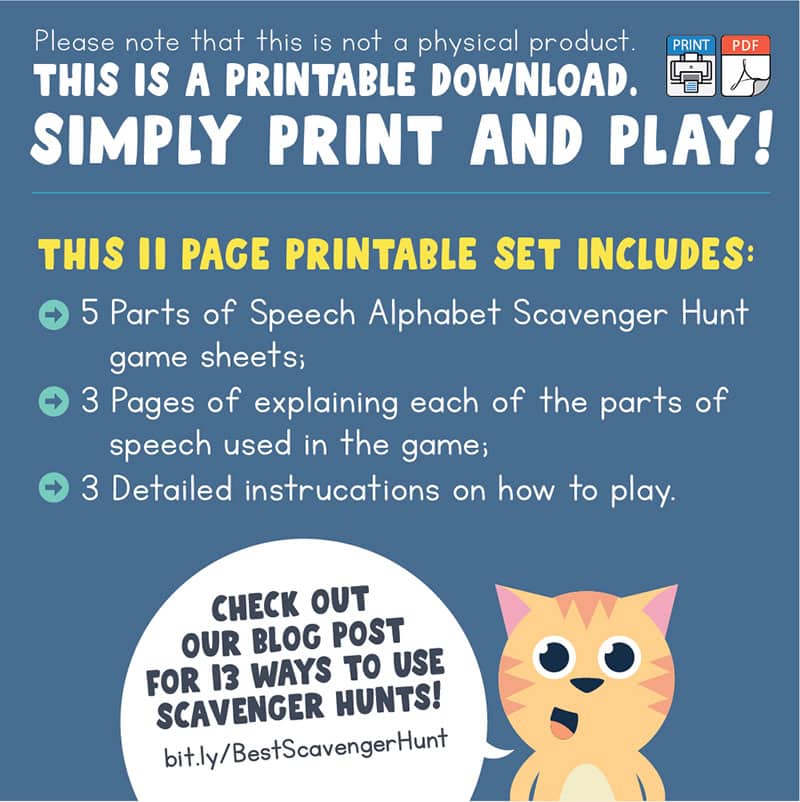
Want to skip the prep? Our Parts of Speech Alphabet Scavenger Hunt is available on its own or as part of our money-saving Scavenger Hunt Bundle—both great value and ready to use.
Adjective Art
Materials: A variety of art supplies (paint, markers, pencil crayons); large sheets of paper or canvas; a list of nouns (optional)
How I run it: I ask each student to pick a noun and then use adjectives to describe it visually through art. They create pictures that capture the descriptive words, and we end up with a colorful gallery that shows how adjectives bring language to life.

Create a Parts of Speech Booklet
Materials: Blank sheets of paper (or pre-cut construction paper); pencils, markers, or crayons; glue or tape; scissors; decorative materials (optional); stapler or hole punch with string (for binding the booklet)
How I run it: I have students make a booklet with a two-page spread for each part of speech, including definitions, examples, and drawings. It’s a fun project that combines writing and creativity, plus they love sharing their finished books with the class.

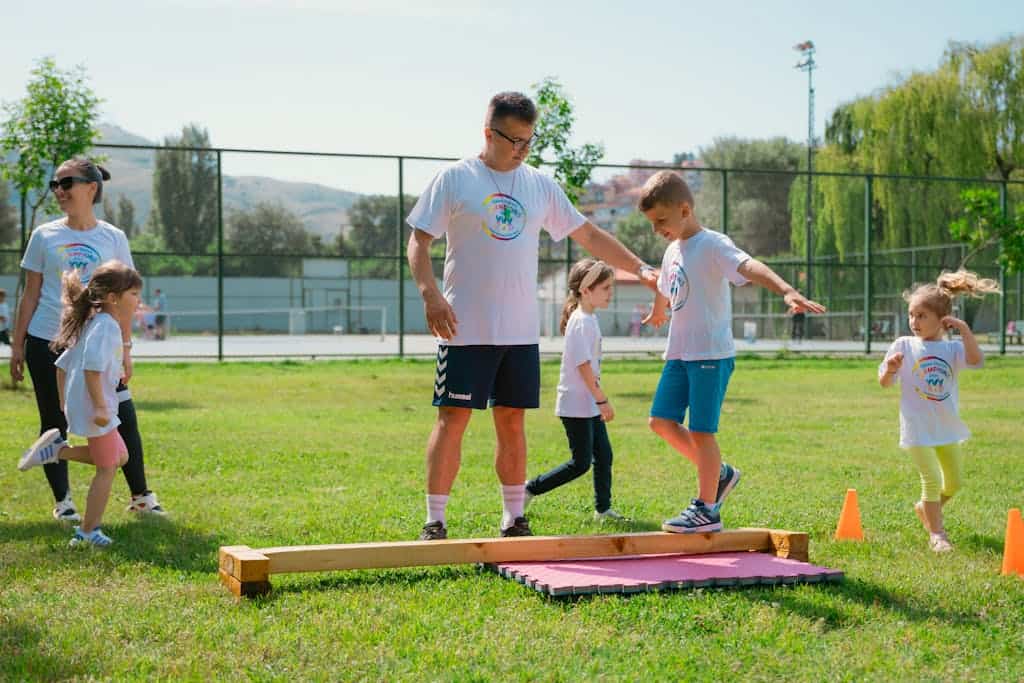
Preposition Obstacle Course
Materials: Various classroom or outdoor objects (chairs, tables, cones, boxes); tape or markers to designate specific areas; preposition cards (optional)
How I run it: I set up an obstacle course with chairs, cones, and other items, then guide students through using prepositions to describe their movements (like “crawl under the table” or “walk beside the chair”). This game is active and hands-on, which really helps prepositions stick.
Interactive Grammar Wall
Materials: Sticky notes or cards; markers; tape or adhesive putty; or a whiteboard and dry erase markers
How I run it: I create a space where students can add new examples of nouns, verbs, adjectives, and more throughout the week. Whether it’s sticky notes on a wall or words on a whiteboard, this ongoing project keeps grammar alive and gives kids a chance to see their contributions.
Parts of Speech Bingo
Materials: Bingo cards featuring a variety of words (nouns, verbs, adjectives, etc.); markers or chips to cover the words; calling cards with different parts of speech
How I run it: I make bingo cards with a mix of nouns, verbs, adjectives, and so on. When I call out a part of speech, students cover words that fit. I like adding articles to the mix since they play a big role in sentences. It’s a lively way to reinforce grammar skills with a familiar game.

Parts of Speech Flashcards
Materials: Flashcards with different words printed on them
How I run it: I use flashcards to have students identify the part of speech, then ask them to make sentences or share synonyms and antonyms. I often have them work in pairs or small groups, which boosts discussion and vocabulary development.

Parts of Speech Song and Rhyme Creation
Materials: Paper; pencils; a list of different parts of speech
How I run it: I challenge students to write their own songs or rhymes about different parts of speech, either solo or in groups. Then they perform for the class, which builds confidence and helps cement their understanding through creativity and collaboration.

Grammar Scenes with Figurines
Materials: A variety of miniature figurines (animals, people, vehicles, etc.); cards with labels for different parts of speech
How I run it: I let students create scenes with figurines, then write sentences describing what’s happening. They identify parts of speech for the words they use, which turns grammar practice into storytelling. It’s always a fun way to learn without feeling like work.

Grammar Hopscotch
Materials: Chalk, tape, or mats to create a hopscotch grid; labels or cards with parts of speech.
How I run it: I set up a hopscotch grid labeled with parts of speech. Students toss a rock or bean bag to pick a square, then hop to it and shout out a word that fits the label. Finally, they use the word in a sentence. It’s active, social, and gets kids thinking on their feet!

Why I Love Using Parts of Speech Activities
When I bring creative and interactive parts of speech activities into my language lessons, I see my students light up with motivation and excitement. Letting kids explore language through play, movement, art, and teamwork brings so many benefits that go beyond just grammar.
✅ Keeps Engagement High
I’ve found that these activities make learning fun and hands-on, which helps keep kids focused and excited throughout the lesson.
✅ Builds Deeper Understanding
When students get to manipulate language concepts actively, they grasp tricky grammar ideas more easily and with more confidence.
✅ Sparks Creativity
I love how these activities encourage kids to think creatively and critically about language—skills they’ll use way beyond grammar lessons.
✅ Boosts Memory and Retention
Because the learning is interactive and meaningful, I notice kids remember parts of speech rules and concepts better and for longer.
✅ Supports Social Skills
Many of these activities involve collaboration, so my students practice teamwork and communication while building positive friendships.

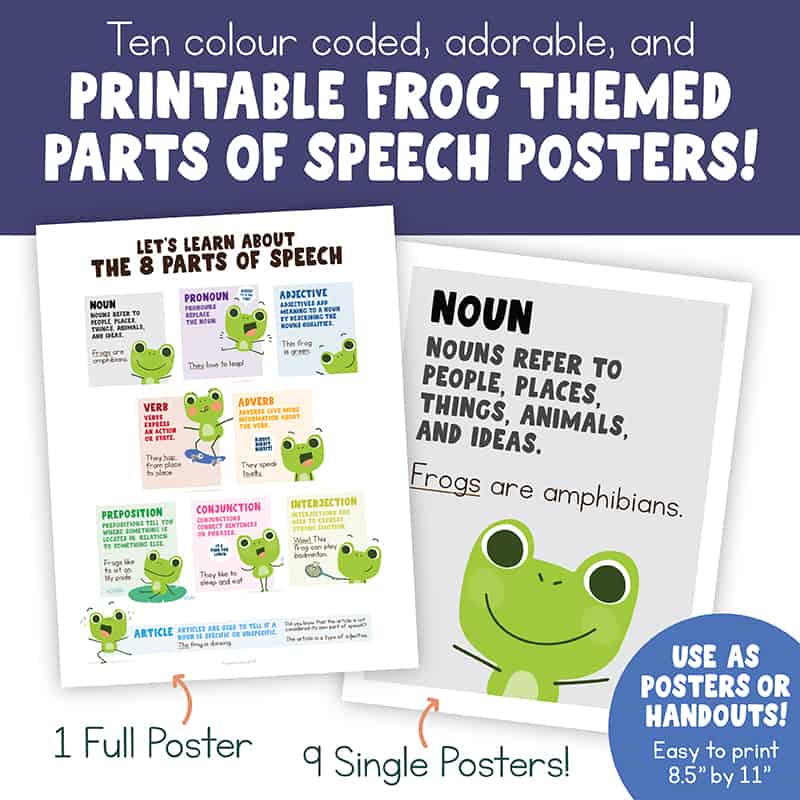
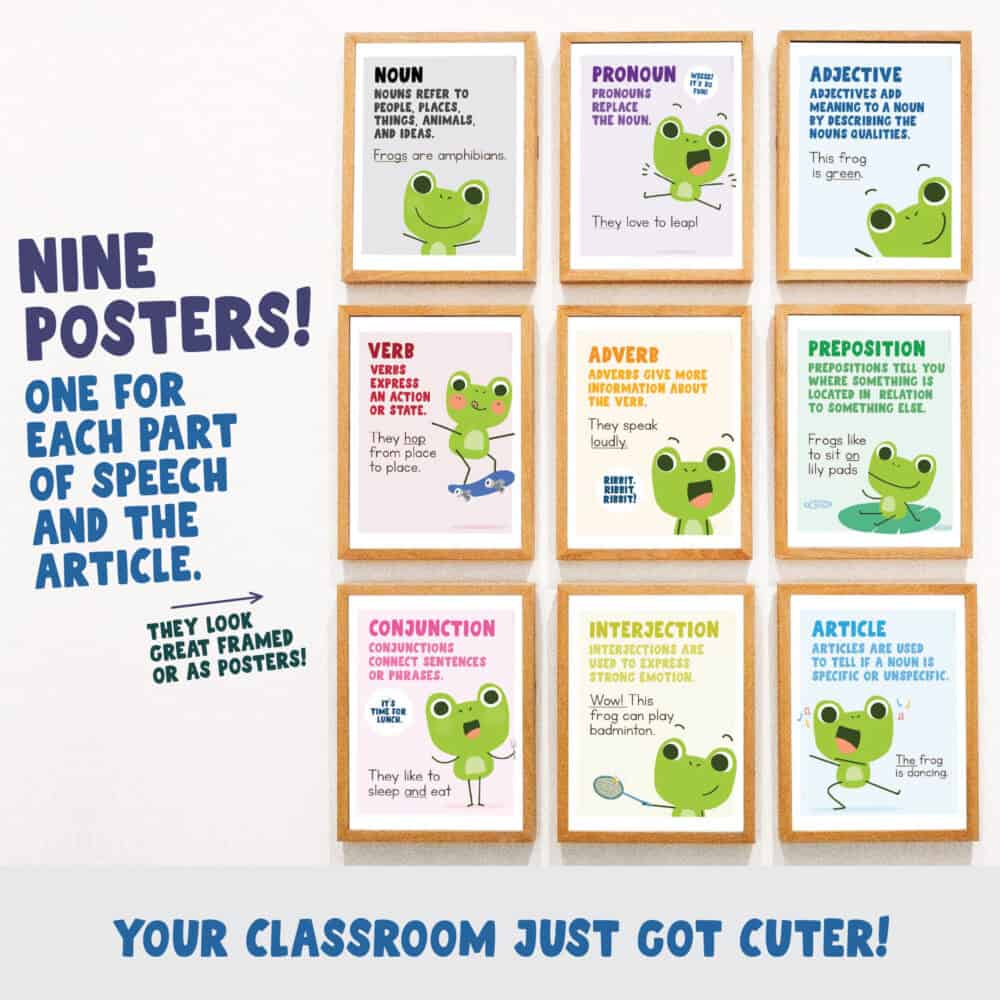
We’ve Got Parts of Speech Posters For You!
To brighten up your language lessons, I love using our eye-catching parts of speech posters!
You can choose from 10 printable posters that feature Montessori parts of speech symbols with a vibrant color scheme, or opt for the 10 posters that focus just on the color scheme to give your classroom a clean, cohesive look. We also have a handy single-page poster that shows all the essential grammar symbols in one place, matching the same bright colors.
These posters have been a great way for me to create a learning space that’s both engaging and informative — I think you’ll love them too!
Here’s a quick glimpse at one of our parts of speech posters:
The Wrap-Up: Parts of Speech Activities
Teaching the eight parts of speech to elementary students doesn’t have to be dull or boring. With a little creativity, I’ve been able to engage students and make grammar lessons both fun and memorable.
I love bringing the joy of learning into the classroom—and even into homes—through interactive games and activities. These parts of speech ideas are ones I’ve seen spark excitement and confidence in young learners, and I’m always inspired by the results.
💡 Try these helpful parts of speech resources:
Animal Matching and Memory Game
Parts of Speech Scavenger Hunt Game
Word of the Week
Vocabulary Graphic Organizer
💡 Encourage reading with these fun activities:
Reading Challenge: 100 Places to Read Checklist
Printable Rebus Puzzle Guide & Cards
Reading BINGO Cards
Roll a Story Dice Game
Carl the Cantankerous Cat Digital Book + Printable Activity Pack
Periodic Table of Elements Digital Lessons
Alphabet Scavenger Hunt Printable
Math Jokes for Kids and Teachers
