Summer Learning Activities Rooted in Play, Curiosity, and Real Life
Let’s be honest—the moment kids hear the words summer learning activities, the enthusiasm drops.
And I get it. After a full school year, no one wants worksheets, drills, or anything that feels like more of the same.
The good news?
Summer learning activities work best when they don’t look like learning at all.
As a former Montessori elementary teacher, I’ve always believed that the most powerful learning happens through:
✅ play
✅ curiosity
✅ conversation
✅ hands-on experiences
Below are some of my favorite summer learning activities for elementary-aged kids, all designed to build real skills while still feeling like summer—and help prevent summer brain drain.
No prep-heavy lessons. No rigid schedules. Just playful ways to keep brains active.
1. Dice Games: One of My Favorite Summer Learning Activities
If I had to pick one category of games for summer learning activities, it would be dice games.
Dice games are:
🎲 cheap
🎲 flexible
🎲 easy to adapt
🎲 weirdly exciting for kids
You can use dice for:
✅ math
✅ storytelling
✅ vocabulary
✅ problem-solving
🎲 Free Printable Dice for Math Games
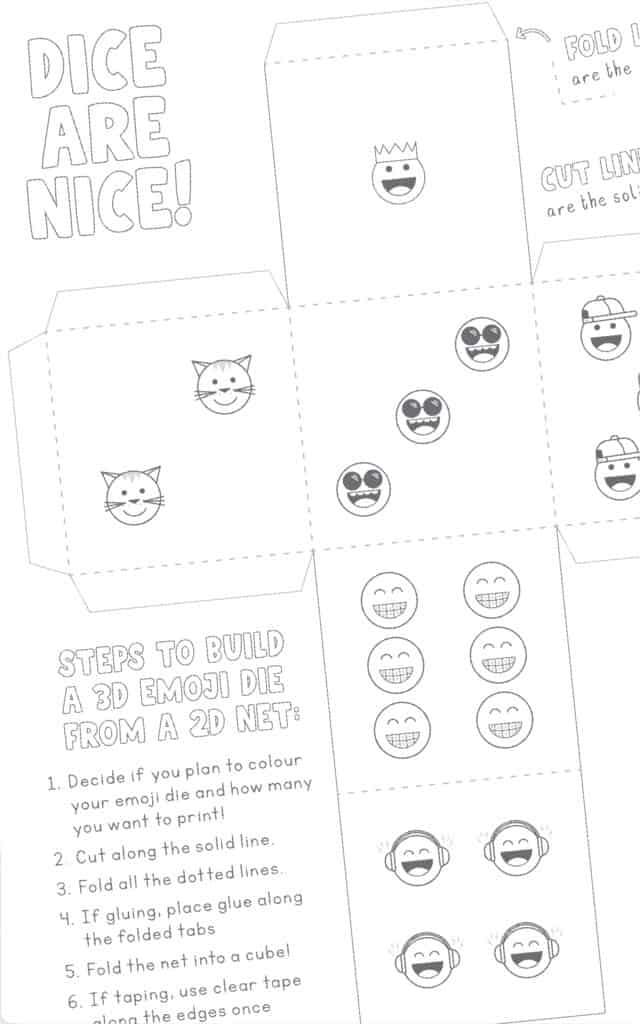
Download our free printable dice and turn math games into a hands-on learning experience.
Students can colour, cut, and build the dice from a 2D net—sneaking in fine motor skills and geometry along the way.
Category Challenge Dice Game
This is one of my all-time favorites for summer learning activities.
How it works:
Write 6 categories and assign each one to a number on the die.
Example:
▲ Things that are triangle-shaped
🥬 Green vegetables
🧦 Things you wear
🚲 Things with wheels
🍎 Red fruits
🐥 Animals with wings
Kids roll the die and have 30 seconds to name something in that category.
It builds:
➡️ word association
➡️ quick thinking
➡️ vocabulary
➡️ confidence speaking aloud
💡Teacher Tip:
Let kids create the categories themselves. The more ownership they have, the more invested they are.

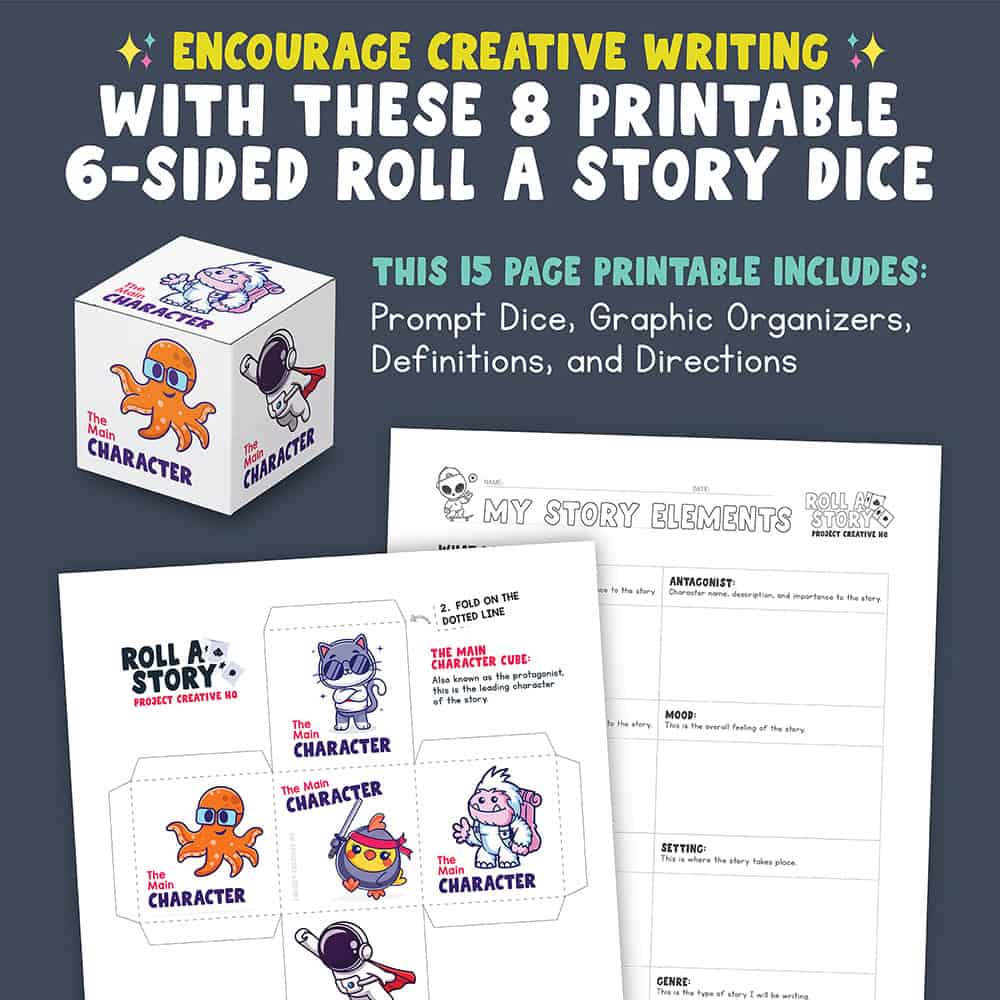
2. Roll a Story: Creative Writing Without the Blank Page Fear
Story dice are one of the most effective summer learning activities for reluctant writers.
Instead of staring at a blank page, kids roll for:
🥷🏼 character
🏰 setting
😫 problem
🥄 object
😄 emotion
And suddenly they have something to work with.
You can:
✍️ write the story
💬 tell it out loud
🎬 act it out
🎨 draw it as a comic
It supports:
✅ narrative structure
✅ sequencing
✅ imagination
✅ confidence in expressing ideas
And most importantly: it makes writing feel playful again.
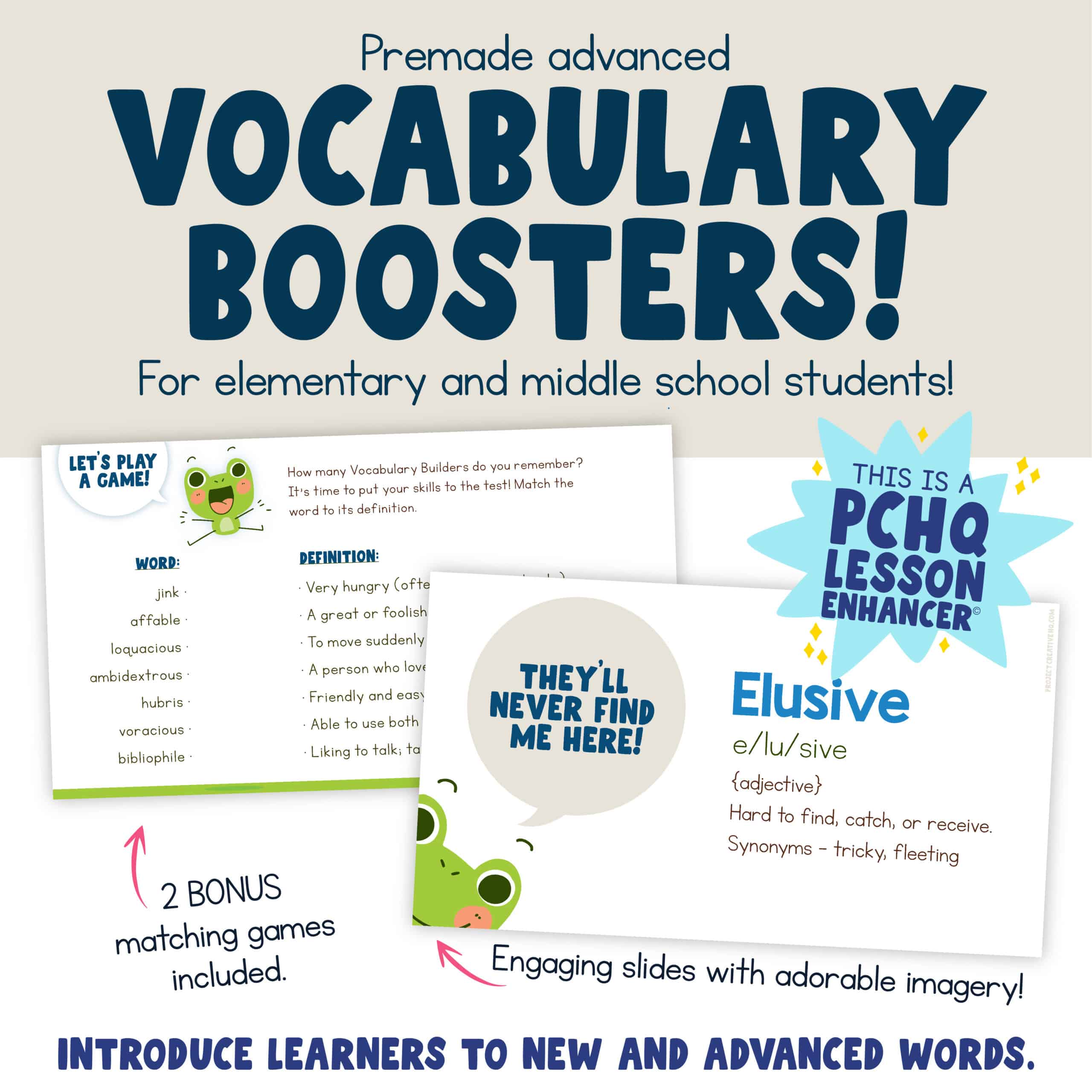
3. Vocabulary Games That Feel Like Play
Vocabulary games are classic summer learning activities because they build language skills without pressure.
Some of the best summer vocabulary activities are simple games:
Rebus Puzzles
Picture-word puzzles that build:
🧩 decoding skills
🧩 logic
🧩 flexible thinking
Word of the Week
Pick one word and challenge the family to use it all week.
It builds:
✅ word awareness
✅ expressive language
✅ playful communication
✅ parts of speech comprehension
✅ love of words
Pictionary & Charades
These classics strengthen:
➡️ descriptive language
➡️ listening skills
➡️ communication strategies
And kids don’t even realize they’re practicing literacy. It’s learning in disguise!
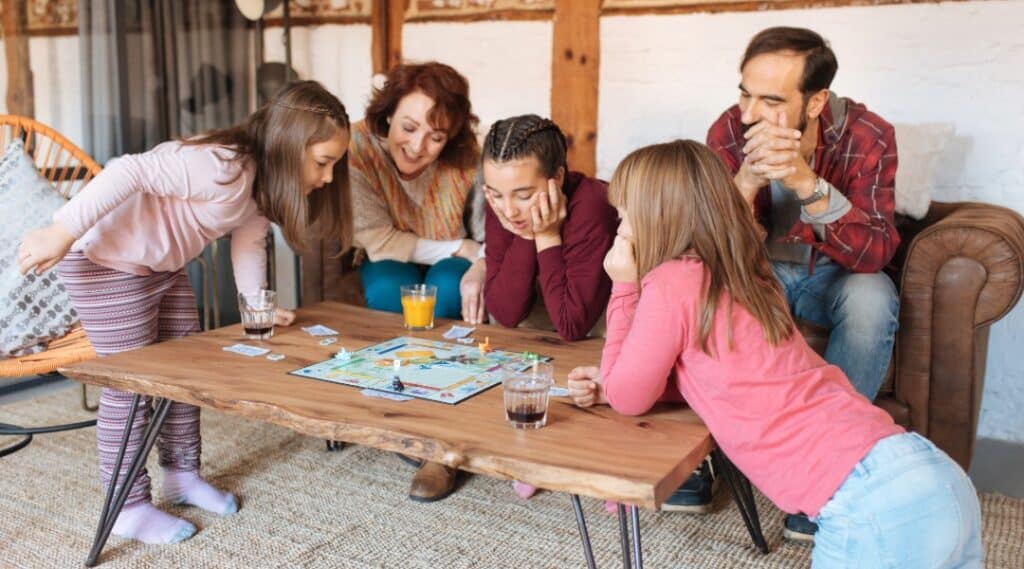
4. Board Games That Sneak in Real Skills
Board games are some of the most powerful summer learning activities for families.
Great summer learning board games include:
♟️ Boggle
♟️ Scattergories
♟️ Tapple
♟️ Balderdash
♟️ Monopoly
♟️ Guess Who
♟️ Connect 4
They build:
✅ reading and spelling
✅ strategic thinking
✅ probability
✅ patience
✅ turn-taking
And they create something just as important as academics: connection and conversation.
5. Math Games That Aren’t Worksheets
Math-based summer learning activities help kids maintain number sense without drills.
Try:
Math bingo
Math card games
Dice games
Sudoku for kids
Estimation games (“how many…?”)
Math jokes for kids
Math Riddles
Or… build math into real life:
👨🍳 cooking
🛒 shopping
⚖️ measuring
🏗️ building
💰 budgeting small amounts of money
This keeps math:
✅ meaningful
✅ practical
✅ far more memorable than drills
6. Scavenger Hunts (Inside or Outside)
Scavenger hunts are simple but effective summer learning activities for all ages.
You can create hunts for:
🔡 vocabulary words
🔷 shapes
🟣 colours
🔢 numbers
☘️ nature objects
🍴household items
They support:
🔎 observation
📖 reading
👍 classification
😌 problem-solving
And they work for:
✅ solo play
✅ siblings
✅ groups of friends
✅ parties
Bonus: Engaging scavenger hunts get kids moving while thinking.

7. Hands-On Creative Projects
Creative projects are open-ended summer learning activities that build real-world skills.
Simple project ideas:
🏗️ build a cardboard city
♟️ design a board game
💥create a comic book
📄 write a mini “how-to” guide
🎥 make a stop-motion video
💡invent a product
These projects build:
✅ planning
✅ creativity
✅ perseverance
✅ communication
✅ real-world problem solving
And they often lead to deep learning without a single “lesson.”

8. Conversation-Based Learning (The Most Underrated Tool)
This one is easy to forget, but it’s huge.
Talking with kids about:
📚 books
✈️ trips
♟️ games
🎥 documentaries
🗞️ current events
❓“what if” questions
Builds:
✅ critical thinking
✅ reasoning
✅ verbal expression
✅ confidence sharing ideas
✅ empathy
✅ listening skills
Sometimes the most powerful summer learning activity is just asking better questions.

How to Use This Without Overwhelm
You don’t need to do all of this.
Pick:
➡️ 2–3 favorite activities
➡️ repeat them weekly
➡️ rotate when things feel stale
That’s it.
Consistency matters more than variety.
The Wrap-Up: Summer Learning Activities
Summer learning doesn’t need rigid plans, long lessons, or expensive programs to be effective. The best summer learning activities feel playful, invite curiosity, and happen naturally as part of everyday life, keeping kids engaged without pressure.
When learning feels light and enjoyable, children stay open to it—and that’s exactly what you want heading into a new school year: not just academic skills, but confidence, curiosity, and momentum.
📌 Pin now, thank yourself later