


The Montessori 5 Great Lessons (With Real Classroom Examples)
The Montessori 5 great lessons are often described as the heart of Montessori elementary, but what’s rarely talked about is what happens after the story ends.
As a Montessori upper elementary teacher, I’ve always loved the moment right after a Great Lesson. The room is quiet, hands start to go up, and the questions begin:
“Wait… how did the dinosaurs actually go extinct?”
“How do we know the Earth is billions of years old?”
“What was the first number ever?”
That’s the moment you know the Montessori 5 great lessons have done their job.

Because the purpose of these lessons isn’t to deliver information, it’s to awaken curiosity and set children on a path of independent exploration.
Here’s how each of the Montessori 5 great lessons typically unfolds in a real Montessori elementary classroom.
The Montessori 5 Great Lessons at a Glance
The Montessori 5 great lessons are five impressionistic stories that introduce children to the biggest ideas we can offer:
- The Coming of the Universe
- The Coming of Life
- The Coming of Human Beings
- The Story of Writing
- The Story of Numbers
Each lesson acts as a starting point for research, projects, and deep cross-curricular learning.
1. The Coming of the Universe
Where awe begins
The first of the Montessori 5 great lessons introduces the beginning of everything—the Big Bang, the formation of stars, the cooling of the Earth, and the laws that hold it all together.
It’s dramatic, visual, and intentionally impressionistic.
What students usually wonder:
- How do scientists know what happened so long ago?
- What is space made of?
- Could there be other planets like Earth?
Where the learning often goes:
This lesson almost always leads into:
- astronomy research
- solar system models
- volcano experiments
- rock and mineral studies
- timeline work

Some students get obsessed with black holes. Others build scale models of the planets. I’ve seen entire “space museums” appear in the classroom, created entirely from student interest.
2. The Coming of Life
When time becomes real
The second of the Montessori 5 great lessons tells the story of how life emerged and evolved over enormous stretches of time.
This is often when children truly grasp how small humans are in the story of Earth.
What students usually wonder:
- What came first—plants or animals?
- Why did dinosaurs go extinct?
- Are humans still evolving?
Where the learning often goes:
- fossil research
- evolutionary timelines
- animal classification
- extinction studies
- ecosystems and habitats
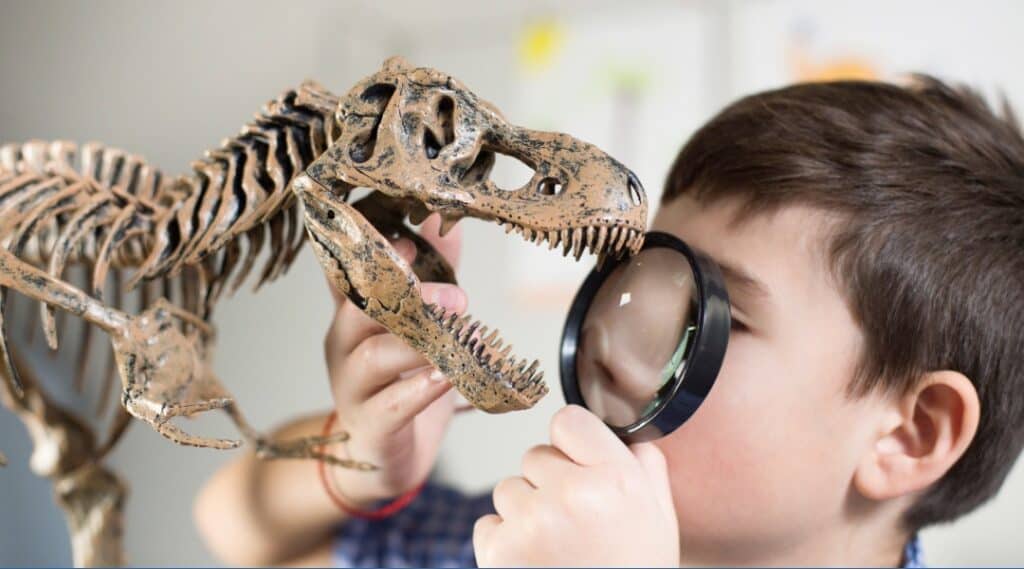
This lesson frequently leads to emotional engagement. Students develop empathy for living things and begin asking ethical questions about conservation, climate, and human responsibility.
3. The Coming of Human Beings
When it gets personal
This is the lesson where students start to see themselves in the story.
The third of the Montessori 5 great lessons explores early humans, survival, tools, civilizations, and what makes humans different—especially the use of the hand and the development of the brain.
What students usually wonder:
- How did humans survive without technology?
- Why do people live so differently around the world?
- What makes us human?
Where the learning often goes:
- early civilizations
- human migration maps
- cultural studies
- inventions and tools
- fundamental needs research

This lesson often sparks some of the deepest discussions in the classroom. Students begin connecting history to modern life and asking big questions about leadership, fairness, and purpose.
4. The Story of Writing
How ideas travel
The fourth of the Montessori 5 great lessons tells the story of how humans learned to communicate—through symbols, pictures, alphabets, and written language.
It’s a powerful bridge between history and literacy.
What students usually wonder:
- Why do different languages exist?
- How did alphabets form?
- What will writing look like in the future?
Where the learning often goes:
- hieroglyphics
- invented languages
- secret codes
- bookmaking
- storytelling projects

Students suddenly see language as something humans created, not just something they’re required to use—and that shift alone boosts motivation to write.
5. The Story of Numbers
Why math exists at all
The final of the Montessori 5 great lessons explores how humans developed number systems to count, measure, trade, and understand the world.
It reframes math as a human invention, not a list of rules.
What students usually wonder:
- Who invented numbers?
- Why is base ten used?
- How did people calculate without calculators?
Where the learning often goes:
- world number systems
- Roman numerals
- time zones
- money and economics
- large-number investigations
This lesson often transforms how students feel about math. When they see math as something humans created to solve real problems, it becomes meaningful—and often enjoyable.
Get Montessori ideas delivered to your inbox!
Our newsletter includes practical resources and free printables for elementary classrooms.
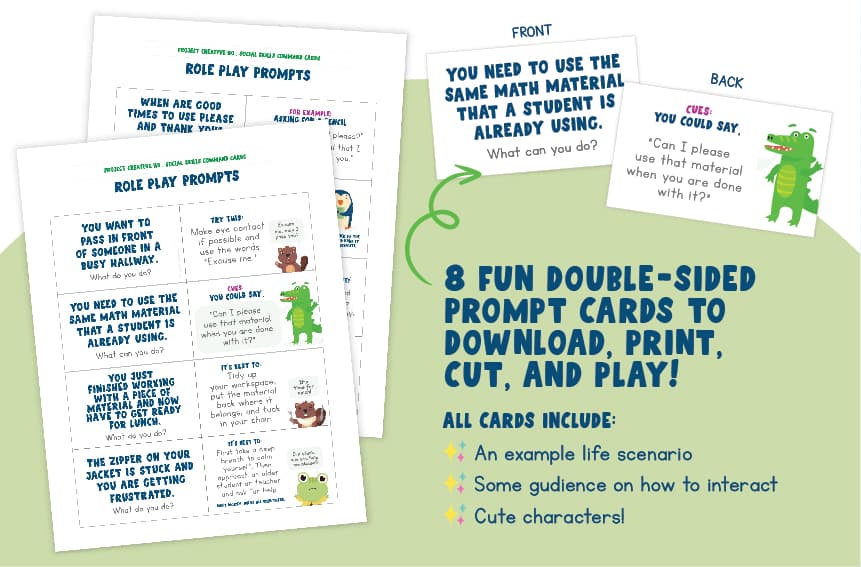
📥 Get Grace & Courtesy Command Cards — FREE
What All Montessori 5 Great Lessons Have in Common
Even though each story is different, all Montessori 5 great lessons share a few powerful qualities:
They create intrinsic motivation
Students don’t need to be told to work. They want to.
They integrate every subject
Science blends into geography. History blends into math. Language supports everything.
They encourage independent research
Instead of asking, “What do I have to do?” students ask, “Can I learn more about this?”
This is cosmic education in action.

The Real Magic Happens After the Lesson
The Montessori 5 great lessons are not meant to be taught as isolated units.
They are:
- invitations to explore
- foundations for long-term projects
- starting points for self-directed learning
The story itself might take 30 minutes.
The learning that follows can last weeks.
And that’s the beauty of it.
When children are trusted with big ideas, they rise to meet them—with curiosity, imagination, and a genuine love of learning.
Which, in my opinion, is exactly what education should feel like.
📌 Bookmark this one—your future self will thank you.
💡 More Montessori Elementary Reads:
What Are the Montessori Great Lessons?
The Montessori Great Lessons Resources Every Teacher Should Know About
These Montessori Books Will Change How You See Learning
11 Myths About the Montessori Elementary Classroom
