


The Unexpected Teachable Moment That Stopped My Lesson
Have you ever planned a lesson perfectly—only to have an unexpected teachable moment steal the spotlight?
As a Montessori elementary teacher, I learned that some of the most powerful learning moments aren’t on the lesson plan at all. They appear quietly, often without warning, and invite us to pause, pay attention, and follow the children.
This is the story of one teachable moment I never planned—but still think about years later.

What a Teachable Moment Really Means
A teachable moment is an unplanned opportunity where learning becomes immediate, relevant, and meaningful. It often begins with a simple question or observation and grows into something deeper—something that connects knowledge, curiosity, and experience.
In Montessori classrooms, teachable moments are especially powerful. Children in the second plane of development (ages 6–12) are eager to make sense of the world, form connections, and apply what they know. When we allow learning to unfold naturally in response to their curiosity, engagement deepens—and understanding sticks.

And the truth is, teachable moments are everywhere.
Sometimes, they even appear before the lesson has officially begun.
A Real Teachable Moment From My Classroom
My upper elementary Montessori students always loved seeing the Google Doodle on the homepage of our classroom computers. Those ever-changing images often sparked conversation—and, more than once, led to unexpected learning.
One cold winter morning in January of 2016, I had planned a geometry lesson for my fourth-grade students. The plan included a short, kid-friendly YouTube song to introduce four-sided shapes—simple, structured, and ready to go.
As I powered up the computer in front of a small group of five curious nine-year-olds, we waited for the screen to load. When Google appeared, we were greeted by a striking Google Doodle celebrating the 127th birthday of Sophie Taeuber-Arp, a Swiss artist known for her geometric abstract work.
 |
It felt like one of those moments you don’t plan for—but instantly recognize.
Questions started flying before the lesson even began:
“What is that?”
“Who is she?”
“Why does it look blurry?”
And just like that, the planned geometry lesson was put on pause.
Following the Curiosity
We took a few minutes to read about Sophie Taeuber-Arp. The students learned she was born in 1889 and worked across many art forms—painting, sculpture, textiles, and even puppetry.
The Montessori teacher in me immediately saw the connection.
Our geometry lesson was focused on quadrilaterals, and her artwork was filled with them. Instead of redirecting students back to the original lesson plan, I leaned hard into the moment. We looked up more of her work, printed a few pieces, and began observing.
Students identified trapezoids, parallelograms, rectangles, and squares within her art. They measured perimeters. They compared shapes. Geometry suddenly felt alive, embedded in something real and intriguing.
That teachable moment transformed the lesson.
What Happened Next Was the Best Part
What made this moment truly unforgettable wasn’t just the learning that happened during class—it was what happened afterward.
Without being asked, some students began creating their own Google Doodles. This wasn’t an assignment. There were no instructions, no rubric, no expectations.
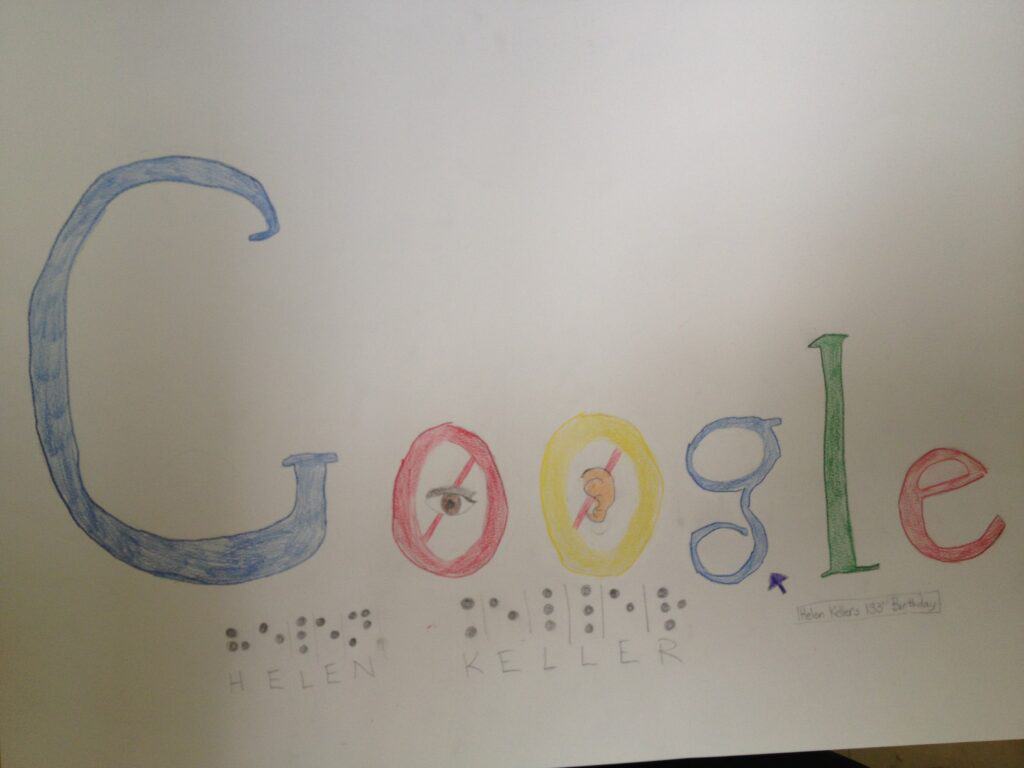
They chose people they felt deserved recognition, researched their lives, sketched designs, and created thoughtful posters. They gathered information, planned presentations, and brought their ideas to life—all sparked by a moment of curiosity that we chose to follow.
That’s the magic of a true teachable moment.
Want a Ready-to-Use Social Skills Activity You Can Try Tomorrow?
Our Grace and Courtesy Command Cards give you instant role-play prompts you can use during:
✅ morning meetings
✅ peace circles
✅ SEL blocks
✅ small group support
They’re simple, printable, and grounded in real classroom experience.
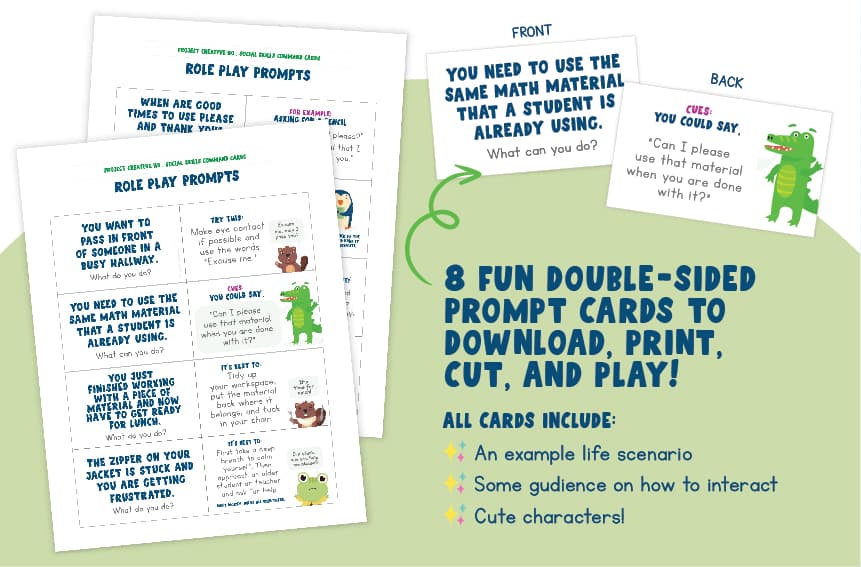
📥 Get the Grace and Courtesy Command Cards
(free with newsletter sign-up)
Teachable Moment vs. Just a Question
Not every question leads to a teachable moment, and that’s okay. A simple question might have a straightforward answer and move learning along.
A teachable moment, however, invites exploration.

It opens a door rather than closing one. It encourages discussion, investigation, and connection. Like our unexpected detour through Sophie Taeuber-Arp’s art, these moments extend learning beyond the original topic and deepen understanding in meaningful ways.
Recognizing the difference helps educators and parents know when to pause, and when to lean in.
A Teachable Moment Just for You!
Interestingly, Google has also honored Dr. Maria Montessori with a special doodle. On August 31, 2012, Google marked her birthday with an illustration celebrating her groundbreaking work in education.
The doodle cleverly incorporated familiar Montessori materials—such as the movable alphabet and coloured bead bars—to spell out the word Google, paying tribute to her lasting impact on how children learn.
It’s a powerful reminder that teachable moments aren’t limited to classrooms. They show up in everyday places—sometimes on a screen, sometimes in conversation—waiting to be noticed and explored.
The Wrap-Up: Explore That Teachable Moment
This experience is a reminder that learning doesn’t always follow the plan. A teachable moment doesn’t derail learning—it enriches it.
When we pause, listen, and follow children’s interests, we give them permission to think deeply, explore freely, and take ownership of their learning.
As educators and parents, we don’t need to chase a teachable moment. They appear naturally when we stay present and open to possibility. Sometimes, all it takes is the willingness to let go of the plan—and trust the moment.
📌 Pin this post and pass it on.

💡 More Montessori Elementary Reads:
What Are the Montessori Great Lessons?
The Montessori Great Lessons Resources Every Teacher Should Know About
These Montessori Books Will Change How You See Learning
11 Myths About the Montessori Elementary Classroom
