


The Montessori Great Lessons Resources Every Teacher Should Know About
If you’re preparing to teach the Montessori great lessons, one thing becomes clear very quickly: the stories themselves are just the beginning. That’s why having the right Montessori great lessons resources matters so much.
To truly support cosmic education, students need access to rich, meaningful materials that allow them to explore, research, and follow their curiosity long after the initial presentation.

This collection of Montessori great lessons resources brings together some of the most useful books and materials I’ve used over the years to support each of the five great stories in a real Montessori elementary classroom.
Whether you’re brand new to Montessori or refining your existing curriculum, these resources will give your students somewhere powerful to go next.
Core Resources for All Montessori Great Lessons
Before diving into lesson-specific materials, it helps to have a few foundational resources that support cosmic education as a whole.
Miss Barbara’s Great Lessons
This is a classic Montessori reference with outlines for all five great stories, follow-up work ideas, and presentation support.
Children of the Universe by Michael Duffy
An essential read for understanding the philosophy behind cosmic education and how the Montessori great lessons fit into the bigger picture, Children of the Universe belongs on your bookshelf.
Timelines of Everything (DK)
A visually rich reference book that students can browse independently, connecting historical events across time.
These form the backbone of many Montessori great lessons resources collections.

Resources for Lesson 1: The Coming of the Universe
These Montessori great lessons resources support research into space, Earth, and the origins of the universe.
Born with a Bang by Jennifer Morgan
A scientifically accurate story of the universe’s beginnings.
Earth Story by Simon Lamb
A beautifully illustrated cosmic narrative for younger readers.
Looking Down by Steve Jenkins
A wordless zoom-in perspective book that builds spatial awareness and scale.
Great for:
🪐 solar system projects
🌋 rock and mineral studies
💫 astronomy research
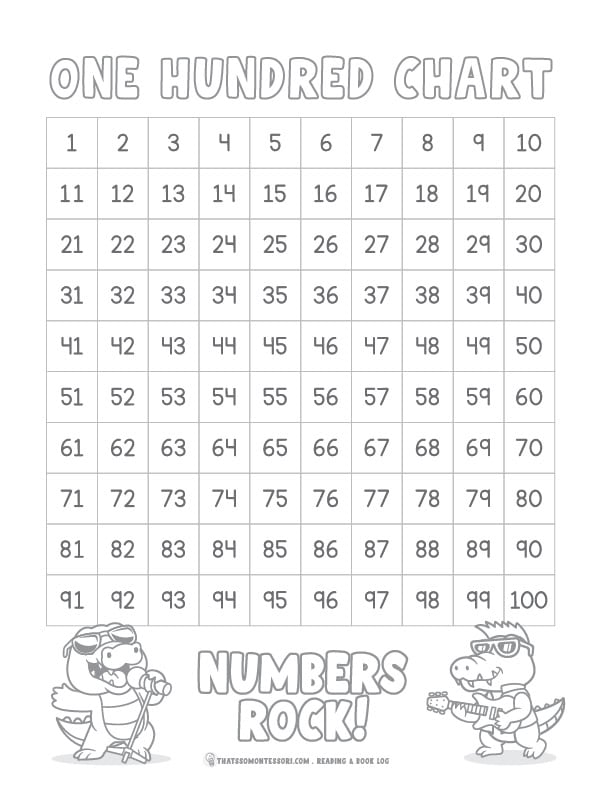
Free Classroom Resource: 100 Chart
Teaching the Story of Numbers? Grab our free One Hundred Chart to help students explore patterns, place value, and number sense.
Want more ideas like this? When you sign up for our emails, you’ll get Montessori-inspired activities and real classroom insights—no spam, just helpful goodness.
Resources for Lesson 2: The Coming of Life
These resources help students explore evolution, fossils, and life on Earth.
From Lava to Life by Jennifer Morgan
Visual and accessible evolution overview.
Fossils Tell of Long Ago by Aliki
Clear introduction to fossil formation.
The Story of Life: Evolution by Katie Scott
A strong companion to the Timeline of Life.
Great for:
🕰️ evolutionary timelines
🦁 animal classification
🐘 extinction studies

Resources for Lesson 3: The Coming of Human Beings
These Montessori great lessons resources focus on early humans, civilizations, and cultural development.
Mammals Who Morph by Jennifer Morgan
Human evolution explained simply.
The Stick and Stone Age by Jacqui Bailey
A humorous take on early history.
A City Through Time by Philip Steele
Detailed visual exploration of civilizations.
Great for:
🗺️ migration maps
🔍 cultural research
⛏️ inventions and tools

Resources for Lesson 4: The Story of Writing
These resources support literacy, communication, and language history.
Ox, House, Stick by Don Robb
The evolution of the alphabet.
The Story of Writing by Carol Donoughue
History of written communication.
The Word Collector by Peter Reynolds
A picture book celebrating vocabulary.
Great for:
🔐 code systems
🔡 invented alphabets
📚 bookmaking projects
💡 TEACHER TIP: Spark curiosity with writing artifacts—think quills, typewriters, or even homemade “papyrus.” Hands-on artifacts make the history of writing feel real.
Resources for Lesson 5: The Story of Numbers
These Montessori great lessons resources support number systems, math history, and real-world math.
A Quick History of Math by Clive Gifford
Entertaining and accessible.
Fun With Roman Numerals by David Adler
Simple and practical.
Counting on Katherine by Helaine Becker
Inspiring real-world math biography.
What’s the Point of Math? (DK)
Everyday applications of math.
Great for:
🔢 world number systems
🕟 time zones
💰 money and economics
💡 Boost math skills with a card game!
This is learning in disguise—one of the easiest ways to use games in the classroom to build fluency, problem-solving, and student engagement.
Looking for ideas? Start here:
13 Epic Math Card Games That Make Learning Irresistible
Elevate Elementary Math Skills with This Exciting Math Card Game
How to Use These Montessori Great Lessons Resources
The most important thing to remember: These resources are not meant to be assigned as a checklist.
They’re meant to:
✅ sit on open shelves
✅ invite browsing
✅ spark independent research
✅ support self-chosen projects
In Montessori elementary, the role of resources is not to direct learning, but to respond to it.
When a child asks a question, the resource becomes the bridge between curiosity and understanding.

The Wrap-Up: Montessori Great Lessons Resources
The Montessori great lessons create wonder.
Resources sustain it.
A thoughtfully curated collection of Montessori great lessons resources allows students to:
💡 follow real interests
💡 make interdisciplinary connections
💡 experience learning as something meaningful, not manufactured.
And that’s what cosmic education is really about.
Not covering content, but helping children discover their place in a vast, fascinating world.
📌 Pin this post for future reference!
💡 More Montessori Elementary Reads:
What Are the Montessori Great Lessons?
These Montessori Books Will Change How You See Learning
Montessori vs Traditional School: What’s the Real Difference?
11 Myths About the Montessori Elementary Classroom
