


Summer Brain Drain Is Real — Here’s How to Actually Prevent It
Summer brain drain is real—even when summer is supposed to feel like a break. Slower mornings. Longer days. Less rushing.
But if you’ve ever picked your child up from school in September and thought, “Wait… where did all that confidence go?” you’re not imagining it.
Kids can lose momentum in reading, writing, and especially math during long school breaks, and it can make the back-to-school transition harder than it needs to be.
Here’s the good news: preventing summer brain drain doesn’t require worksheets, strict schedules, or turning your home into a classroom.
As a former Montessori elementary teacher (and a stepmom), I’ve seen this again and again: Kids don’t stop learning in summer, they just stop learning in the same way.
So the goal isn’t “keep school going.”
The goal is keep their brains active through real life, play, and curiosity… while still letting summer feel like summer.
Below are 9 realistic, low-stress ways to prevent summer brain drain in elementary-aged kids, without ruining the vibe.
What Is Summer Brain Drain?
Summer brain drain (often called “summer slide”) is the learning loss that can happen when kids go a long stretch without practicing key skills.
It doesn’t mean your child forgot everything. It usually shows up more like:
✖️ math facts feeling slower
📚 reading stamina dropping
📝 writing feeling harder to start
😕 confidence taking a hit
And because teachers often spend the first few weeks reviewing, summer brain drain can also affect the whole class’s momentum.
But again, this is not a call to panic.
It’s a call to add tiny, doable learning moments into your summer.

How to Prevent Summer Brain Drain Without Making Summer Miserable
Here are my go-to ideas that work for families and make sense for teachers to recommend.
1. Keep Reading Easy and Enjoyable
If you do one thing to fight summer brain drain, let it be this: keep reading in the mix.
Not “read this because it’s good for you.”
More like: reading is part of daily life, like snacks and sunscreen.
Try:
✅ library trips where your child chooses anything
✅ graphic novels, comics, joke books, trivia books, cookbooks
✅ reading aloud together (yes, even for older kids)
✅ audiobooks in the car (still language exposure!)
💡 Teacher Tip:
If your child says they “hate reading,” they usually don’t hate reading, they hate reading books they didn’t choose.

☀️ Click for summer reading activities for elementary-aged kids!
2. Use Games as Your Secret Weapon
Games are one of the easiest ways to prevent summer brain drain because they naturally build:
💡problem-solving
💡number sense
💡reading comprehension
💡memory
💡flexible thinking
And kids will play longer when it feels like fun, not practice.

Great options:
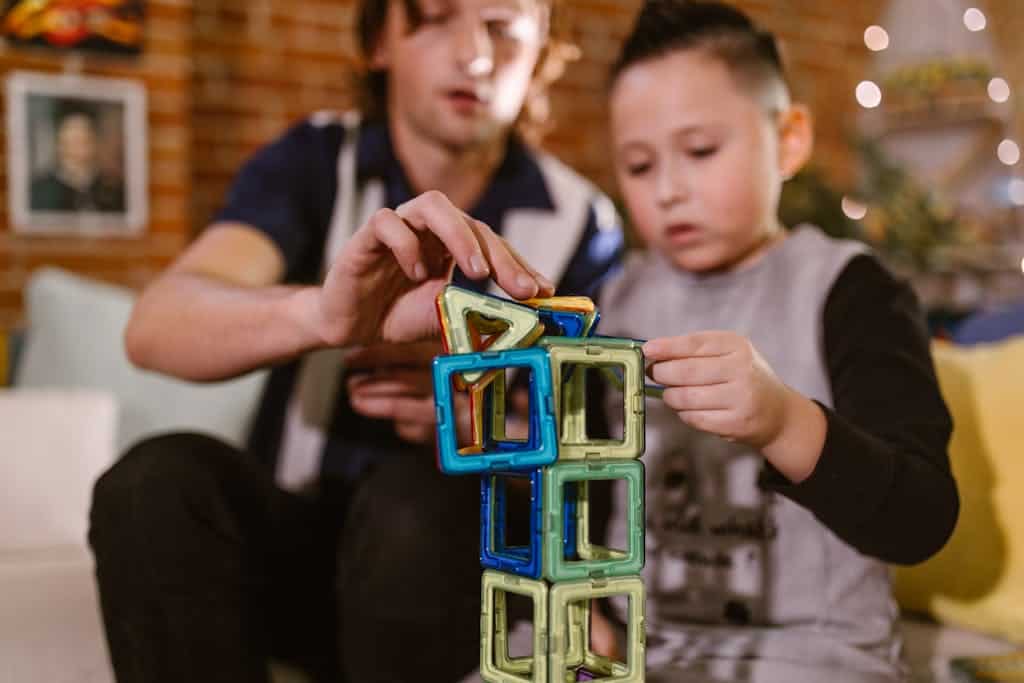
♟️board games
♣️ card games
🎲 dice games
🔡 word games
💡Teacher Tip:
Keep one small “game shelf” available and rotate options weekly. Novelty matters.
💡 Did you know games are highly beneficial for elementary learning?
Click and read more about it!
🧮 Want more math games?
Click here for awesome math board games!
3. Make Math Show Up in Real Life
In my experience, summer brain drain hits math hardest—not because kids “forget,” but because math skills fade when they’re not used.
So instead of worksheets, use real-life math:
Try:
👩🍳 cooking (fractions, measuring, timing)
🛒 grocery store estimating (“about how much will this cost?”)
💰 budgeting a small allowance
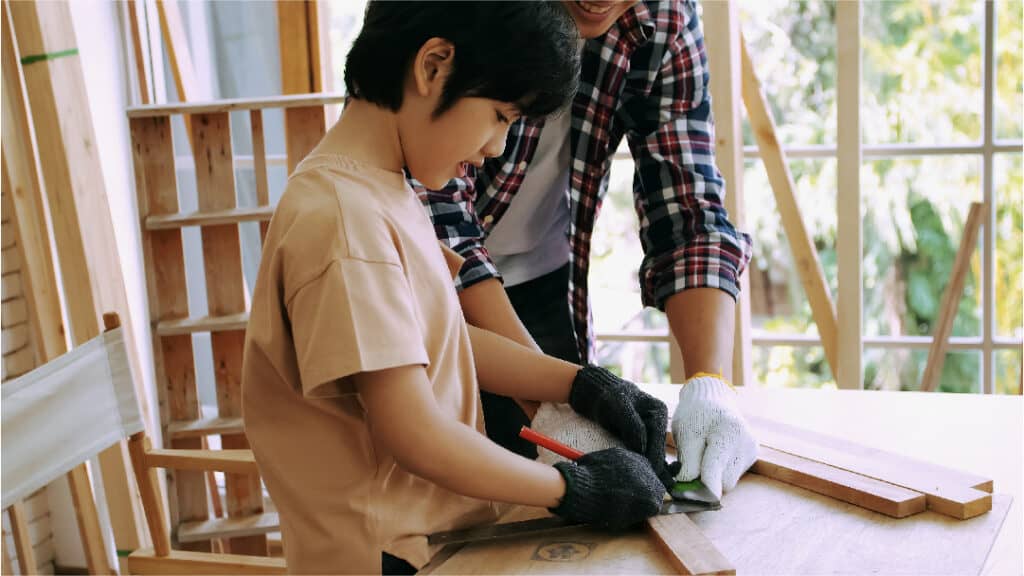
🏗️ building projects (measuring, planning, spatial reasoning)
🗺️ map reading on day trips (“how far is it?”)
💡Teacher Tip:
Don’t correct every mistake. Ask questions instead:
“How did you figure that out?” or “What would happen if…?”
4. Create One Simple Routine (Not a Schedule)
You don’t need a rigid daily plan to prevent summer brain drain.
What helps most is a predictable rhythm—a few repeated anchors.
Example:
⏱️ 20 minutes reading
⏱️ 10 minutes math-in-real-life
⏱️ one “project moment” a few times a week
If your child is older, let them help create it. Buy-in changes everything.
💡Teacher Tip:
Keep it short. Consistency beats intensity every time.

5. Give Kids a Weekly “Theme” to Follow Their Curiosity
This is one of my favourite ways to keep learning alive while still feeling like summer.
Pick a theme for each day (or even each week). For example:
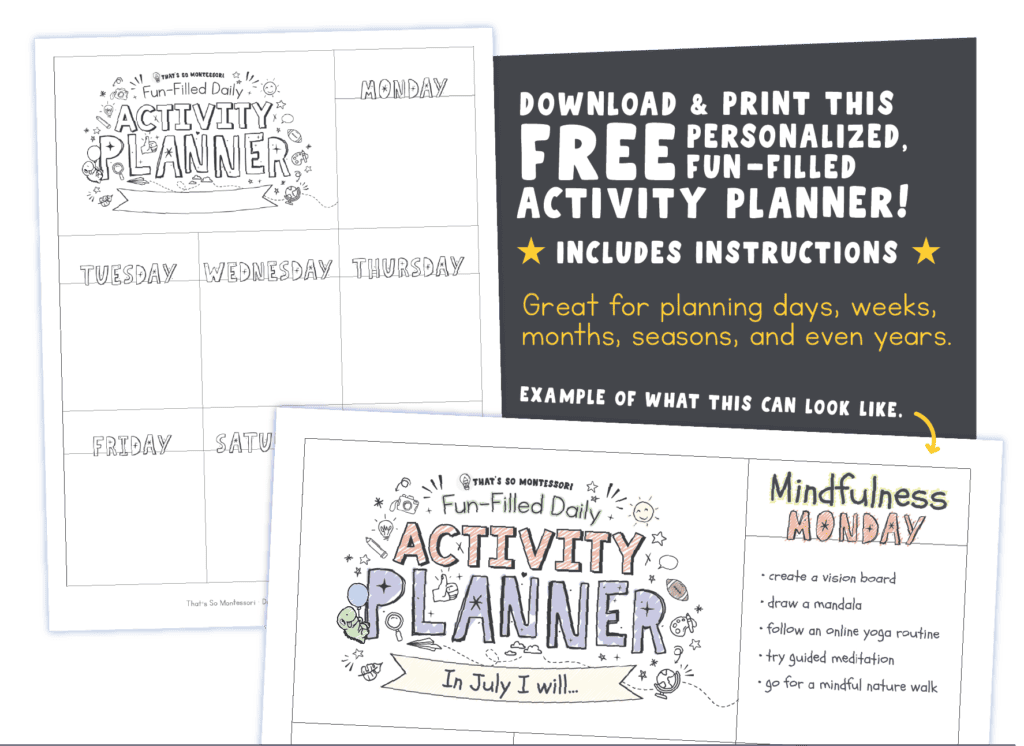
- Make Something Monday (art, building, cooking)
- Try Something New Tuesday (new skill, new food, new place)
- Where in the World Wednesday (maps, cultures, geography)
- Thoughtful Thursday (journaling, kindness, books)
- Fitness Fun Friday (movement, hikes, games)
This naturally prevents summer brain drain because it keeps kids thinking, creating, and exploring.
GET THIS WEEKLY ACTIVITY PLANNER FREE!
Subscribe to our newsletter and receive our Customizable Daily Activity Planner printable for free in your inbox.
6. Plan “Going Out” Experiences
In Montessori, “going out” means kids explore the real world with purpose—not just wandering around, but doing something connected to their curiosity.
And you don’t need a Montessori classroom to do it.
Try:
💡 museum visits
💡 nature centres
💡 a farm or market
💡 a behind-the-scenes tour of something local
💡 library events
💡 community festivals

Before you go, ask:
“What do you want to notice?”
“What questions do you have?”
After, ask:
“What surprised you?”
“What do you want to learn next?”
That’s how you quietly beat summer brain drain—through meaningful experiences.
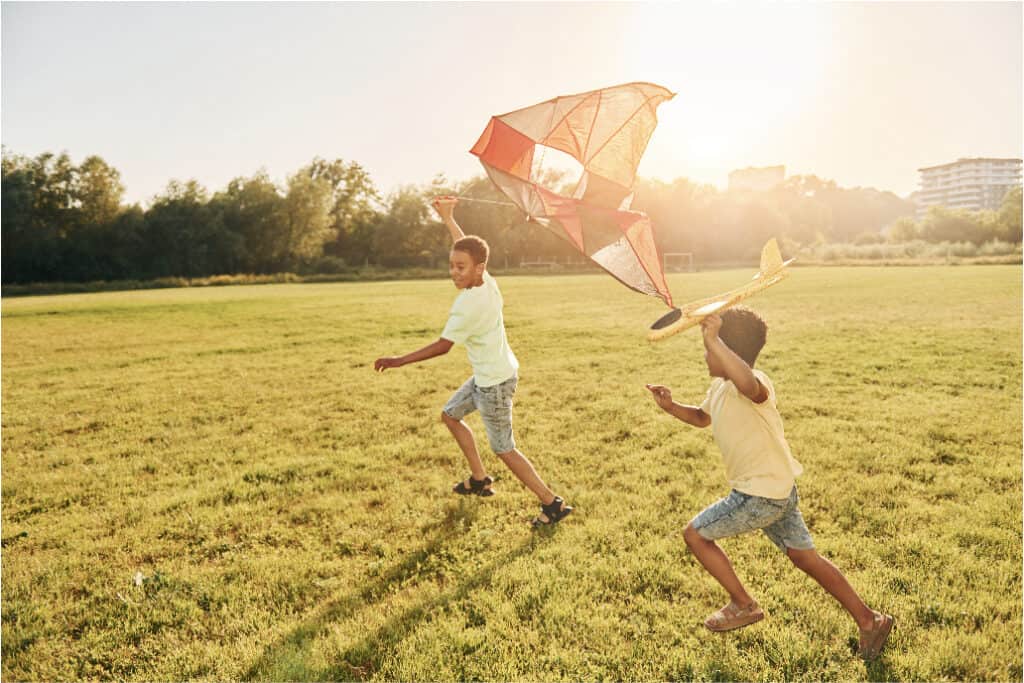
7. Keep Their Bodies Moving (It Helps Their Brains)
This one gets overlooked, but it matters.
Movement supports:
✅ focus
✅ mood
✅ memory
✅ emotional regulation
And those are the exact skills kids need when school starts again.
Easy wins:
🏊♀️ swimming, biking, hiking
😎 obstacle courses
🔎 scavenger hunts
🚶🏼“walk and talk” family walks
⛹🏾♂️ movement games (especially for kids who struggle to sit still)
💡Teacher Tip:
If your child is restless or resistant to learning activities, movement first often changes everything.
8. Use Digital Learning Intentionally (Not as the Default)
Screens can absolutely support learning—but the key is to use them like a tool, not a babysitter.
A few ways digital learning can help prevent summer brain drain:
✅ short math games for fluency
✅ typing practice for writing stamina
✅ coding games for logic
✅ research videos connected to a real-world project
One online platform I genuinely like for this is Outschool, because classes are interest-based and there are live options, not just passive videos. Kids can take everything from creative writing and art to science experiments, debate, coding, or even “weird but wonderful” topics that spark real curiosity.
The “rule” I like: screens that lead to something offline (building, drawing, making, writing, trying)
If a screen time session ends with your child wanting to create something in the real world, you’re using screens well.
📺 Using YouTube Intentionally
Not all screen time is equal. The right channels can support learning and help keep skills fresh over the summer—without it turning into a scroll-fest.
See our favourite picks here: 27 YouTube Channels to Prevent Summer Learning Loss.
9. Play With Words (Vocabulary Games That Don’t Feel Like Work)
Vocabulary is one of the easiest areas to build through play—and it supports reading, writing, and comprehension.
Try:
🧩 rebus puzzles
🔎 word scavenger hunts (“find 5 synonyms for ‘big’ today”)
✍️ Pictionary
🧠 Boggle
🎲 story dice
🔤 “word of the week” challenges
This kind of playful language practice helps protect against summer brain drain without kids even realizing they’re learning.

The Real Goal: Keep Their Confidence Intact
Here’s what I want you to remember: Preventing summer brain drain isn’t about keeping kids “ahead.” It’s about helping them keep their confidence, curiosity, and love of learning intact—so school doesn’t feel like a harsh restart in September.
Start small.
Pick 2–3 ideas from this list.
Make them part of your week.
Let summer still be summer.
That’s how you actually prevent summer brain drain.
Want to Make This Even Easier?
Save this post somewhere you’ll remember it (notes app, Pinterest, bookmarks, a “parent life” folder—whatever works).
Because when July hits and everyone’s tired and the “I’m bored” soundtrack starts playing…
You’ll be glad you have a plan that doesn’t feel like homework.
The Wrap-Up: Avoid the Summer Brain Drain
Summer brain drain is real—but it’s not something to stress over or try to “fix” with more school at home.
What actually works is keeping learning part of everyday life: reading for pleasure, playing games, moving their bodies, exploring new ideas, and following their curiosity.
With just a little intention, you can help prevent summer brain drain while still letting summer feel like a break. And when kids return to school feeling confident, capable, and curious, that’s the biggest win of all.

💡 Have You Read These Blogs Yet?
100th Day of School Activities Teachers Love and Kids Enjoy
How to Use Earth Day Coloring Pages to Get Kids Thinking
45 Pi Day Jokes Guaranteed to Get Students Laughing
19 Powerful Reasons Why Elementary Kids Need Summer Reading Logs
The Best Summer Schedule for Kids (+ Free Activity Planner!)
