

Montessori vs Traditional School: What’s the Real Difference?
As a Montessori teacher, one of the questions I hear most often is, “What’s the difference between Montessori vs traditional school?” Sometimes it’s even followed by, “Is Montessori really better?”
It’s an understandable curiosity. We all want to know what kind of environment will help children thrive, and if a different approach could make learning more joyful and meaningful. After spending over a decade teaching in Montessori classrooms and supporting families transitioning between the two systems, I’ve seen firsthand how different the experience can be.
Let’s look at what truly sets Montessori vs traditional school apart, and how to decide which one might be the best fit for your child.
Montessori vs Traditional School Differences
A Different Kind of Classroom
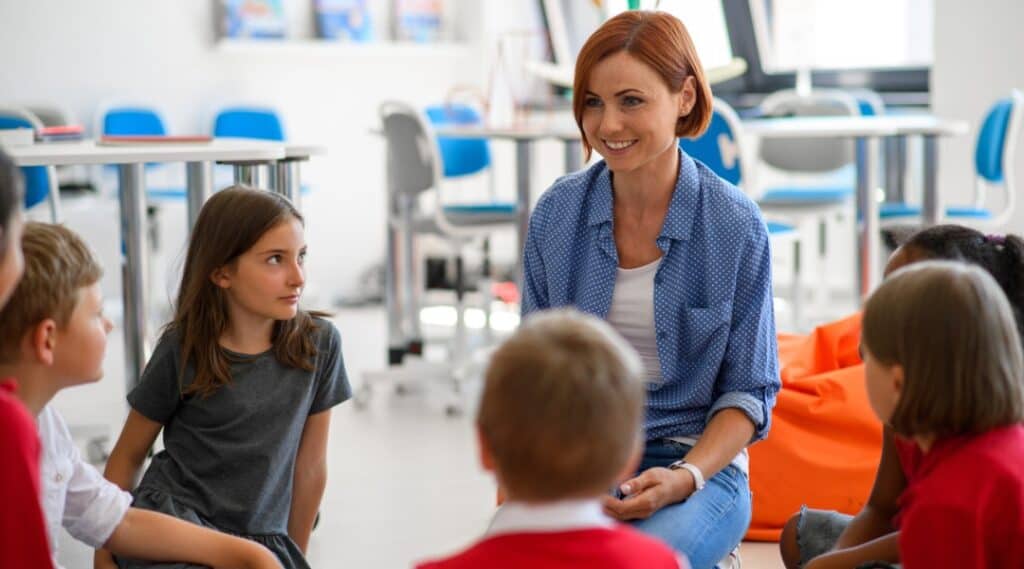
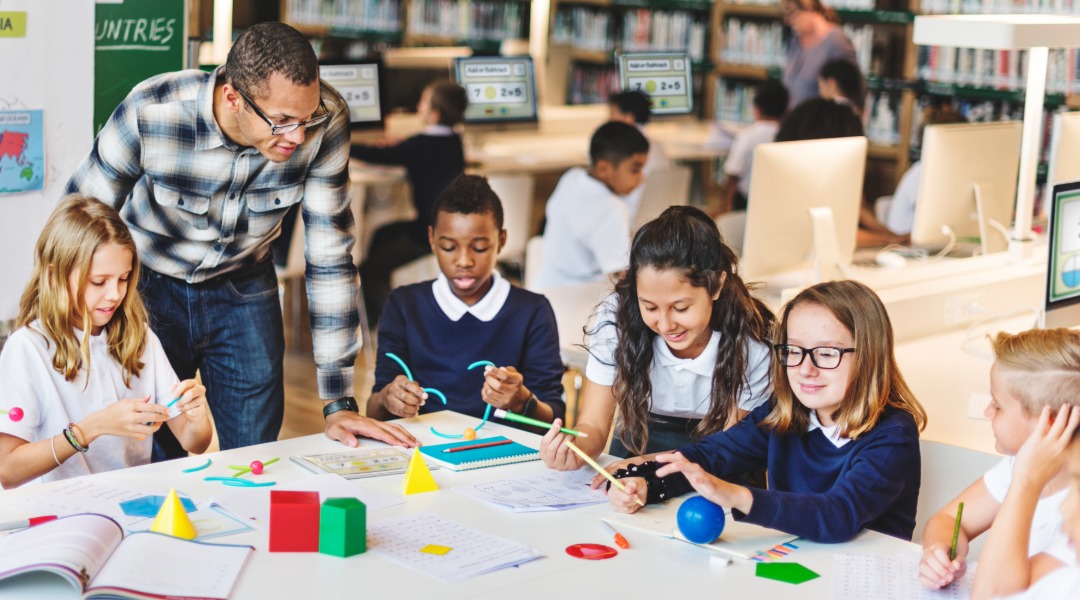
When I first stepped into a Montessori classroom, it felt alive. There was a calm buzz of activity—students working at low tables or on rugs, teachers quietly guiding small group lessons, and shelves lined with beautiful hands-on materials.
It looked nothing like the traditional classrooms I grew up in. There were no rows of desks or daily worksheets to complete in unison. Instead, children were engaged. They were choosing work that interested them, helping one another, and moving with purpose.
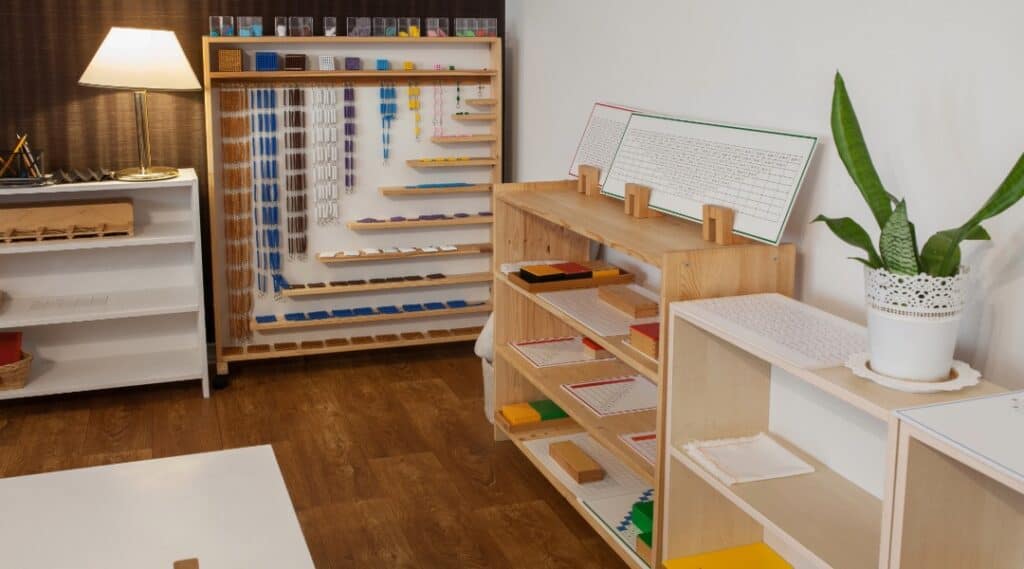
That sense of calm independence is one of the biggest differences between Montessori vs traditional school. Montessori classrooms are designed for children to move, explore, and make choices. Traditional classrooms are typically designed for students to listen, follow directions, and complete the same assignments together.
If you want to get a sense of how I felt after the first time I visited a Montessori elementary environment for just one morning, you should check out this video showcasing a parent’s perspective of Montessori education:
All in all, neither is inherently bad, they just reflect two very different philosophies about how children learn best.
Child-Led Learning vs Teacher-Led Teaching
In Montessori education, learning begins with curiosity. Teachers (called guides) give lessons to small groups or individuals, then step back to let students explore and practice. Children move through the curriculum at their own pace, using materials that make abstract ideas tangible.
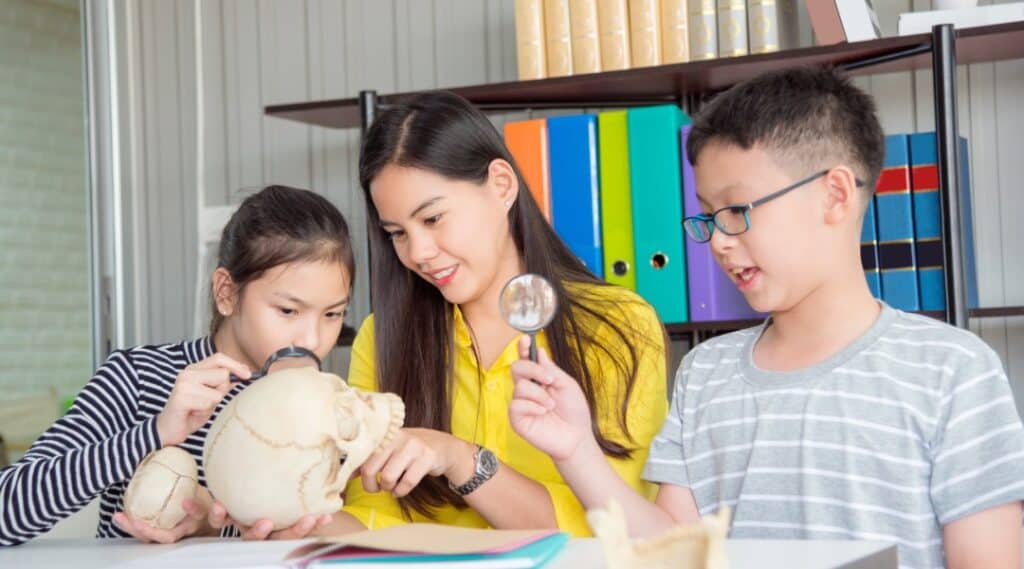
In traditional classrooms, the teacher directs most of the learning. Lessons are presented to the whole group, and everyone is expected to move through the same content together. There’s less room for choice or movement, and learning tends to happen through listening, reading, and repetition.
When I compare the two, I think of it this way:
- In a traditional classroom, the teacher holds the steering wheel.
- In a Montessori classroom, the child learns how to drive—with the teacher riding alongside.
That gradual shift of responsibility is what builds confidence and independence over time.
💡 Discover our collection of Montessori-aligned articles:
These Montessori Books Will Change How You See Learning
11 Myths About the Montessori Elementary Classroom
Montessori-Aligned Books for Elementary
Montessori Lifestyle Made Easy: Engage Your 6-12 Year Olds
Hands-On Learning in Montessori
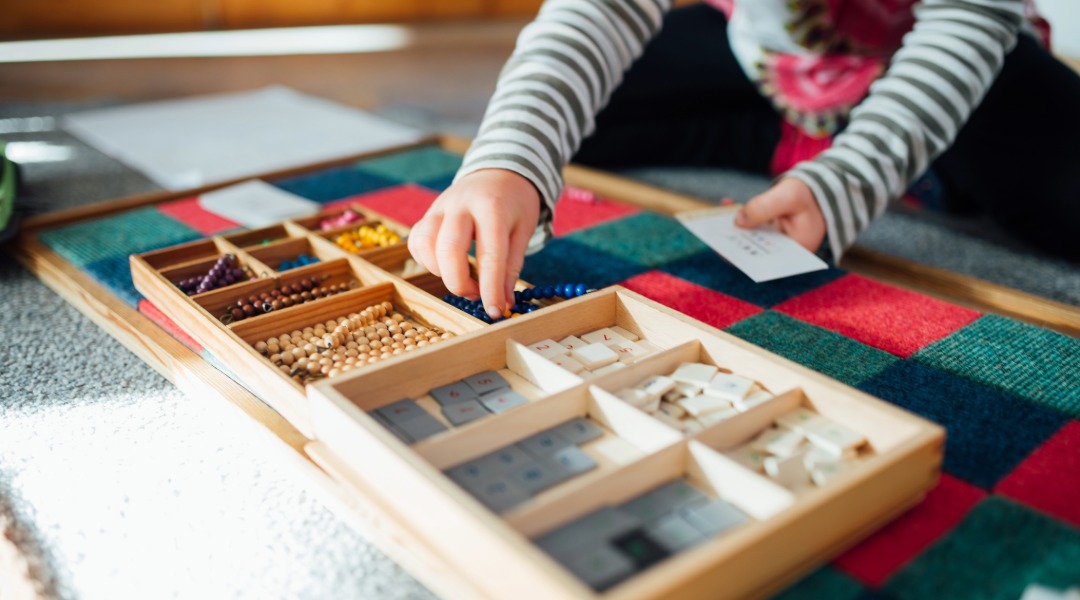
Montessori materials are designed to invite exploration. From the Montessori long division materials for math to grammar symbols that turn language into art, each material isolates one concept so children can see and feel what they’re learning.
If a child makes a mistake, the material itself often reveals it, what we call “control of error.” That means students can correct themselves without waiting for an adult to mark their paper. It’s empowering to watch them realize, “Oh! I see what I did wrong, let me fix it.”
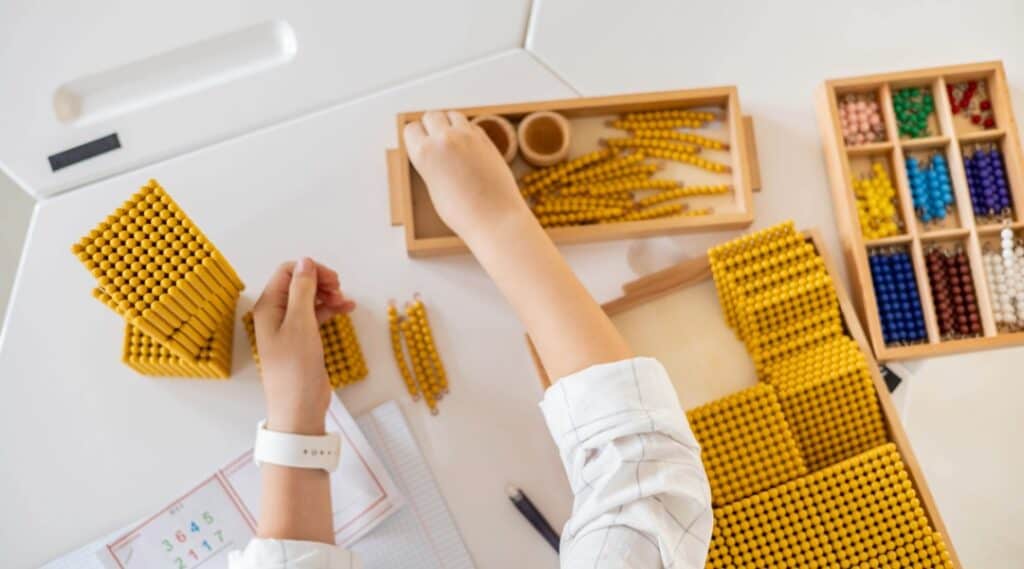
In contrast, traditional schools rely more on textbooks, worksheets, and tests to measure understanding. These tools can be useful, but they often reward memorization over discovery. Montessori materials, on the other hand, nurture problem-solving, persistence, and curiosity—skills that last long after a test is over.
Check out this video by the American Montessori Society that really highlights what a Montessori prepared environment looks like and how it all works. You can really get a sense of the differences between Montessori vs traditional education here:
Multi-Age Classrooms and Mentorship
Another striking difference between Montessori vs traditional school is age grouping.
In traditional education, children are grouped strictly by age, every first grader is six or seven. In Montessori, classes span three years (for example, ages 3-6, 6–9, 9–12). This setup mirrors real life more closely, where people of different ages learn and work together.

Younger students look up to older ones, and older students gain confidence by mentoring younger classmates. I’ve seen shy students blossom into leaders simply because they were given the chance to teach someone else how to use a material.
Keeping the same teacher for three years also builds deep trust and understanding. By the end of a cycle, I know each child’s strengths, struggles, and passions — and they know that I’m their partner in learning, not just their evaluator.
Want a Ready-to-Use Social Skills Activity?
Our Grace and Courtesy Command Cards give you instant role-play prompts you can use during:
✅ morning meetings
✅ peace circles
✅ SEL blocks
✅ small group support
They’re simple, printable, and grounded in real classroom experience.
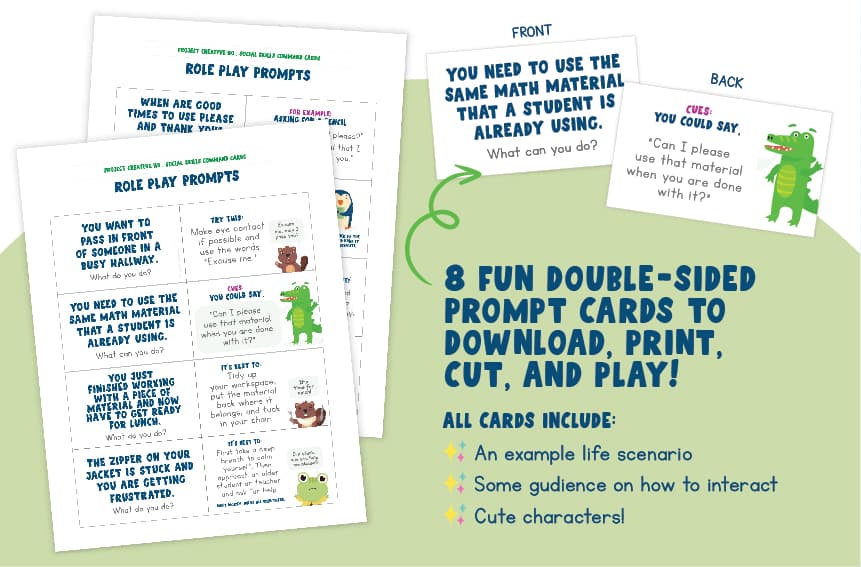
📥 Get the Grace and Courtesy Command Cards
(free with newsletter sign-up)
The Role of the Teacher
In a traditional classroom, the teacher is the main source of information. Lessons are often lecture-style, and success depends on how well students can recall and apply what was taught.
In Montessori, the teacher is a guide—someone who observes, supports, and connects each child with materials or experiences that match their developmental stage.

I spent much of my time in the classroom observing elementary students: noticing what sparked curiosity, what required extra effort, and how a small shift in approach could unlock understanding.
And the best part? When students came to me, excited to share something they discovered on their own. Those moments of authentic, self-driven learning are what make Montessori feel so different from traditional school models.
Freedom with Responsibility
One of Dr. Maria Montessori’s core principles is “freedom within limits.” In a Montessori classroom, children have the freedom to choose their work, but they also learn to balance that freedom with responsibility, respect for the environment, and consideration for others.
That means completing required lessons, caring for classroom materials, and respecting others’ concentration time. Students learn to manage their schedule, plan projects, and make decisions about how to spend their day.
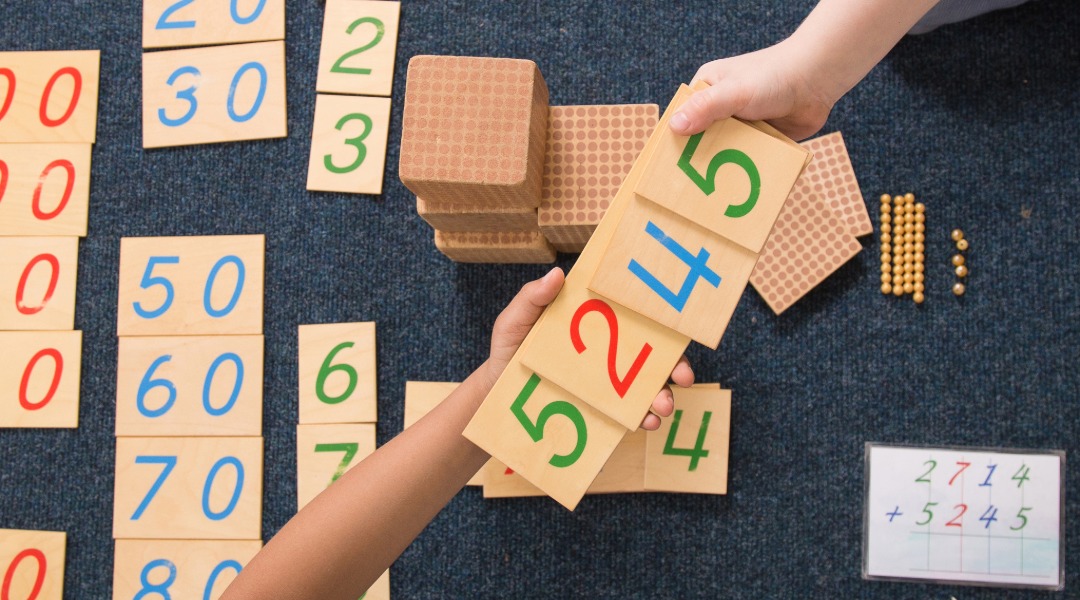
It’s not chaos, it’s self-management in action. By the upper-elementary years, many Montessori students have stronger time-management and organizational skills than adults!
In traditional schools, structure comes from the outside: the teacher sets the schedule, directs transitions, and keeps everyone on task. Montessori gradually transfers that responsibility to the child, which helps them build the executive-functioning skills they’ll need in later life.
The Classroom Environment
Dr. Montessori called the classroom “the prepared environment.” Everything in the room is intentional, from the layout of the shelves to the size of the furniture. Materials are within reach, activities are arranged in sequence, and beauty matters.
This environment encourages independence. Children can set up their workspace, clean up spills, or choose a new activity without asking permission. There’s a natural rhythm to the day, and students learn to take ownership of their space and community.
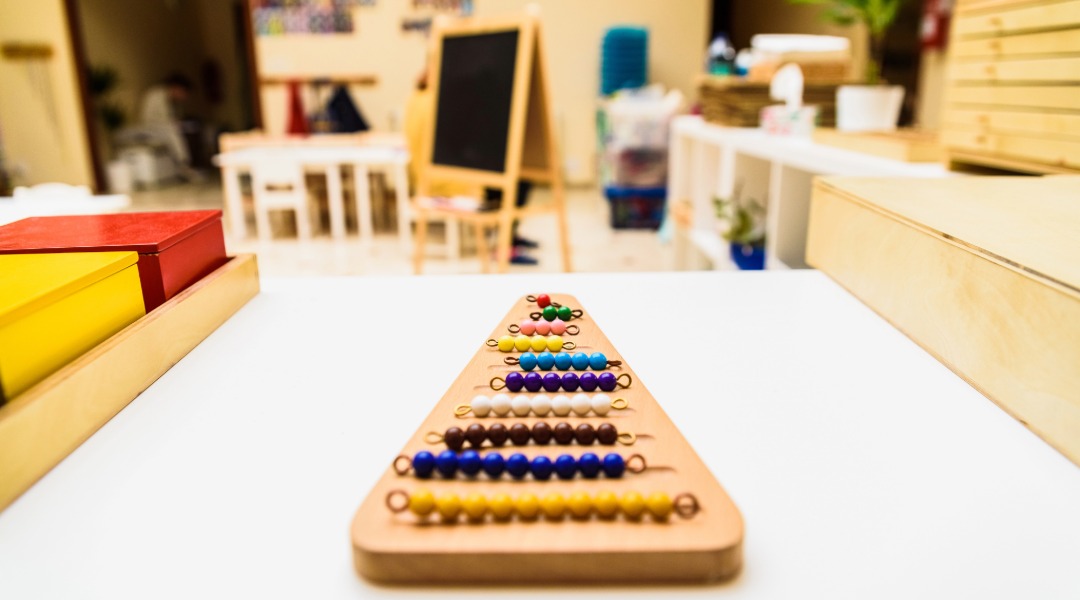
In contrast, traditional classrooms are usually designed for efficiency—desks face the front, and materials are stored by the teacher. While this setup can work for whole-group instruction, it limits opportunities for movement and self-direction.
When you walk into a Montessori classroom, it feels peaceful but purposeful — like a small community where everyone contributes.
Assessment and Feedback
One of the biggest contrasts between Montessori vs traditional school lies in how progress is measured.
Traditional education relies heavily on grades, quizzes, and standardized tests. These can provide data, but they often create anxiety or competition among students.
Montessori assessment is rooted in observation. I watch how students interact with materials, solve problems, and express understanding. Feedback happens in real time—through conversation, self-correction, and reflection.
There are no letter grades, but students know where they stand because they’re deeply involved in their own progress. They learn to evaluate their work based on effort and growth rather than external rewards.
A Day in the Montessori Classroom
In Montessori schools, students work in long, uninterrupted blocks of time— often called the three-hour work cycle. During that time, they can dive deep into their work without being interrupted by bells or subject changes.
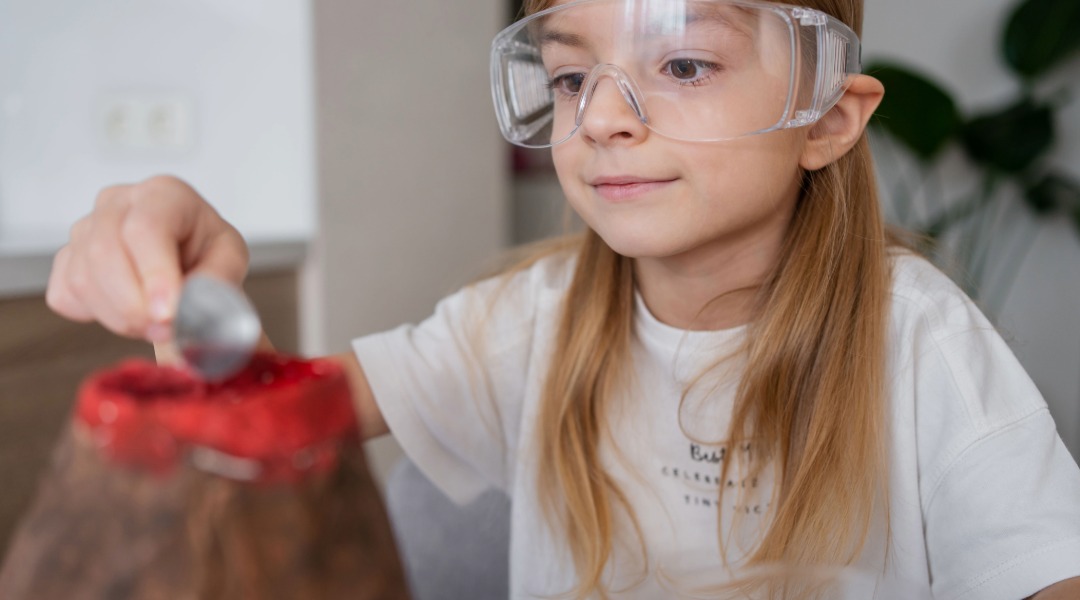
A student might start the morning researching volcanoes, then move to math work with bead chains, and later write a story inspired by their science lesson. There’s a natural flow between subjects, because learning isn’t compartmentalized.
A traditional school day might look like math at 9:00, reading at 10:00, lunch, then science. With two recess breaks and transitions in between, the day becomes a series of stops and starts, leaving little room for deep concentration.
In Montessori, time is treated as a tool, not a constraint.
Social and Emotional Learning
One of my favorite things about Montessori classrooms is how naturally they build empathy and community. Students help one another, resolve conflicts peacefully, and learn to collaborate. Because they work in multi-age groups, they experience being both the learner and the mentor—which strengthens social-emotional skills at every age.
Traditional schools are working hard to integrate SEL (social-emotional learning), but in Montessori, it’s embedded in daily life. Respect, patience, and kindness aren’t separate lessons—they’re part of how the classroom runs.
What About Academics?
People sometimes assume that Montessori is all play and no structure—but that couldn’t be further from the truth. Montessori students cover all the core subjects (math, language, science, history, geography) and often go deeper because they’re genuinely curious.
Instead of memorizing multiplication tables, they see how multiplication works through bead arrays and move naturally from concrete to abstract understanding. Instead of reading a textbook paragraph about ancient civilizations, they might create timelines, maps, and presentations that connect history to modern life.
Because the lessons are self-directed, Montessori students often develop strong problem-solving, research, and writing skills—along with a lasting love of learning.
Choosing What’s Right for Your Child
So, is Montessori better than traditional school? It depends on the child and the environment.
Montessori shines for curious, self-motivated learners who thrive on hands-on exploration and freedom to move. It’s also wonderful for children who benefit from a calm, respectful atmosphere and learn best through doing.
Traditional schools can be a great fit for students who like structure, enjoy group instruction, and prefer clear external guidance. Some children genuinely thrive with predictability and direct teaching.
As a parent or educator, the goal isn’t to pick the “better” system—it’s to find the one that aligns with your child’s needs and your family’s values.

My Takeaway as a Montessori Elementary Teacher
After nearly two decades of experience in a Montessori classroom, here’s what I’ve learned: children are naturally driven to learn. When given the right environment—one that honors their curiosity, independence, and pace—they flourish.
That’s what drew me to Montessori in the first place. It felt like education that made sense—education that respected children as capable, creative, and compassionate humans in progress.
Whether your child attends a Montessori school or a traditional one, what matters most is that they feel seen, supported, and inspired to keep asking questions.
Because when learning feels joyful, everything else falls into place.
📌 Save this Montessori comparison to revisit!
💡 Keep Learning About Montessori:
11 Myths About the Montessori Elementary Classroom That Will Change Your Perspective
Montessori Prepared Environment: The Most Powerful Teacher in the Room
5 Surprising Facts About Upper Elementary Montessori You Need to Know
15 Remarkable Benefits of Montessori Education Revealed by a Teacher
