


Are Montessori Schools Good? A Teacher’s Honest Take—Plus What Former Students Say Now
After more than 15 years teaching upper elementary in a Montessori classroom, I’ve heard this question countless times:
“Are Montessori schools good?”
The short answer? Yes. But the longer answer is much more interesting, and far more personal.
Montessori isn’t just a style of teaching; it’s a way of seeing children as capable, curious, and full of potential. When it works (and I’ve seen it work beautifully), it gives children something deeper than academic success—it gives them confidence, purpose, and joy in learning.
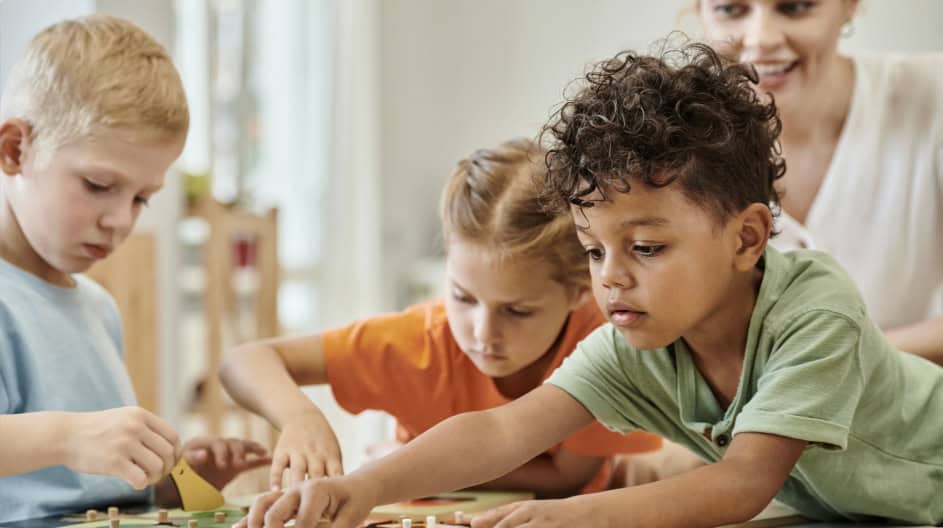
Still, I’ve also seen children for whom Montessori wasn’t the right fit. Some craved more external structure or struggled with the open-ended nature of the environment. After years of guiding students and watching them grow, I’ve learned that asking “Are Montessori schools good?” is really about finding the right match for the right child.
To explore this question more deeply, I reached out to some of my former upper elementary students—now thriving in high school, university, and beyond—to hear their reflections. Their stories reminded me just how powerful a Montessori foundation can be.
Freedom, Responsibility, and the Joy of Learning
In my classroom, freedom and responsibility were always two sides of the same coin. Students learned how to choose their work, plan their time, and follow their curiosity—all within a structure that encouraged independence.
Former student Alexis (Class of 2018) captured this perfectly when reflecting on her transition to a traditional school:
“At a Montessori school, the students are free to move around and work wherever they want in the classroom, whereas at a traditional school, students are made to sit at desks… In a Montessori environment, we were able to choose how much time we wanted to dedicate to each assignment and subject.”
That freedom built a quiet confidence that has clearly stayed with her. Alexis continued:
“There was not really anything that I can think of that the public school students seemed to know that I did not learn from my Montessori education. I was actually very far ahead in most subjects… I had already learned algebra in Grade 6.”
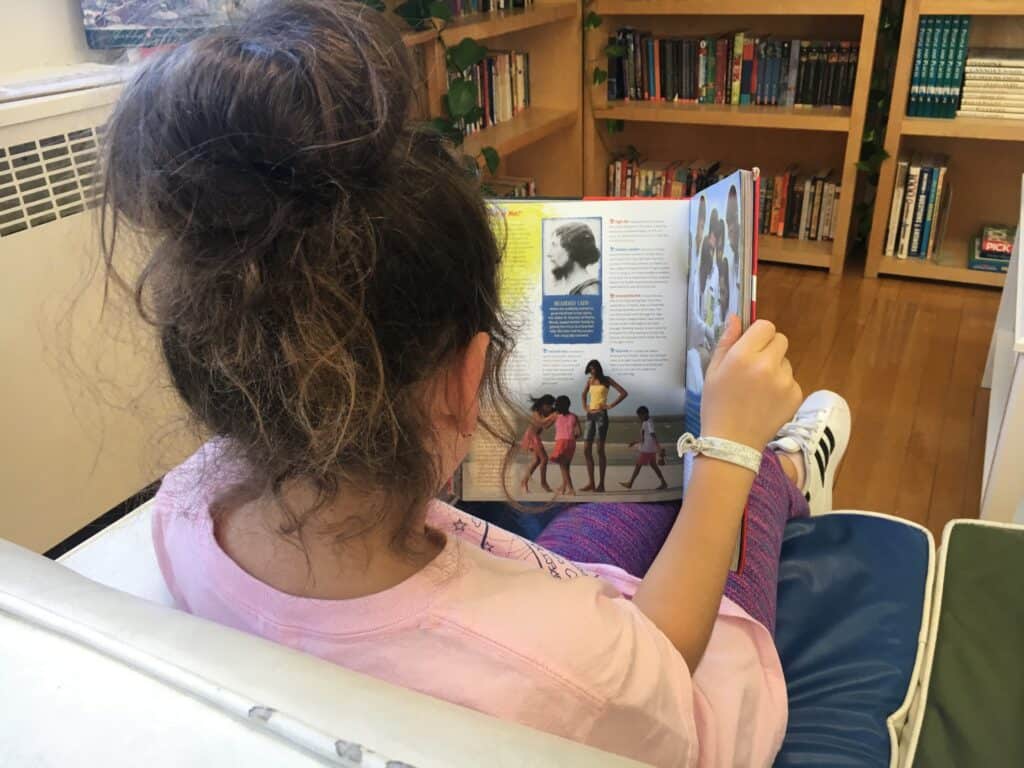
Today, she’s still thriving, currently in second year university and excelling in all that she does. It’s hard not to smile reading her favorite quote, one that reflects the heart of Montessori itself:
“Joy, feeling one’s own value, being appreciated and loved by others, feeling useful and capable of production are all factors of enormous value for the human soul.” Maria Montessori
When people ask me “Are Montessori schools good for academics?” I think of students like Alexis who didn’t just learn what to study, but how to love learning.
Free Social Emotional Learning Activity!
Sign up for our newsletter and get this super engaging resource for free.
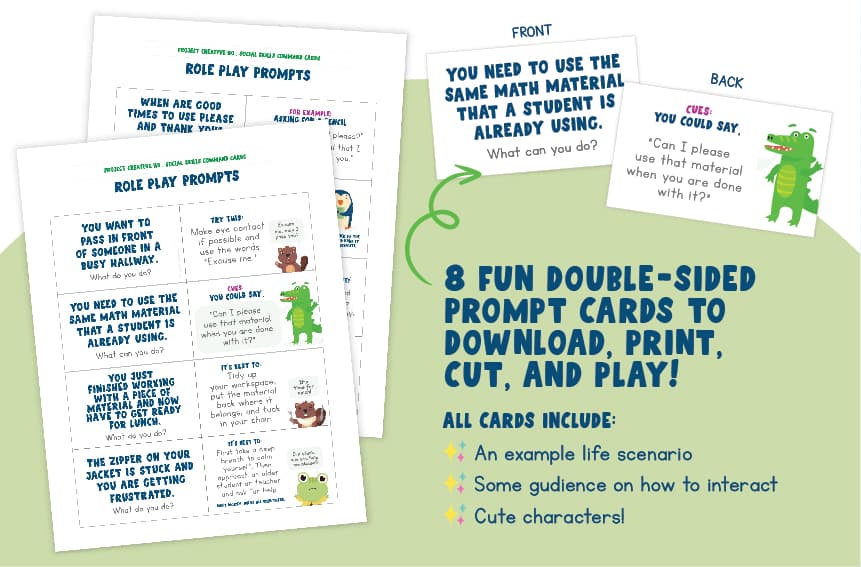
📥 Get Grace & Courtesy Command Cards
The Transition: From Montessori Magic to Traditional Structure
Every former student I spoke with shared some version of the same truth: transitioning from Montessori to a traditional middle or high school can be a big adjustment.
Clare (Class of 2014) spoke honestly about the challenge of being graded after years without traditional report cards:
“Going from not being graded for the majority of my school years to then starting to be graded was a harsh reality and was a big adjustment that took time to get used to… It’s always hard having a letter or a percentage to work that you put into something.”
That shift, from learning for understanding to learning for marks, can be a shock. Clare said that once she began forming strong relationships with her teachers, the anxiety eased, and she went on to make the honor roll all four years of high school.

Cara (Class of 2020) echoed a similar feeling when she moved from Montessori to an IB program, where testing and deadlines were suddenly front and center:
“In the first week or two we had already been introduced to a couple of marked tests and assignments… I found this to be challenging, however, my teachers and peers were helpful, and they allowed us to give extensions which eased the nerves.”
She admitted she had to learn new study strategies—making flashcards, reviewing notes, and preparing days in advance—but also recognized how well Montessori had prepared her to take ownership of her learning.
Alexis (Class of 2018) described another side of the transition—the social shift:
“The social adjustment was a bit difficult for me after I left Bannockburn. At Bannockburn, we were able to move around and work with whoever we wanted for assignments and classwork. This was different in middle school because since we had to sit at desks the whole day and lessons were more lecture-based, we were not able to interact as much with our classmates.”
It took time, she said, to rebuild that sense of collaboration. But when she did, it came easily, thanks to the communication skills she’d built in Montessori.
Katherine (Class of 2015) remembers a similar mix of comfort and challenge:
“When I went to middle school, it felt like the ‘regular school’ I saw on TV: lockers, desks, and competitive sports. I remember missing the in-depth arts and culture we had and the relationship between student and teacher. But the similarities came back in high school. The creativity and independence I’d learned in Montessori showed up again when I became a Drama Major.”
Transitions like these remind me that the question “Are Montessori schools good?” isn’t about avoiding struggle, it’s about how children handle it.
Montessori kids often step into new environments ready to adapt. They know how to manage their time, work independently, and advocate for themselves. The adjustment might take a few weeks or even months, but once they find their footing, they soar.
Finding Your Place in a Bigger World
For some students, the shift from a small, close-knit Montessori community to a large traditional school is a culture shock. Leela (Class of 2018) described this transition with honesty and humor, and her story captures what so many Montessori graduates experience when they first step into a bigger world.
“It was a huge change when I went from a small Montessori school to a huge private school. The overall tone of not everything moving at exactly my pace was a real wake-up call of what the ‘real world’ is like that Montessori shielded us from.”
She remembers the chaos of lockers, detentions, and strict hallway rules:
“I still remember being in grade 7 and I got a detention for eating a candy in the hallway… all I could think was how at Bannockburn I’d never gotten in trouble in all my years there, yet there I was, a few weeks into middle school and I was already getting told off.”
Her reflection makes me smile—not because of the detention, but because it shows how Montessori children internalize grace, courtesy, and responsibility in such natural ways. When those values meet the more rigid systems of traditional schools, it can be a shock—but it’s also a powerful learning moment.
Leela shared three lasting benefits of her Montessori education that I’ve seen echoed in countless students over the years:
“Having your own learning timeline, more responsibility with ‘jobs’ at the end of the day taught at a young age, and the relationship the older kids have with the younger classes, which teaches responsibility.”
And her advice for future Montessori grads?
“Don’t be too worried! Although there’s pressure to adjust from Montessori to your new school, just know that in the long run it won’t matter too much how you handled your first few years. And if you’re going with a few friends, make new ones too—it really helps build confidence and allows you to actually feel some change.”
Her words remind me that Montessori doesn’t just prepare children to learn, it prepares them to adapt.
Prepared for Life, Not Just for Tests
When I think about how Montessori prepares students for the real world, I often think of Cara’s story.
“I was not really overwhelmed by the amount of homework, however, I did feel overwhelmed by the amount of tests and assignments… Being in Montessori for 11 years I had become used to using concrete materials to learn different concepts.”
Even amid those early challenges, she recognized that the skills she’d built—self-direction, perseverance, and curiosity—gave her a head start.
“I feel that I have a strong work ethic that public school students would not have. One of Montessori’s values is a strong work ethic and desire to learn. I feel that this prepared me for high school.”
Cara’s favorite quote, from Nelson Mandela, sums up that sense of purpose perfectly:
“Education is the most powerful weapon which you can use to change the world.” Nelson Mandela
Students like Cara show that Montessori education doesn’t just prepare children academically, it nurtures a mindset of lifelong growth and empathy.
Lessons That Last a Lifetime
Katherine (Class of 2015) beautifully connected her Montessori beginnings to her later success in a creative arts high school:
“When I went to middle school, I remember thinking ‘I’ve never taken a history or biology class,’ and then they started teaching and I was like, ‘Oh! I’ve learned this before.’ It took a couple of weeks of adjustments, but it never clicked for me that the ‘lessons’ we did were each in a different subject.”
Her Montessori foundation helped her see learning as interconnected, not compartmentalized, and that connection stayed with her through the arts.
“Montessori truly made me the self-sufficient, independent, and collaborative person I am today. When I tell people I went to Montessori school they all say, ‘Ah! That makes sense.’”
She also shared a favorite quote that feels like a perfect reminder of what Montessori fosters:
“Productivity is never an accident. It is always the result of a commitment to excellence, intelligent planning, and focused effort.” Paul J. Meyer
That’s the essence of the Montessori approach—helping children build those habits naturally, not through pressure or fear, but through purpose.
So, Are Montessori Schools Good?
When I look back on my years teaching and now seeing where my students are—honor rolls, arts programs, IB diplomas, university scholarships, successful careers—I can say with certainty that Montessori education works.
But it works because it honors the individuality of each child. It gives them the tools to manage freedom, the patience to learn from mistakes, and the confidence to try again. It’s not perfect for every child but when the fit is right, it’s something extraordinary.
As a teacher, I’m endlessly grateful to have witnessed that magic up close. Watching these incredible young adults grow into who they were always meant to be is the greatest answer to the question “Are Montessori schools good?”
Yes, they are. And for many children, they are life-changing!
📌 Pin this so you can refer to it later. 📌

💡Go Deeper with These Montessori Must-Reads:
Montessori Lifestyle: 13 Ways to Engage Your Kid at Home
Montessori vs Traditional School: Is One Better Than The Other?
5 Surprising Facts About Upper Elementary Montessori
15 Benefits of Montessori Education Revealed by a Teacher
