

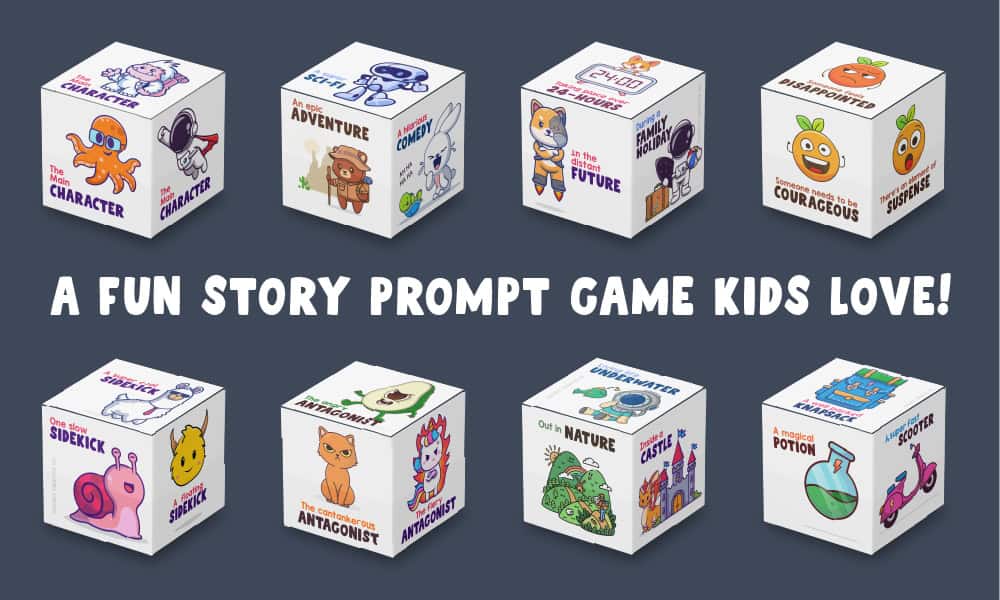
Story Dice: A Fun Story Prompt Game Kids Love
If you’ve ever asked kids to write a story, you know that look—the blank page stare, pencil in hand, but no idea where to start. That’s why I turn to story prompts. They give kids a way in, a spark to ignite creativity without boxing them in. And once I started using story dice, I realized story prompts could be even more engaging.
Instead of just handing kids a list, I could let them roll their story. Suddenly, the classroom energy shifted and writing became a game. Even my most reluctant writers leaned in.
Moments like that remind me how much kids benefit from simple, meaningful entry points. And that’s where story prompts shine.
Why Story Prompts Work
I’m a big believer in story prompts. Before I ever discovered story dice, I used prompts all the time because they:
- Stop the blank page panic. Prompts give kids a starting point so they’re not left wondering, “What should I write?”
- Spark creativity. A single idea—a dragon in space, or a girl who finds a secret door—can light up a student’s imagination.
- Give just enough structure. Kids can be wildly creative, but they often need some boundaries to guide them. Prompts do that beautifully.
- Push kids to try new things. Prompts nudge kids toward genres or characters they wouldn’t usually pick, which builds range.
So yes, I’ve always loved story prompts. But when I started turning them into a game? That’s when things really clicked.

Why Story Dice Work So Well
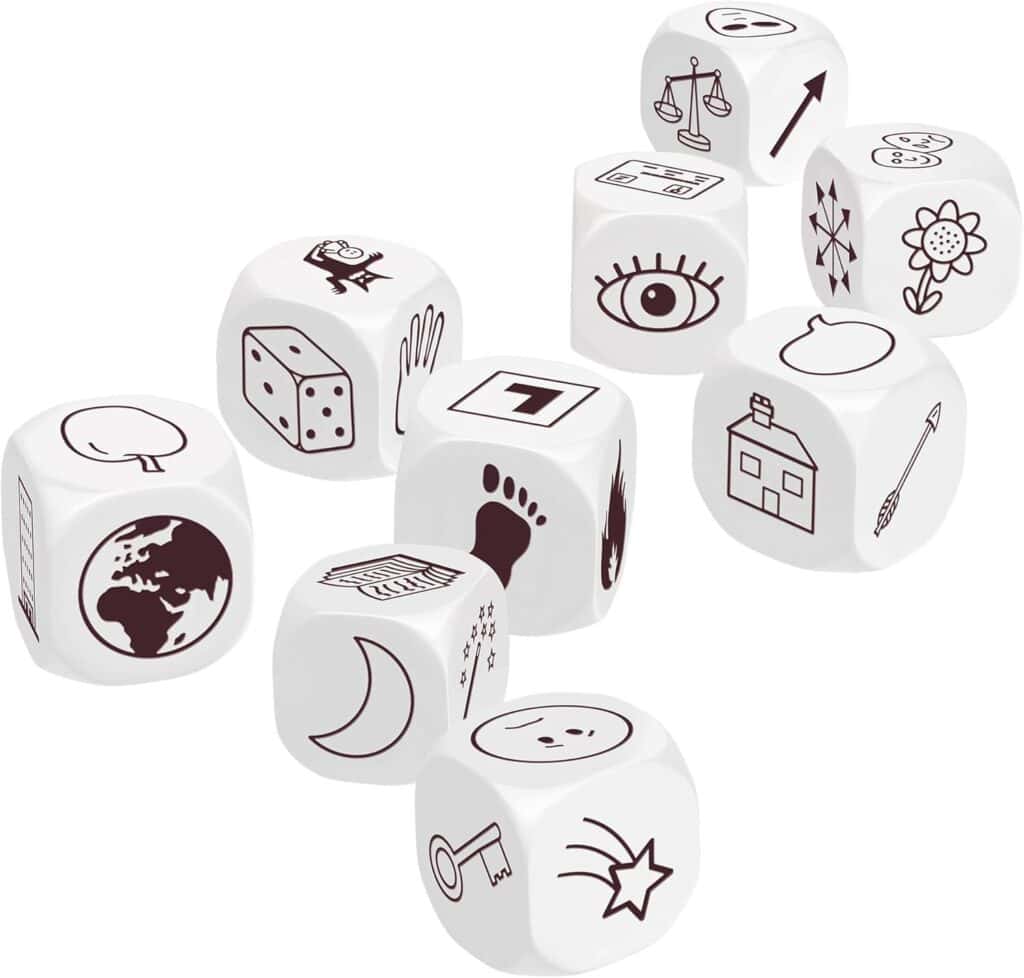
The first time I ever tried story dice was with Rory’s Story Cubes, and I still remember bringing them into my upper elementary classroom. I figured students would enjoy them, but they absolutely ate it up—begging to keep rolling and writing long after the activity was supposed to end.
Here’s why I think story dice work so well:
They make writing feel like play.
Rolling dice instantly lowers the pressure. Kids aren’t “doing an assignment”—they’re playing a game.
They encourage collaboration.
I’ve had groups of students roll together and build a single story. They laugh, they negotiate, they build off each other’s ideas—it’s writing, but it feels like recess.
They create endless story prompts.
Because every roll is unique, kids never run out of ideas. Even if we use the dice week after week, the results are fresh.
They push kids outside their comfort zone.
Some students love fantasy. Others stick to realistic fiction. But when the dice tell them to write a mystery or a comedy, they dive in—and end up surprising themselves.
They build real writing skills.
These aren’t just random prompts. By rolling for things like antagonist, mood, or setting with a set of story dice, kids naturally learn how to think about story structure.
Our Story Dice: The Prompts You Can Roll
Ok, so our printable Roll a Story Dice set is pretty special. Instead of staring at a sentence prompt on a worksheet, kids get to roll their story elements.
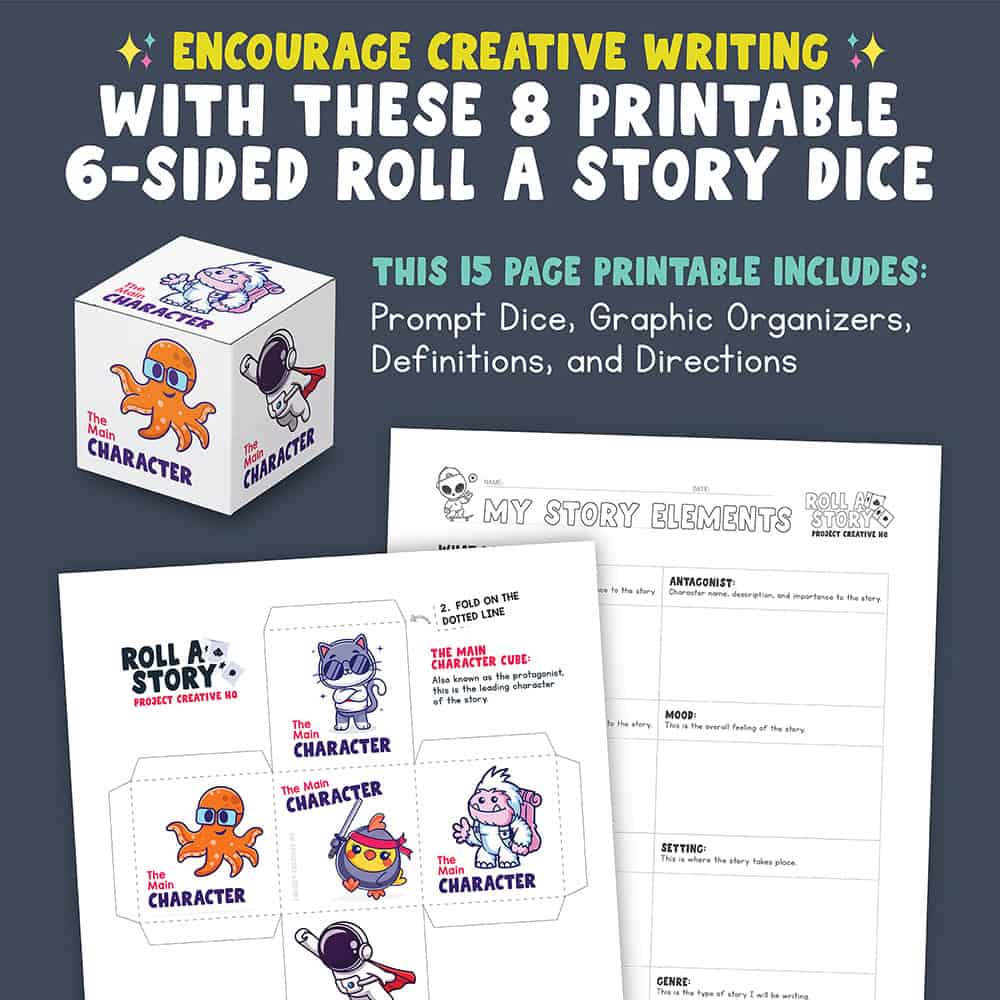
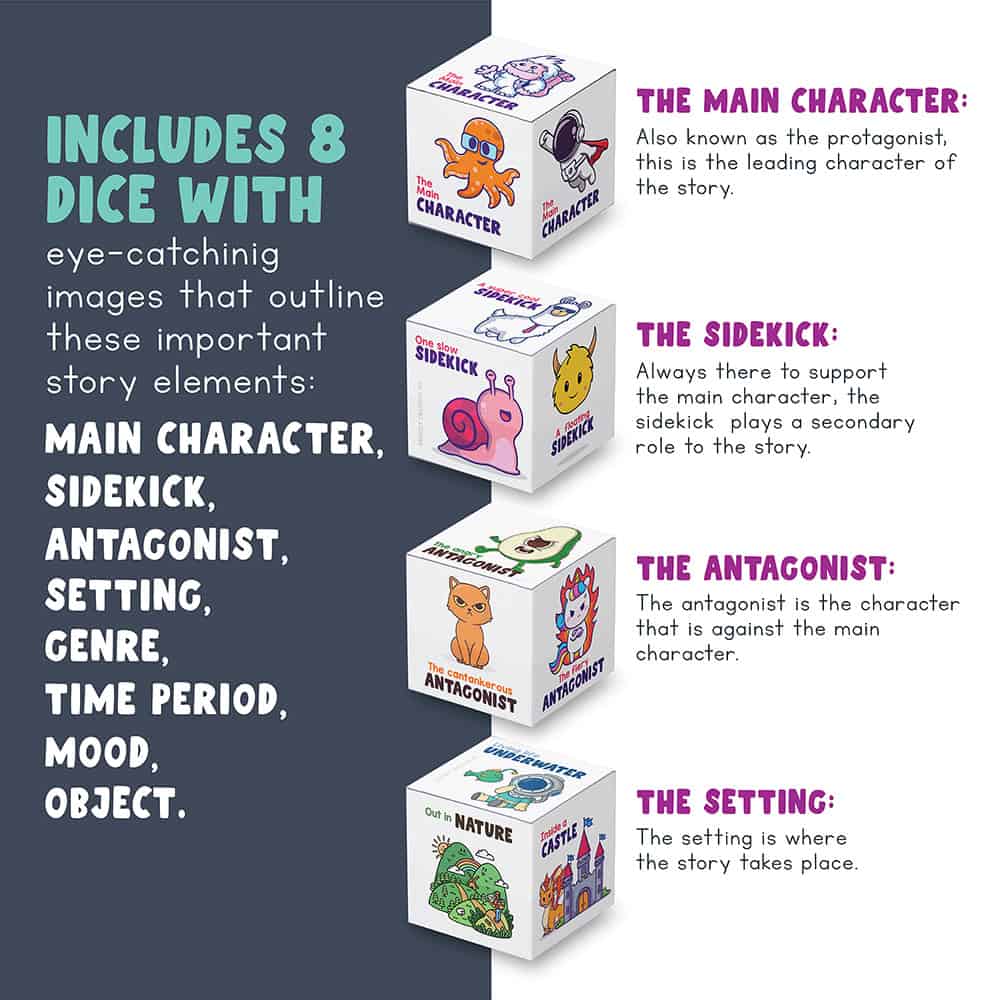
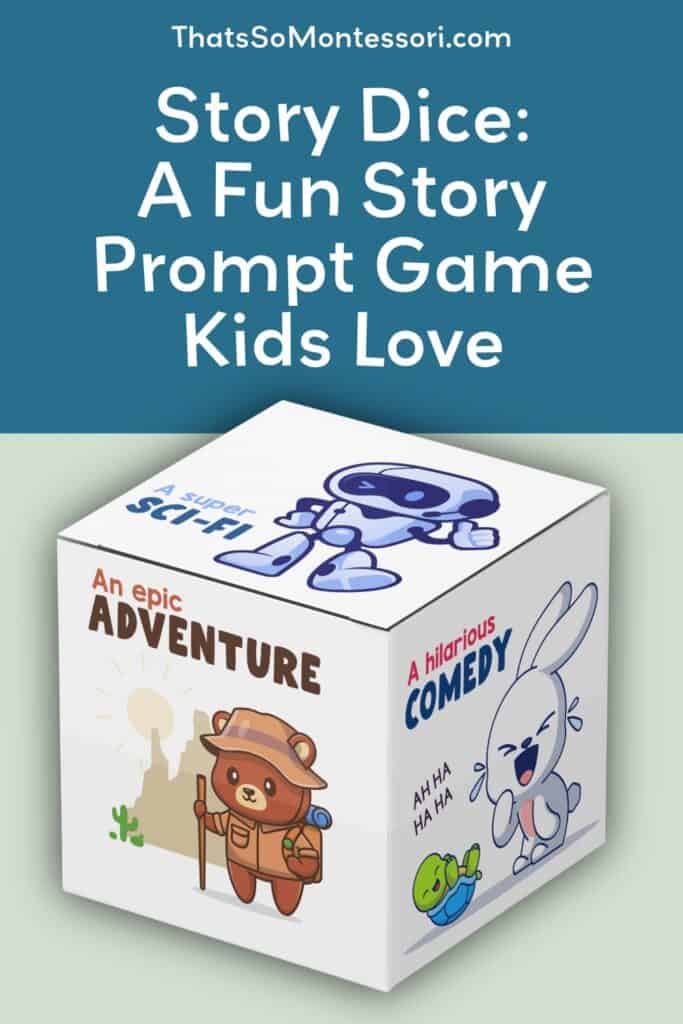
The set includes eight dice you print and build (a fun little craft on its own!), and each one represents a key storytelling element:
- Setting
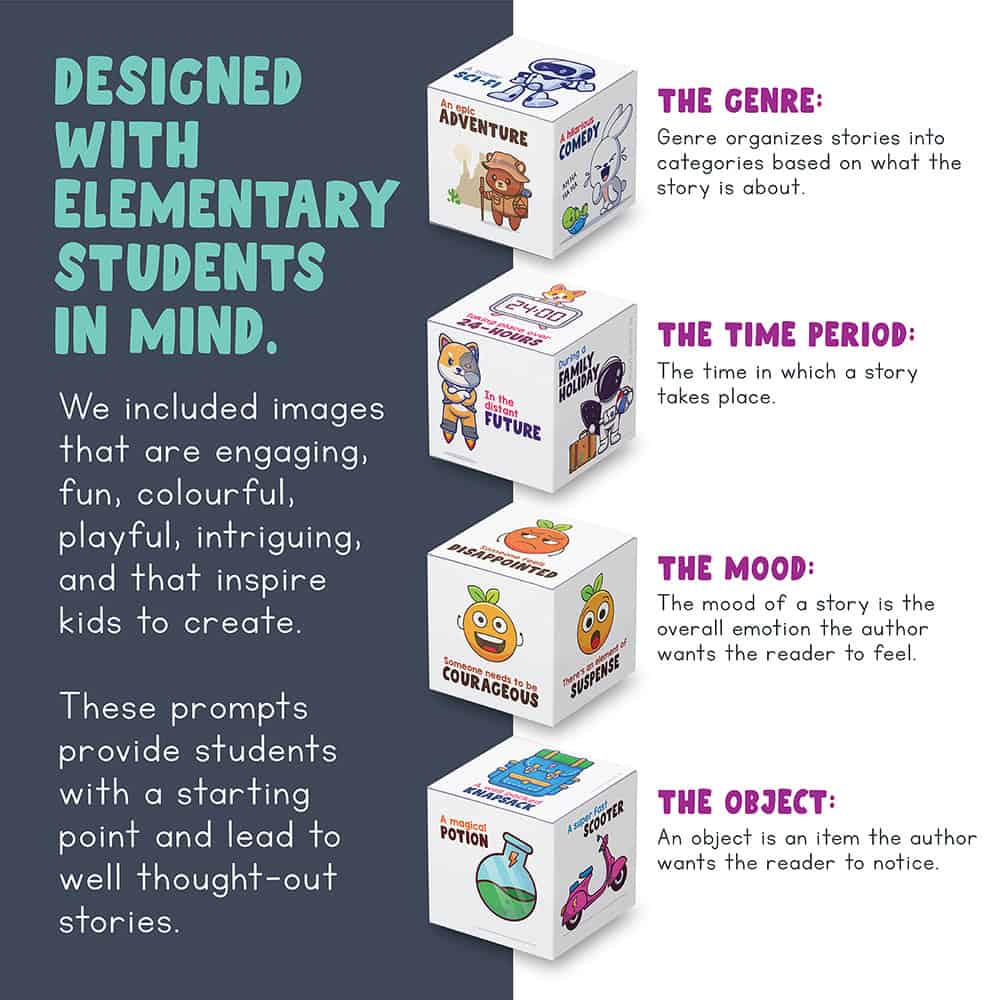
- Genre
- Main Character
- Sidekick
- Antagonist
- Time Period
- Mood
- Object
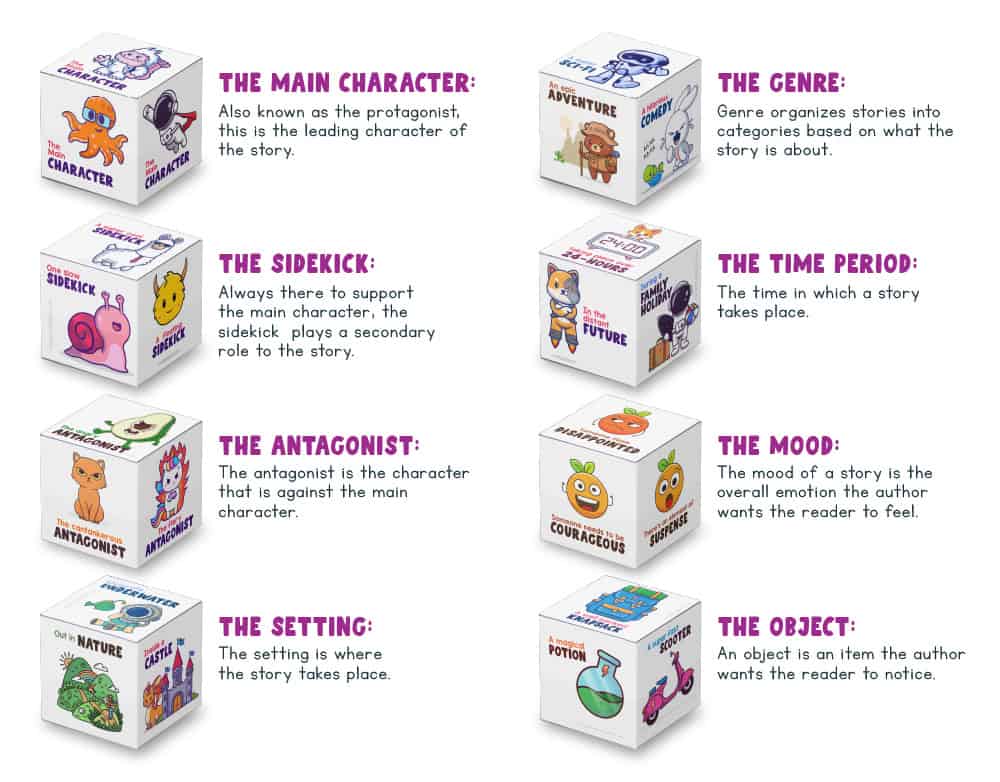
Each die features bright, eye-catching images—48 in total—that serve as simple sparks for imagination. Students can roll all of them to create a full story framework or just roll a few when they want to shift their thinking.
And the best part? No two rolls are ever alike. One moment your students are writing about a wizard in a haunted forest; the next they’re crafting a comedy in outer space. That variety keeps the experience fresh and engaging every time.
What You Get in the Roll a Story Dice Set
At $8.99, this printable resource offers exceptional value. A similar product like Rory’s Story Cubes runs about $14.99—and once a cube is lost, it’s gone. With our printable set, you can reprint any cube at any time, and even prepare multiple sets for groups or home use. It’s the storytelling activity that keeps on giving.
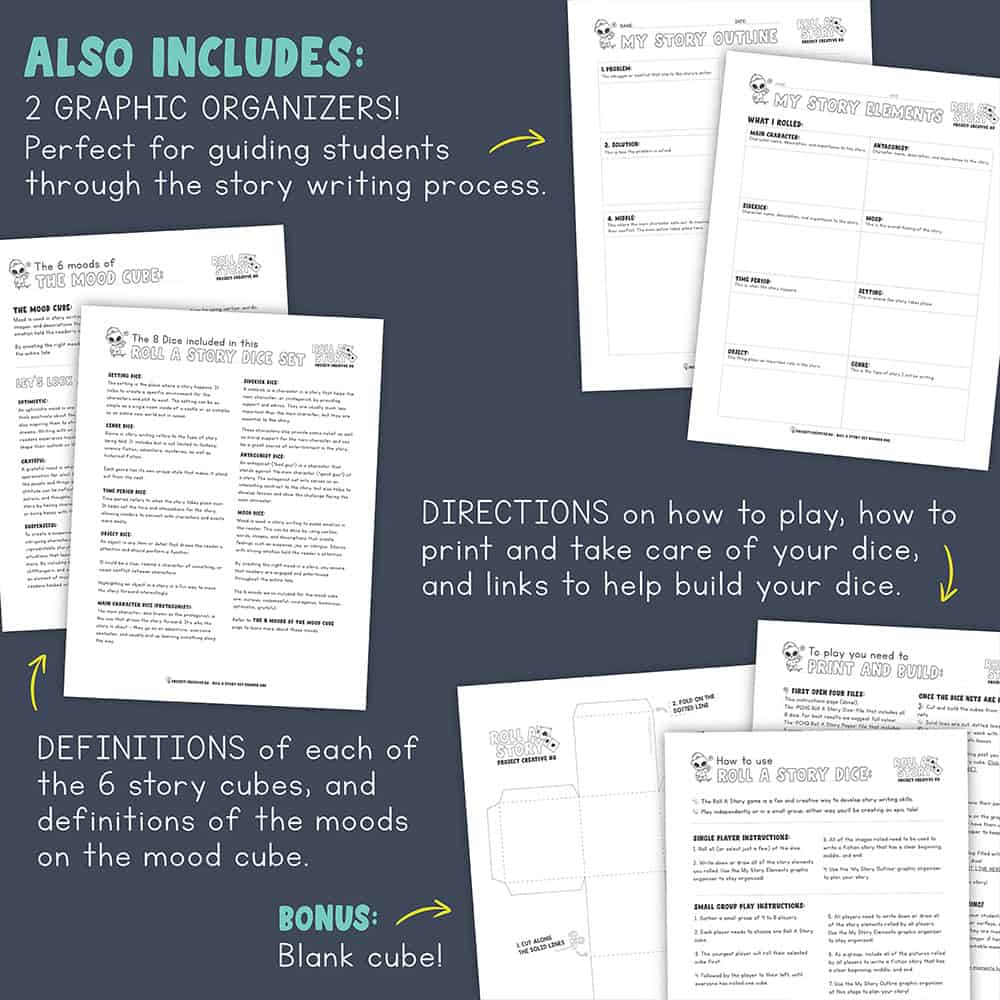
But the real value comes in everything that surrounds the dice. This set gives you a full range of supports to guide students’ storytelling and spark meaningful creativity.
The set includes:
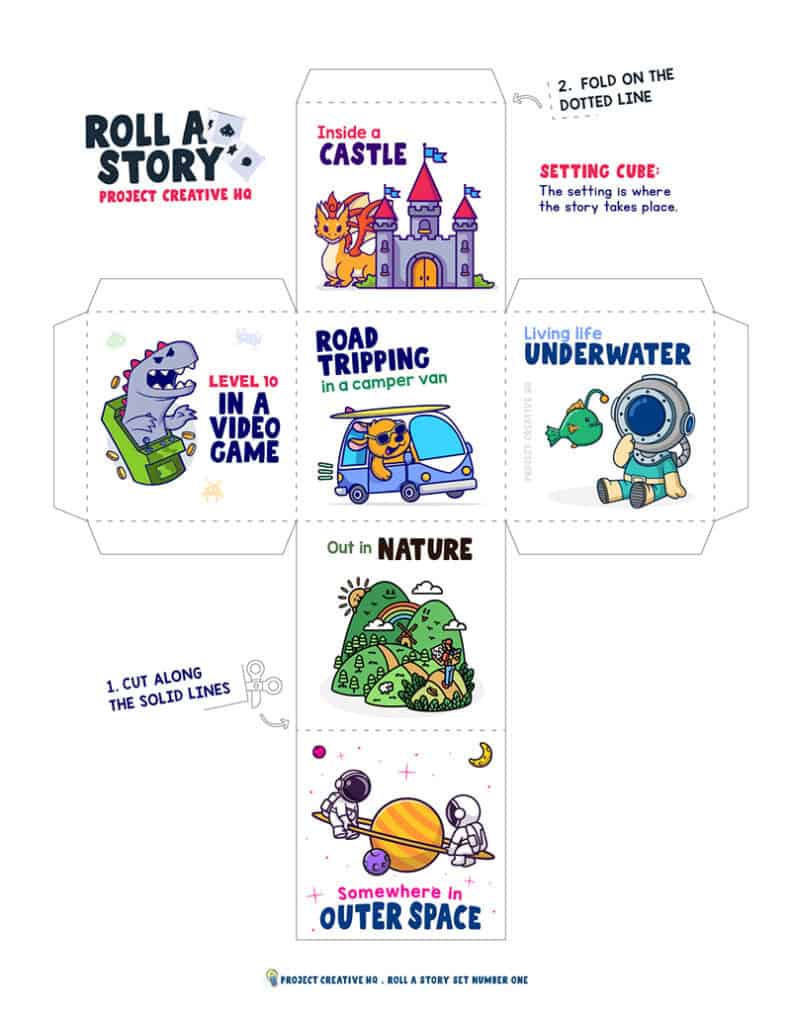
- 8 printable illustrated story dice
- 1 blank cube template so kids can design their own story prompts
- A page of definitions for all eight story elements
- A page explaining the moods on the mood die
- 2 graphic organizers to help kids plan their stories
- A page with two ways to play (solo or group)
- Links to blog posts with even more ideas and instructions
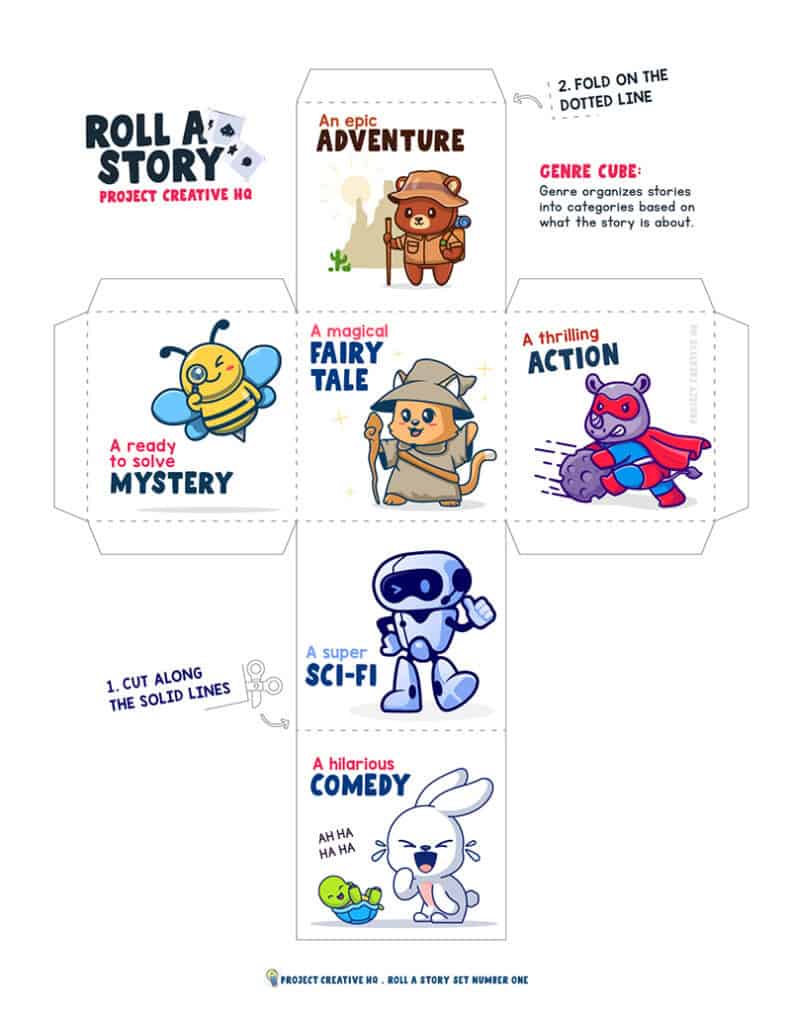
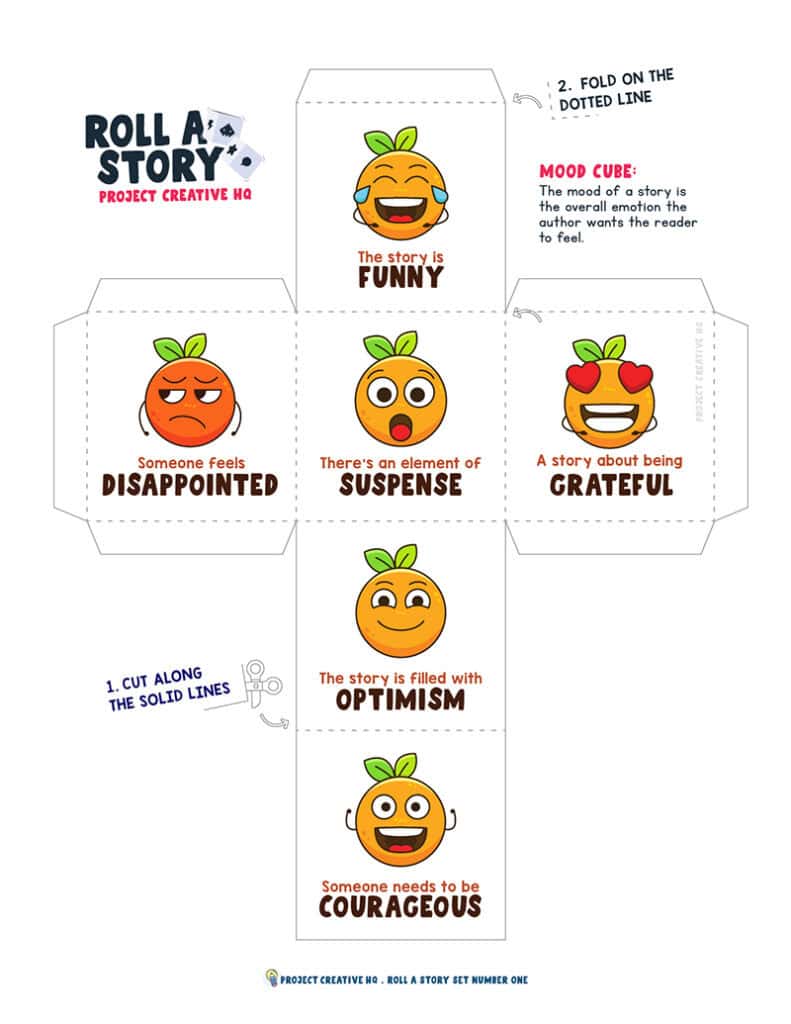
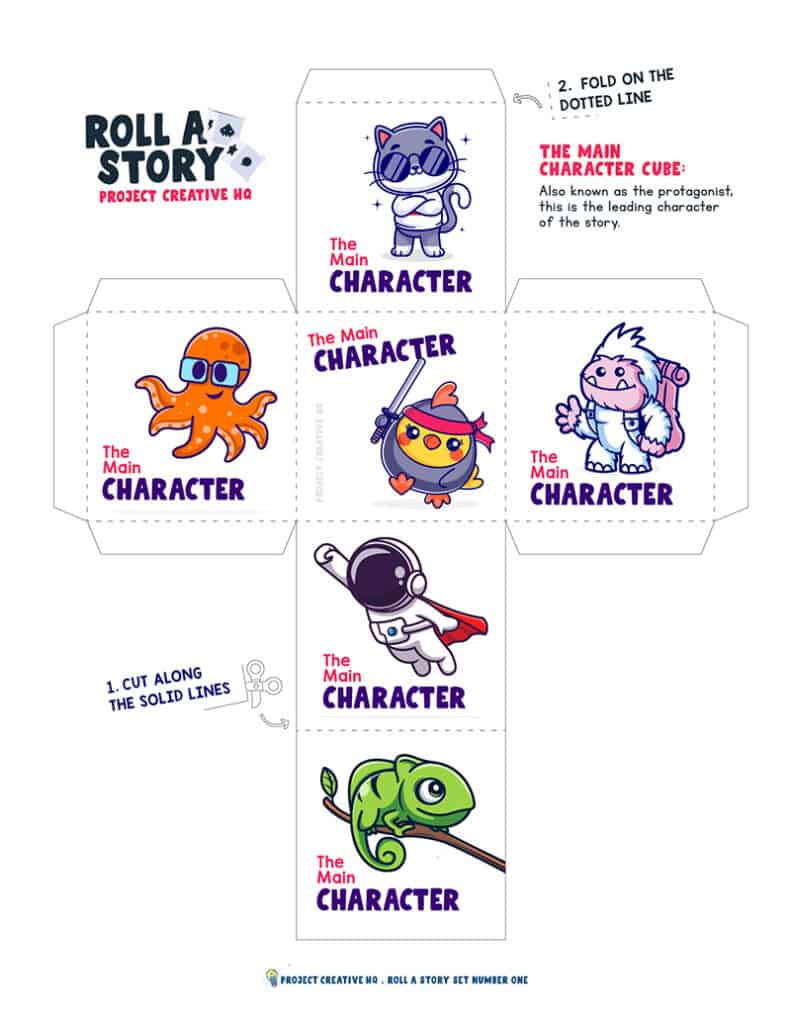
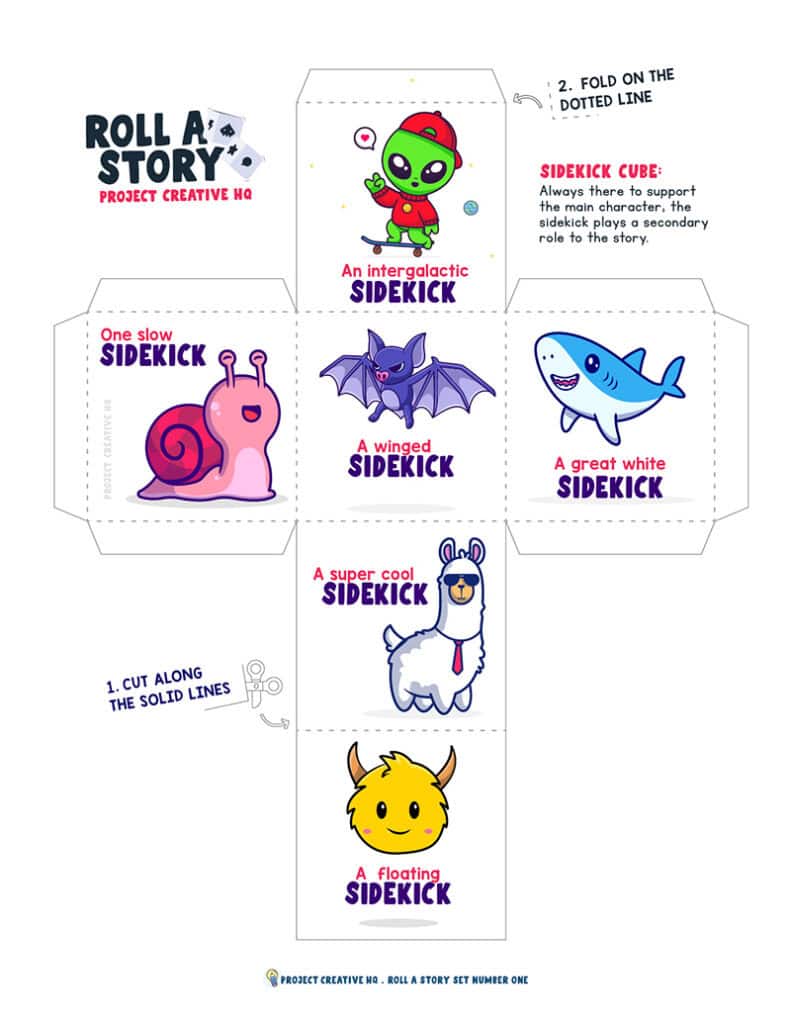
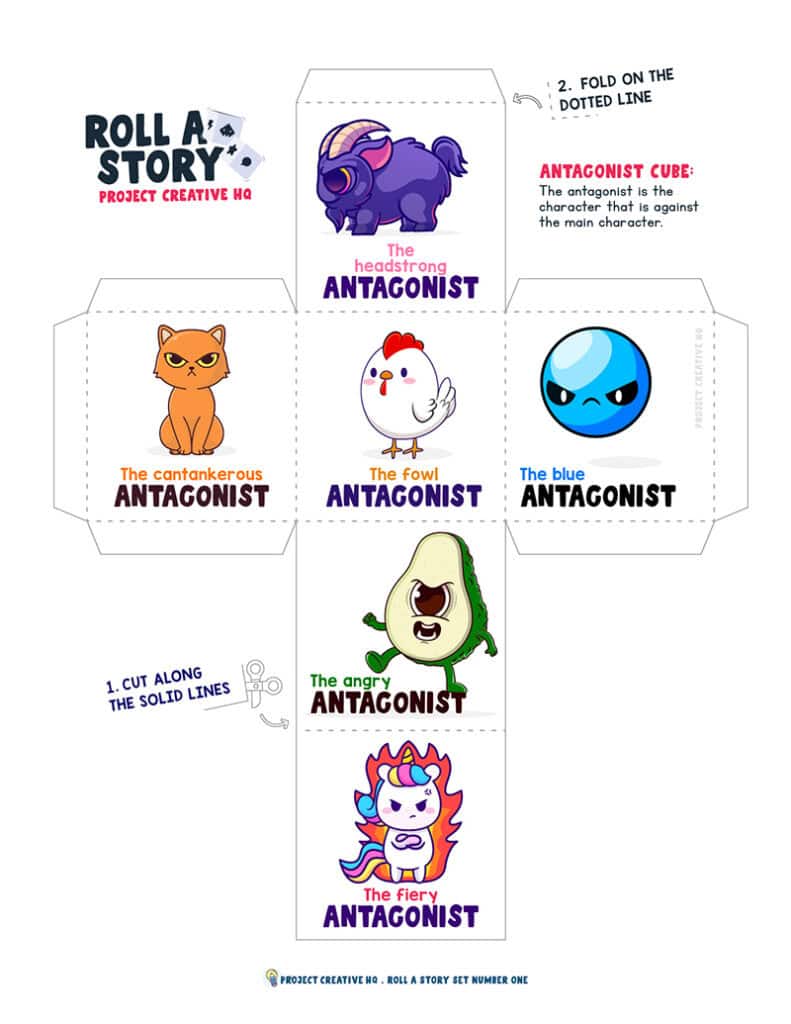
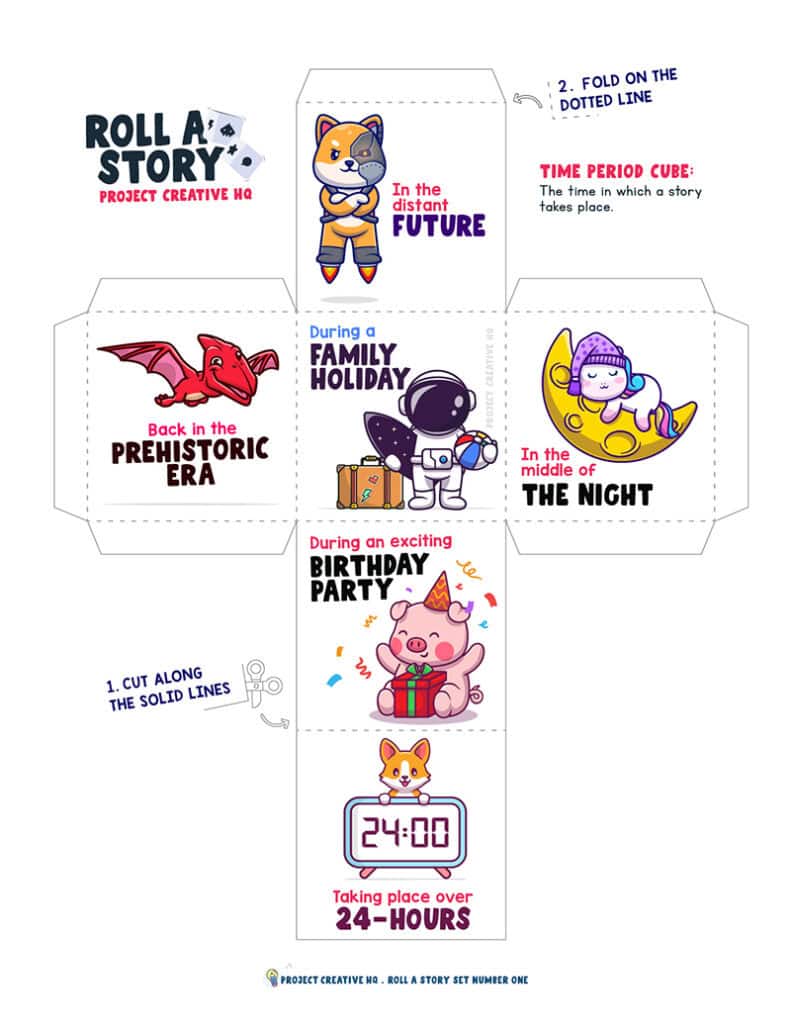
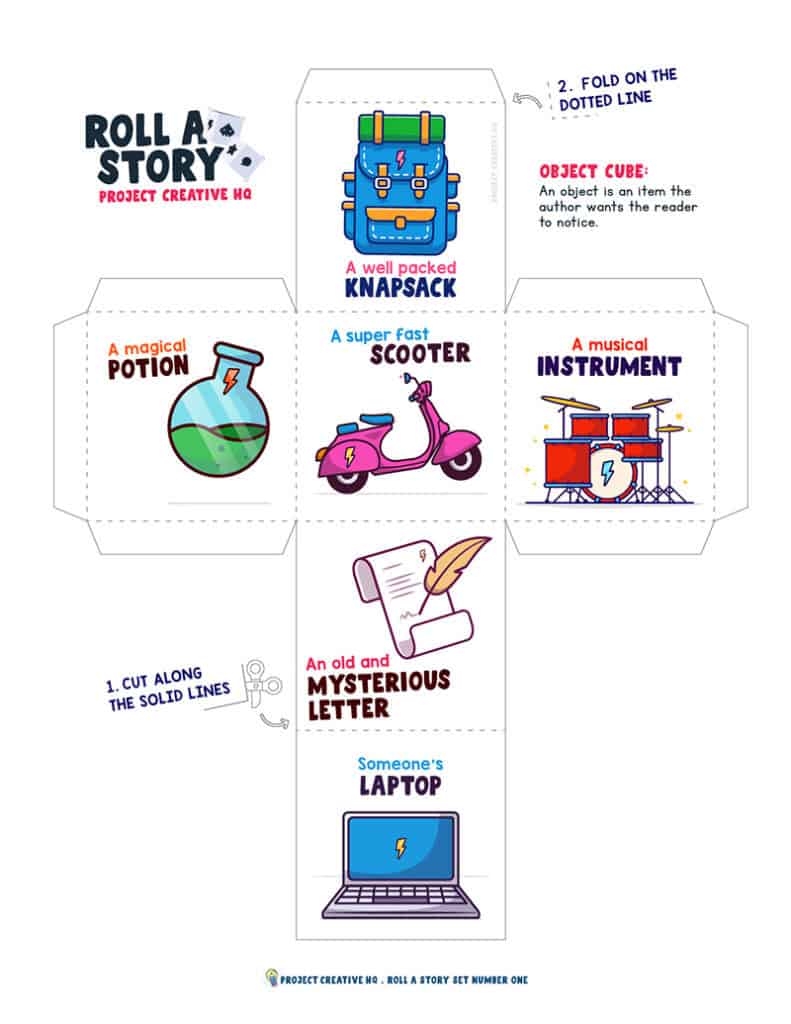
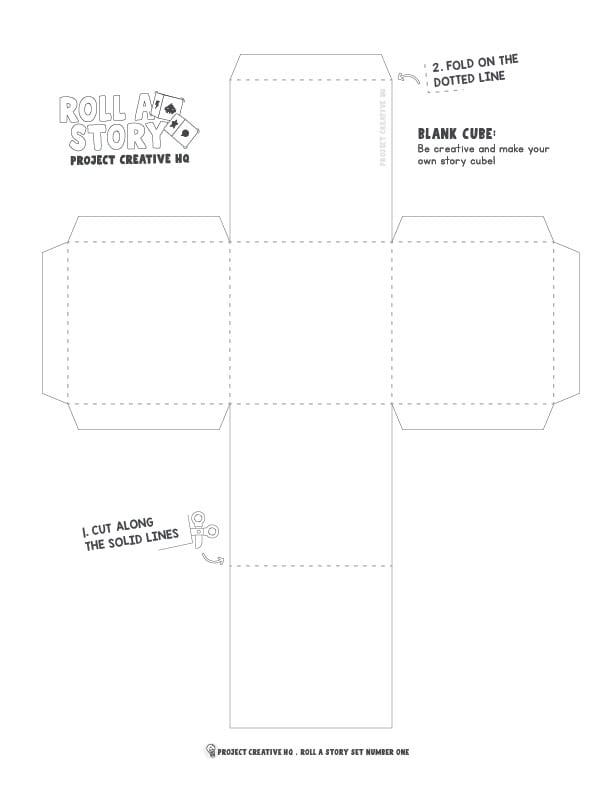
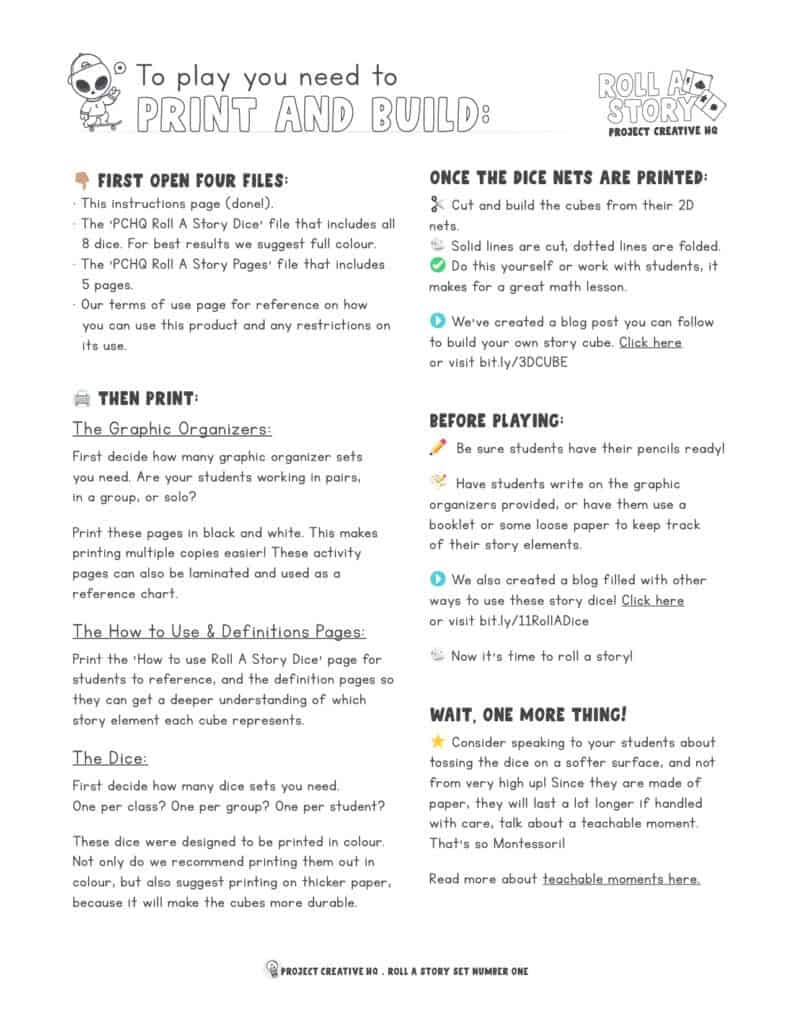
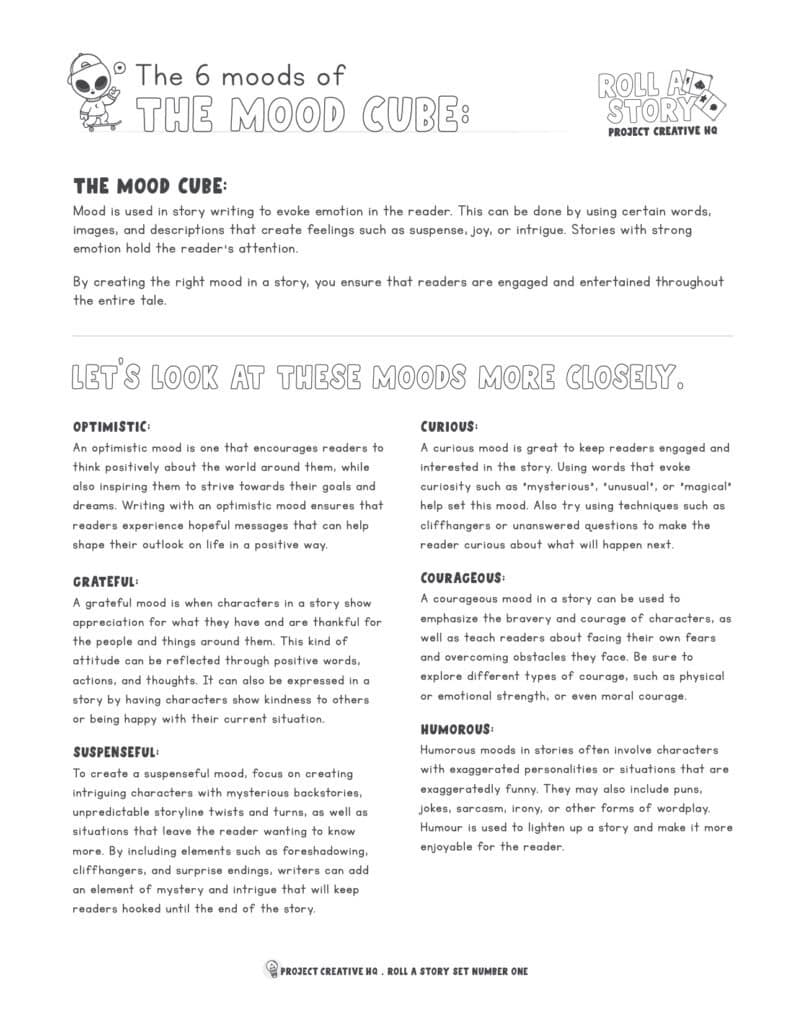
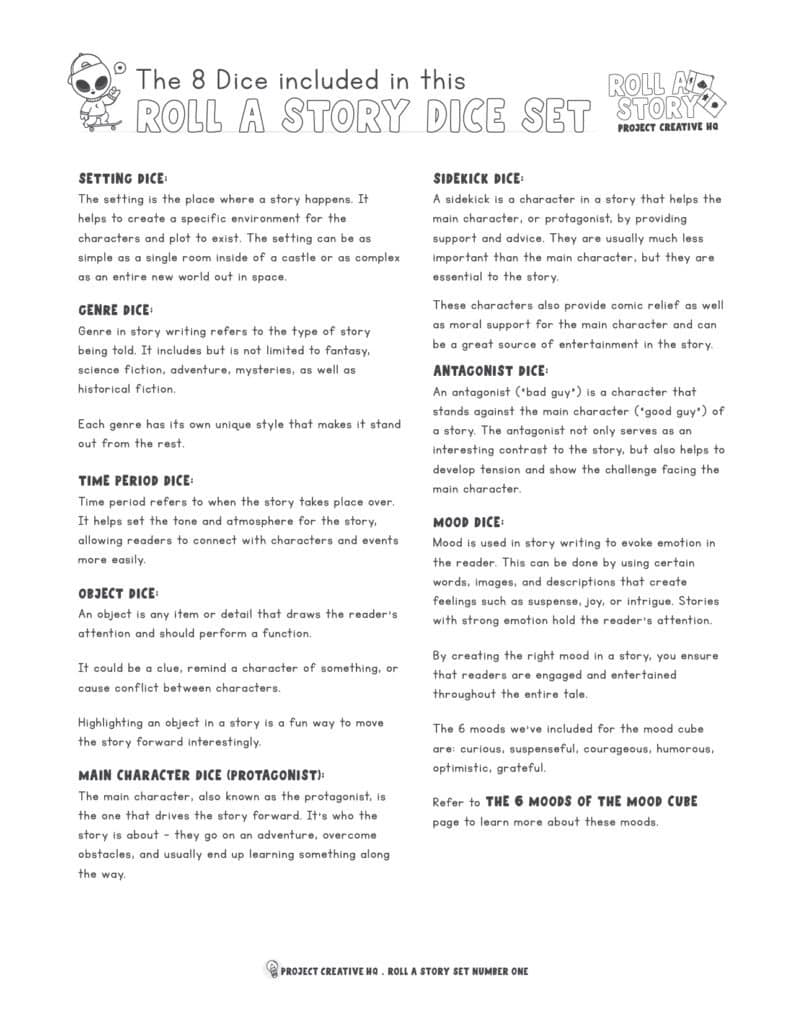
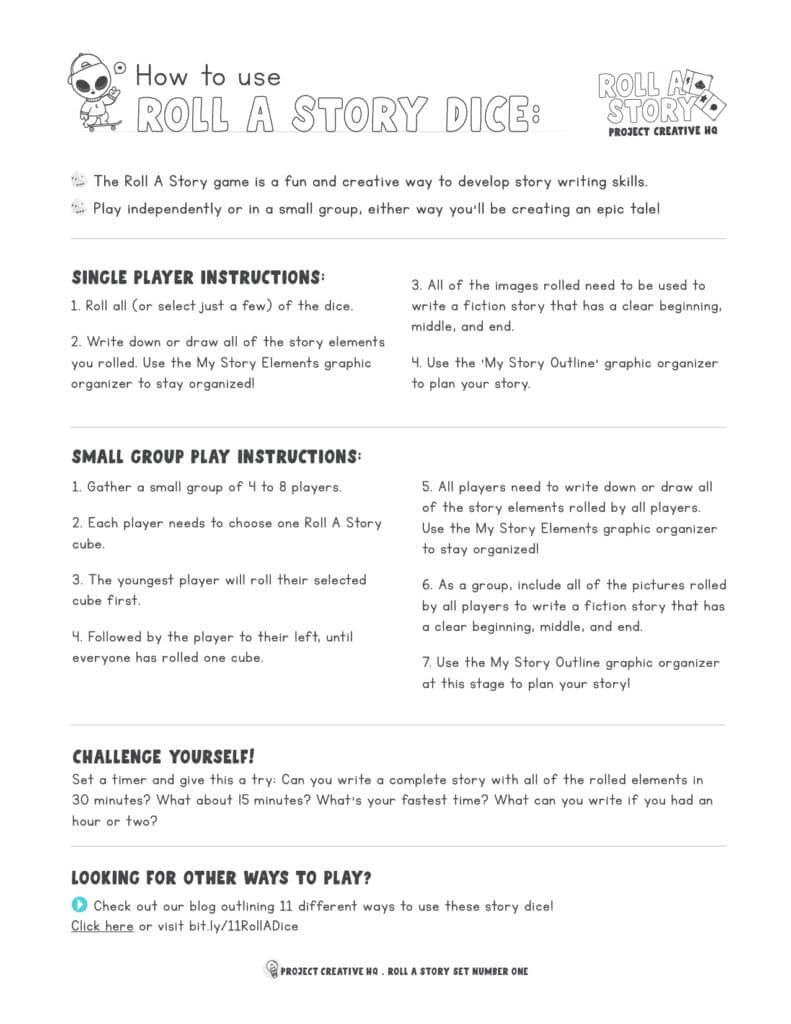
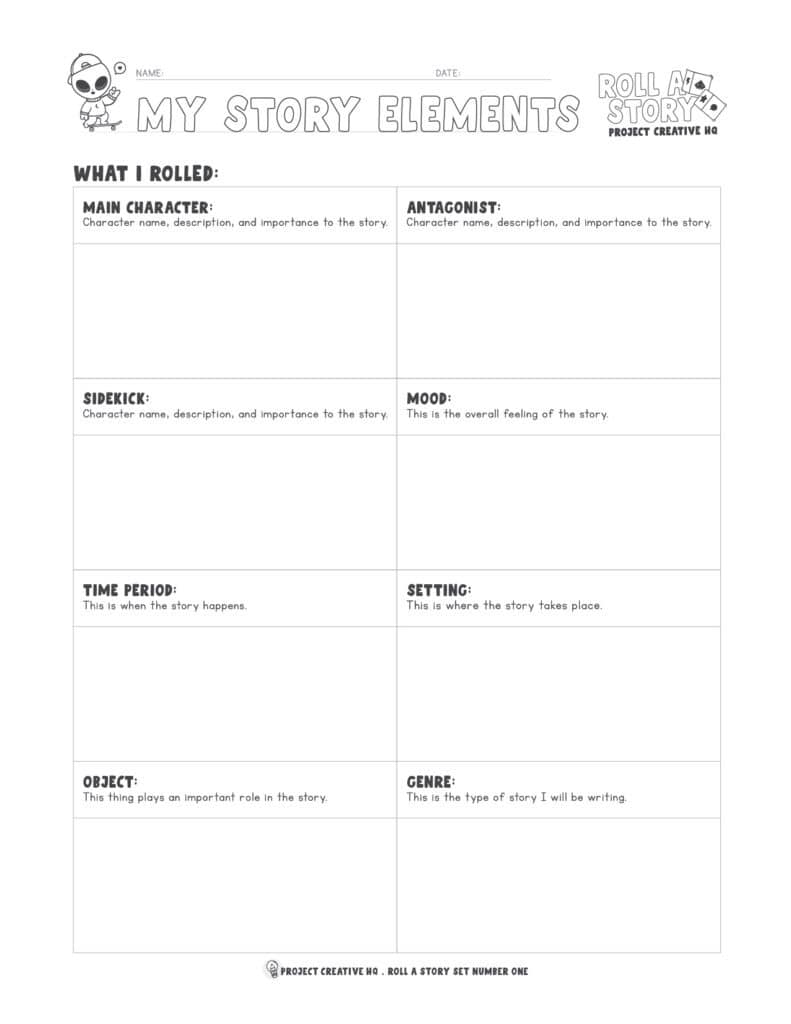
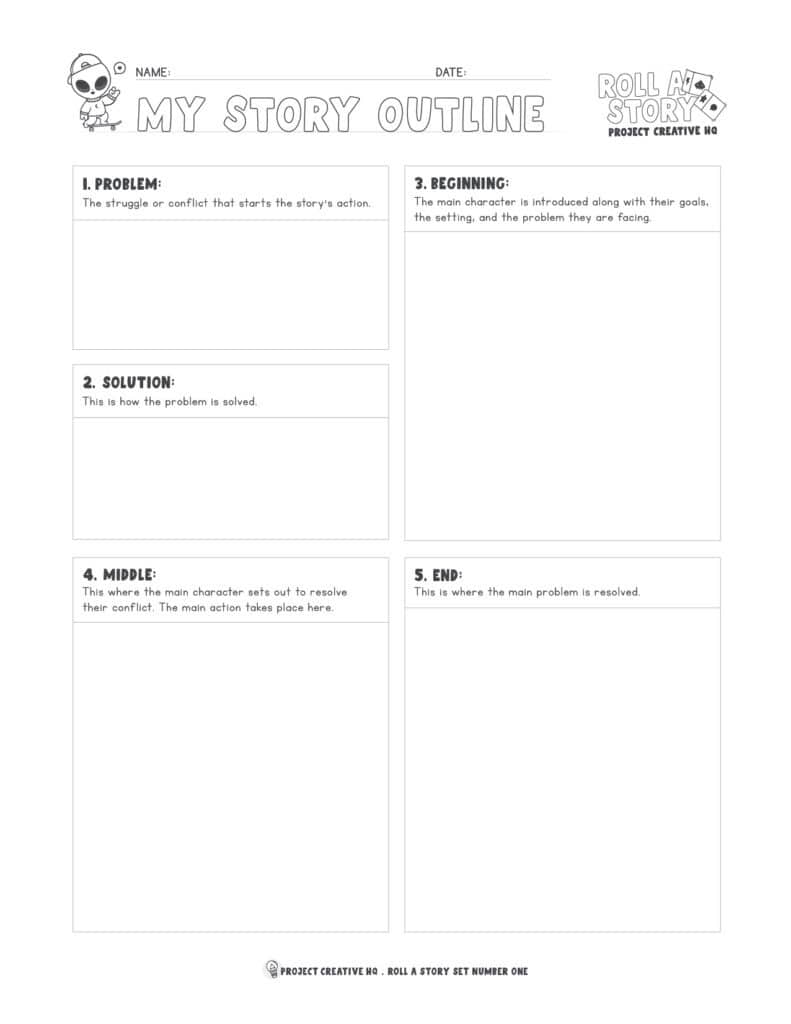
Think of it as a storytelling toolkit you can use year after year.
How to Use Our Story Prompt Dice in Class
Here are a few of my favorite ways to use our Roll a Story Dice set in class:
Quick Writes – Roll three dice and have students spend 10 minutes writing a beginning. It’s a great warm-up.
Whole-Class Storytelling – Roll the dice and let the class build a story one sentence at a time.
Small Group Challenge – Give each group the same roll and see how different their stories turn out.

Mood Remix – Roll the mood die and have students rewrite a familiar tale in that mood (Little Red Riding Hood as a comedy? Hilarious!).
Character Deep Dive – Roll the character and sidekick dice and have students write backstories.
I love that I can use the dice for quick bursts of writing or full-length projects. They’re that flexible.
FREE Cat Libs Creative Writing Activity
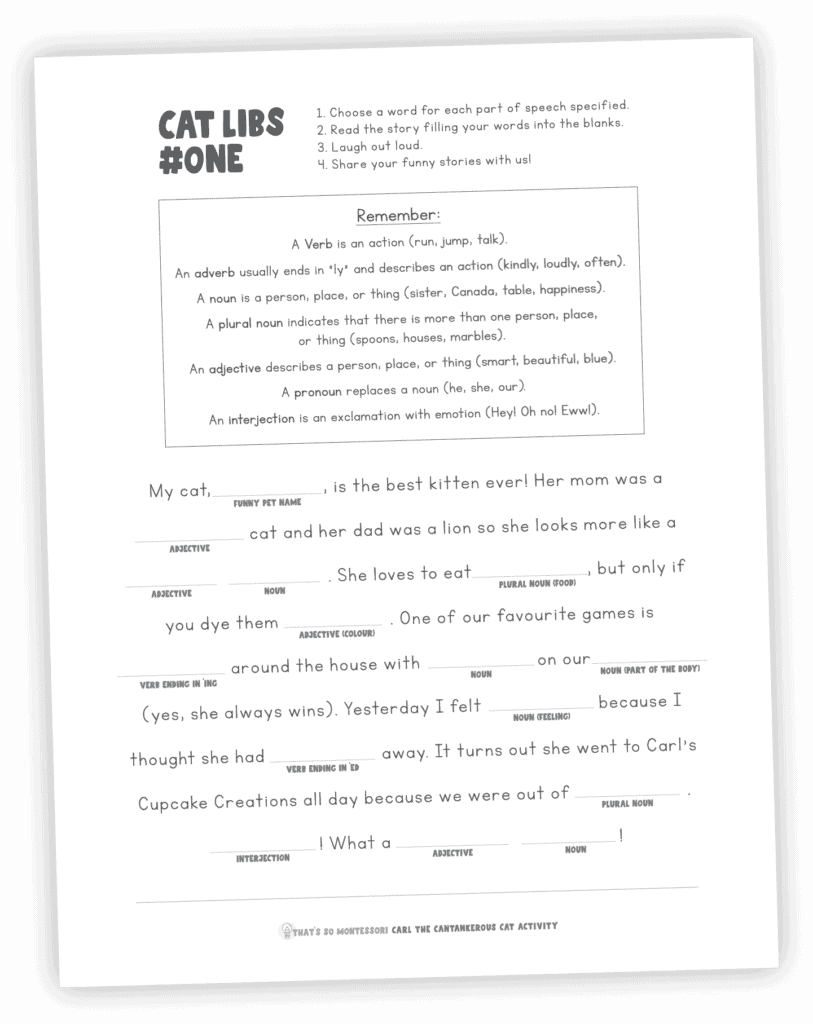
Spark learning fun with a free page from our Carl the Cantankerous Cat Activity Pack.
This cat-themed Mad Libs helps kids explore the parts of speech and practice writing—with plenty of laughs along the way.
Subscribe to receive the printable straight to your inbox!
Help Reluctant Writers With Story Prompt Dice
If you’ve worked with reluctant writers, you know the struggle—blank pages, long sighs, pencils hovering in midair. Story dice can break that cycle instantly. Here are simple ways to use them with kids who need a little extra encouragement:
Start With a Single Roll
Let them roll just one die—setting, character, or object. Small steps reduce pressure and spark quick ideas.
Try a 2-Minute Quick Sketch
Before writing, have them sketch what they rolled. Drawing lowers the stakes and helps ideas begin to flow.
Offer a Sentence Starter
Pair the roll with a simple starter like:
“The moment I found the ___, I knew things would change.”

Create a “Writing Buddy” Roll
Have two students roll together and combine their elements. Collaboration makes it feel more like play than work.
Use a Timer for Short Bursts
Roll → write for 3 minutes → stop.
Short bursts make writing feel achievable and help students experience success quickly.
Celebrate the Twist
Highlight surprising combinations—“A pirate in a bakery? Yes please.” Silly prompts lower stress and boost engagement.
Let Them Skip a Roll
If one prompt feels too hard, they get one re-roll. Choice increases ownership and confidence.
Creative Story Prompts at Home
Even outside the classroom, story dice are a hit. Parents tell me they use them during family book club meetings, on road trips, or for a bit of after-school fun. Homeschool families love them for language arts, too.
Because the dice use pictures, even younger kids and English language learners can jump right in. There’s no need to read a long prompt—just look at the image, roll the dice, and imagine.
It turns story prompts into something the whole family can enjoy.

Why Story Dice Belong in Your Toolkit
Here’s why these dice have earned a permanent spot in my teaching toolkit:
- They’re reusable. Print once and use them endlessly, year after year.
- They’re adaptable. Roll one die, three dice, or all eight depending on your lesson or learner.
- They’re engaging. Kids love the visual prompts and the surprise combinations.
- They’re educational. Each roll reinforces core storytelling elements in a hands-on way.
- They’re genuinely fun. And when kids are having fun, the writing flows naturally.
It’s the ideal mix: a learning tool that kids are excited to use and teachers can rely on again and again.

The Wrap Up: Story Prompts That Inspire
If you want kids to feel excited—truly excited—about writing, story dice are a game changer. They turn prompts into hands-on play and spark creativity instantly.
Our Roll a Story Dice set helps kids build stories with confidence while learning the elements that make writing meaningful. It works anywhere: classrooms, homeschool spaces, family evenings, you name it.
In the end, kids don’t just read prompts—they roll them, own them, and turn them into stories that surprise even themselves.
👉 Ready to roll? Click here to grab your set and see the magic for yourself.
💡Keep your kids busy learning with the activities in these blogs:
11 Ways to Use Our Roll A Story Dice Game
13 Engaging Vocabulary Development Activities for Elementary Kids
Rebus Puzzles for Kids: A Comprehensive Riddle-Solving Guide
31 Fun Summer Reading Activities Elementary Students Will Love
The Best Neighborhood Walk Scavenger Hunt
8 Easy Rebus Puzzles with Answers
Rebus Puzzles for Kids: A Comprehensive Riddle-Solving Guide
27 Educational YouTube Channels to Prevent Summer Learning Loss
