


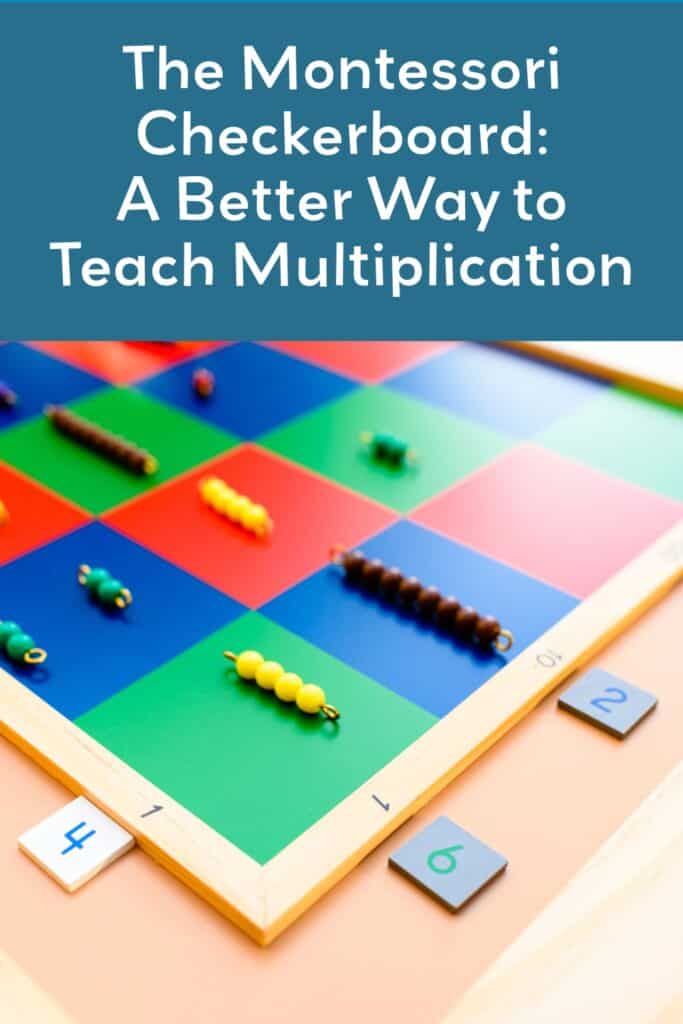
The Montessori Checkerboard: A Better Way to Teach Multiplication
Multiplication doesn’t have to feel abstract. With the Montessori checkerboard, children can see it, touch it, and understand it.
Whether you’re:
➡️ Teaching a curious Grade 1 ready for multiplication,
➡️ Supporting a Grade 3 struggling to grasp the concept,
➡️ Reviewing skills with a Grade 5, or
➡️ Following along with a second-plane Montessori child at home…
This guide will help you confidently use the Montessori checkerboard to make multiplication meaningful.
💡 Bonus: A full video tutorial walks you through single-digit and double-digit multiplication using our printable checkerboard.
Why Montessori Math Materials Work
Montessori math materials bring abstract concepts to life. Inspired by Maria Montessori, students learn by doing first.
For example:
Seeing the number 3 on paper is one thing.
Holding three apples is another.
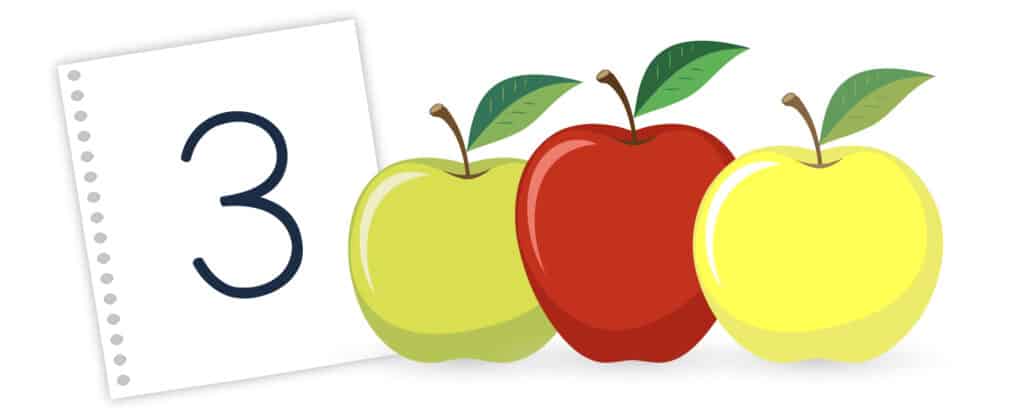
Hands-on experience helps students understand numbers deeply.
Math materials like:
✅ Golden Beads
✅ Stamp Game
✅ Racks and Tubes
✅ Bead Frames
✅ Montessori Checkerboard
…allow children to touch, move, and build math concepts before relying on memorization.
This makes multiplication on the checkerboard more than math; it’s a learning experience.
💡 Expand Your Understanding of Montessori Racks and Tubes!
We have some informative articles that include video demonstrations of division with a single-digit divisor as well as a double-digit divisor.
What Is the Montessori Checkerboard?
The Montessori checkerboard (or chequerboard) is a large, colour-coded math tool introduced in early elementary years.
It teaches:
🔢 Multi-digit multiplication
🔢 Place value and number families
🔢 Partial products
🔢 Skip counting
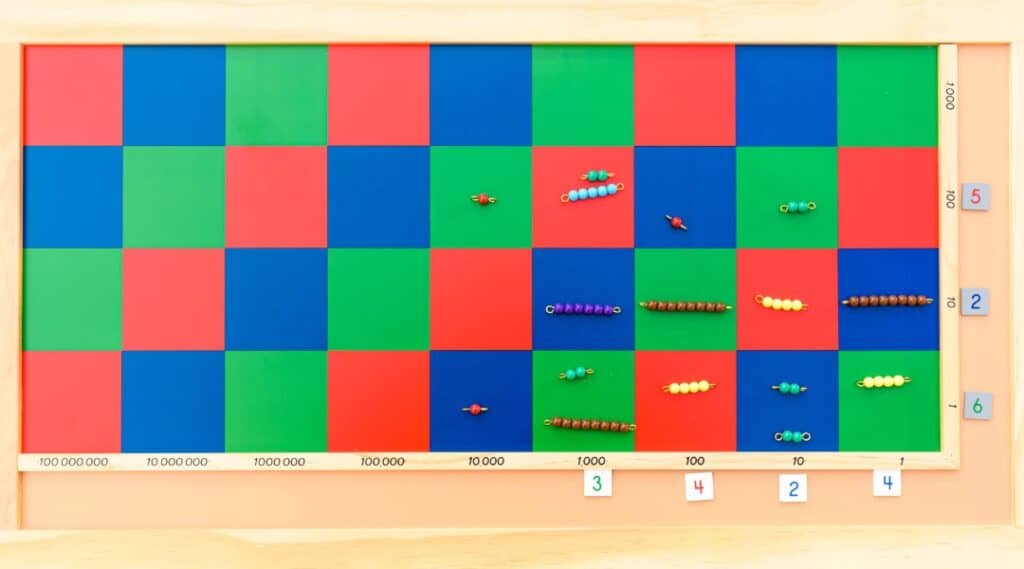
Students use bead bars to physically represent each part of a multiplication problem. With practice, multiplication facts are absorbed naturally—no rote memorization required.
This hands-on approach contrasts sharply with traditional methods, where memorization often comes before understanding.
💡 A Different Approach to Multiplication
Unlike traditional classrooms, Montessori doesn’t require children to memorize tables before trying multi-digit multiplication. With hands-on materials like the checkerboard, students build understanding first, then facts naturally follow.
Click here to explore more differences between Montessori and traditional schooling.
Why the Montessori Checkerboard Works
The checkerboard works because it:
✔ Makes multiplication visible and tactile
✔ Reinforces place value through a colour-coded system
✔ Breaks large problems into manageable parts
✔ Encourages independence and responsibility
✔ Builds confidence in students
When students complete a problem on the checkerboard, they aren’t just “doing math”—they’re constructing it, which makes learning stick.
Parts of the Montessori Checkerboard
To use the checkerboard effectively, you’ll need:
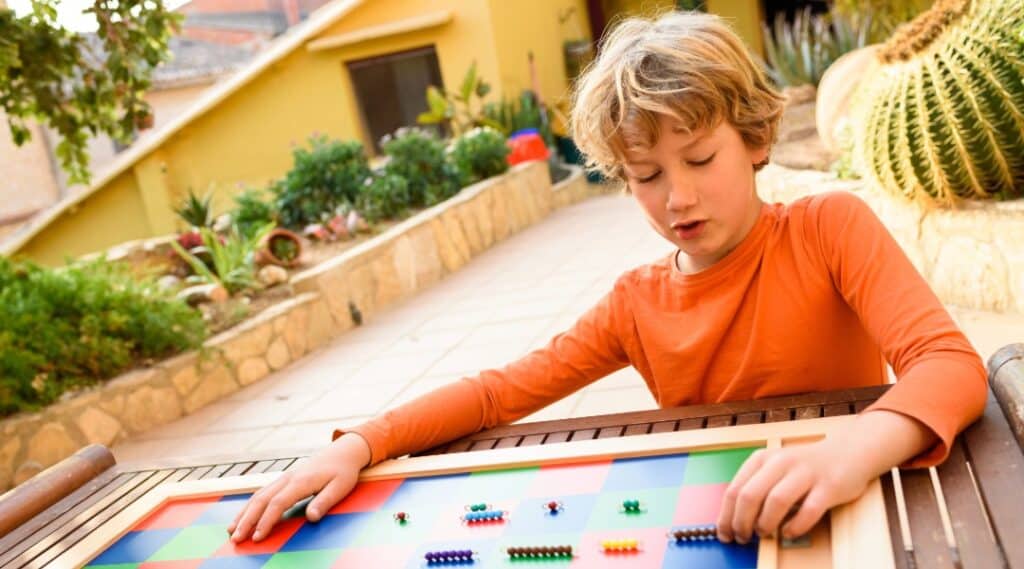
- The Board: Traditionally wooden, now available printable, fabric, or digital. Four rows × nine columns, colour-coded green (units), blue (tens), red (hundreds).
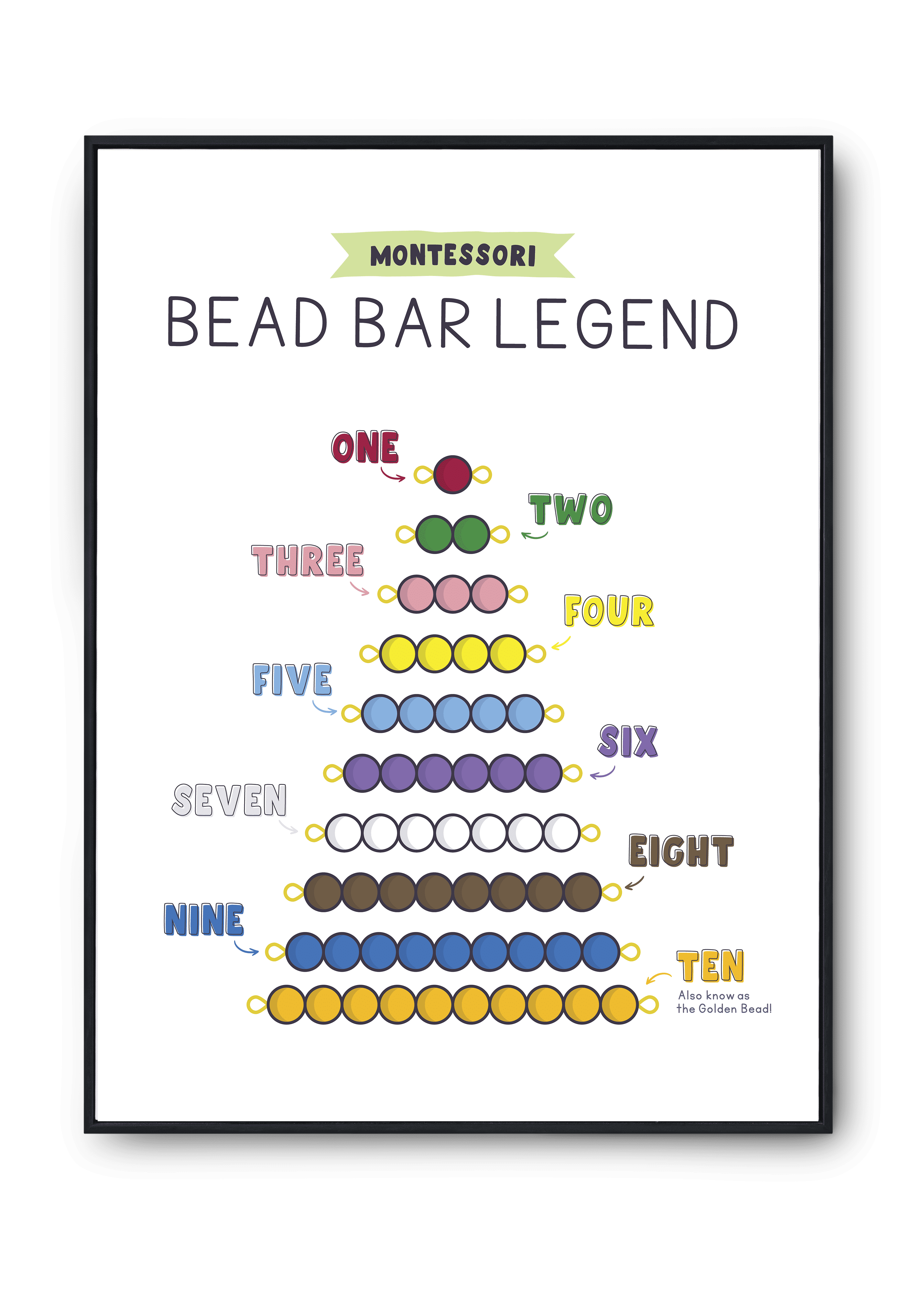
- Bead Bars: Represent numbers 1–9. Green, blue, red beads correspond to the checkerboard’s number families. Bead bars reinforce skip counting and partial products.
- Number Tiles: White tiles = multiplicand (bottom), grey tiles = multiplier (side). Match tile colours to the board for easy identification.
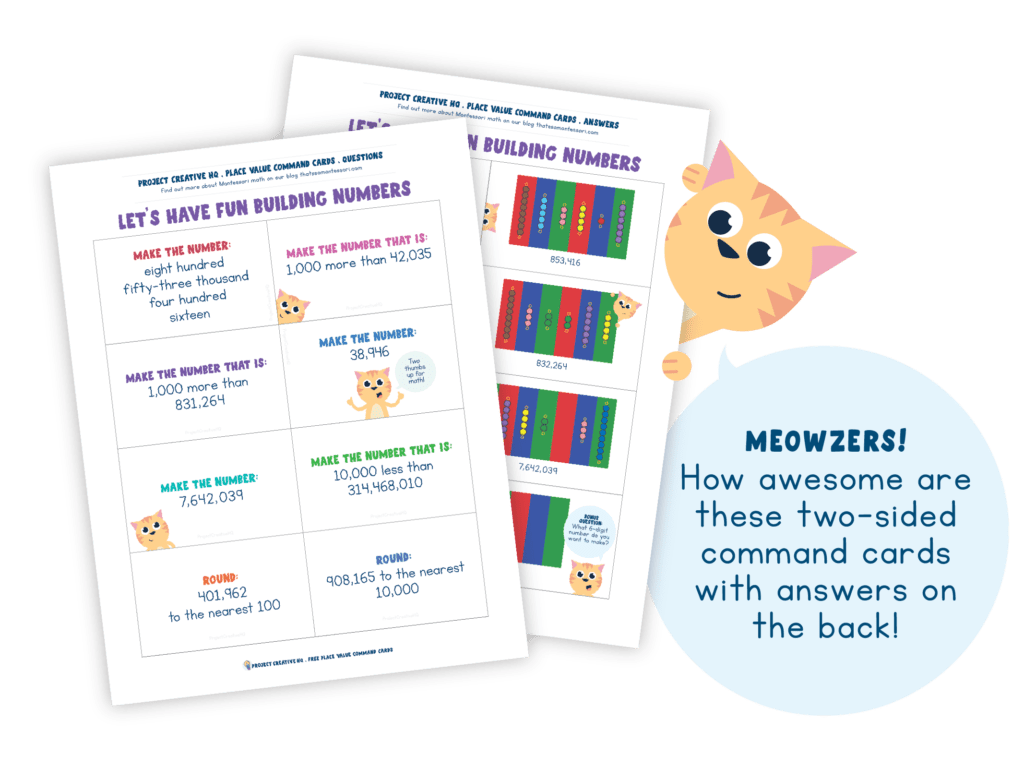
- Command Cards (Optional): Ready-made or student-created cards for guided practice and follow-up work.
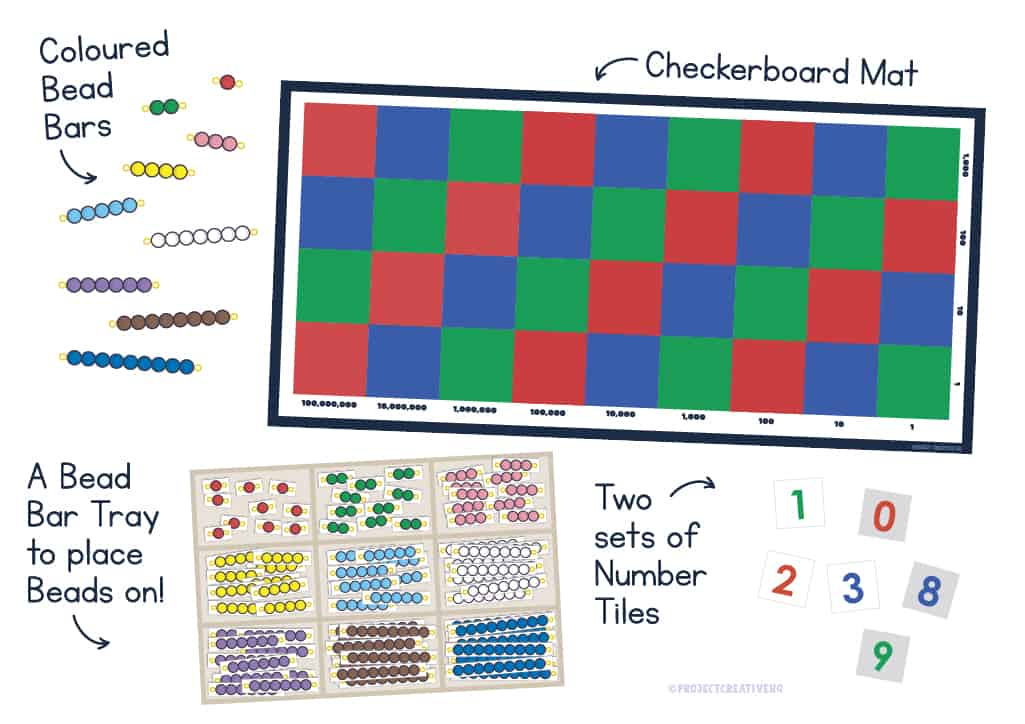
💡 Tip: Printable versions of the checkerboard, bead bars, and command cards are available in our Etsy and TPT shops.
How to Use the Montessori Checkerboard
1️⃣ Introduce the Board: Show students the green-blue-red colour-coded system. Explain number families.
2️⃣ Warm-Up: Practice placing bead bars on the board to represent numbers.
3️⃣ Single-Digit Multiplication: Use bead bars to solve problems step by step.
4️⃣ Double-Digit Multiplication: Gradually introduce larger multipliers when students are ready.
5️⃣ Follow-Up: Encourage students to solve problems independently with command cards, dice games, or self-created questions.
6️⃣ Praise and Encourage: Celebrate progress, effort, and understanding.
This approach gives students confidence and independence while reinforcing math concepts.
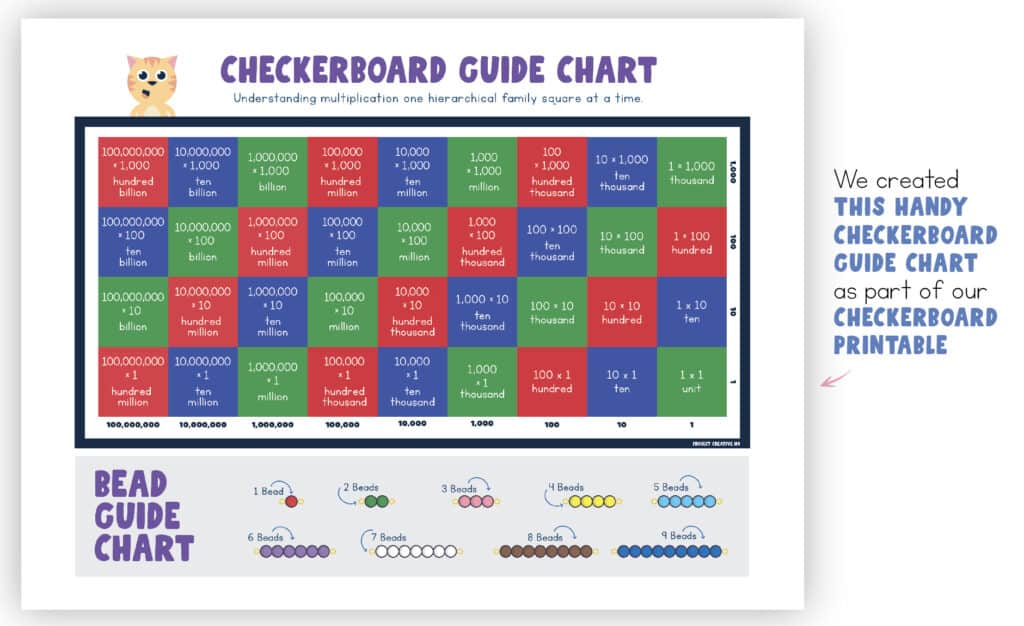
Find it as part of our Checkerboard printable on our Etsy and TPT Shop
Watch the Montessori Checkerboard in Action
Check out our full video demonstration of the checkerboard in action:
You’ll see:
💡Single- and double-digit multiplication
💡How partial products form on the board
💡The magic of colour-coded number families
If you’re new to bead bars, watch the video after familiarizing yourself with the parts above for the best experience.
Montessori Checkerboard Benefits
Using the checkerboard teaches more than multiplication:
✅ Concrete Understanding: Abstract math becomes visible and tactile.
✅ Place Value Mastery: Colour-coded squares reinforce units, tens, hundreds, and beyond.
✅ Responsibility & Independence: Students gather, use, and return materials.
✅ Confidence & Pride: Completing problems fosters a sense of achievement.
Even if you’re not in a Montessori classroom, this tool adds excitement and depth to any elementary math lesson.
💡 Free Place Value Command Cards
Join our newsletter to get instant access to printable command cards designed for hands-on place value practice.
When to Introduce the Montessori Checkerboard
The Montessori checkerboard is typically introduced in lower elementary (grades 1-3) once a child:
➡️ Understands place value (units, tens, hundreds)
➡️ Has experience with Golden Beads or the Stamp Game
➡️ Can solve simple single-digit multiplication problems
➡️ Shows readiness for larger, more complex numbers
In a Montessori classroom, this often happens during the second plane of development (ages 6–12), when children are naturally drawn to big work and big numbers.
The checkerboard satisfies that developmental need beautifully. It allows students to work with large multi-digit multiplication problems while still relying on concrete materials.
Instead of memorizing steps, they build understanding.
Montessori Checkerboard for Home or Classroom
Whether you’re a classroom teacher, homeschool parent, or simply curious about Montessori math, the checkerboard is one of the most powerful tools for teaching multi-digit multiplication.
The Montessori checkerboard:
💡Bridges concrete to abstract thinking
💡Reinforces place value
💡Strengthens number sense
💡Builds independence
💡Encourages mathematical confidence
And perhaps most importantly, it makes multiplication feel possible.
The Wrap-Up: The Montessori Checkerboard
The Montessori checkerboard proves that children don’t struggle with math because they “aren’t math kids.” They struggle when math is presented abstractly before they’re ready.
Give them something they can see.
Give them something they can move.
Give them something they can understand.
That’s what the Montessori checkerboard does.
If you’re ready to bring clarity and confidence to multiplication, explore the printable resources, watch the video tutorial above, and let your students experience math the Montessori way.
Because when children understand the why, the facts follow.
📌 Teaching multiplication soon? Pin this now.
💡 More Montessori Math Insights
Montessori Command Cards: What They Are + How to Use Them
How to Use Montessori Racks and Tubes for Division
Montessori Long Division: How to Use Racks and Tubes
The Best Real-Life Summer Math Activities for Hands-On Learners
